How Does a Utility Pump Work: A Practical Guide for Homeowners
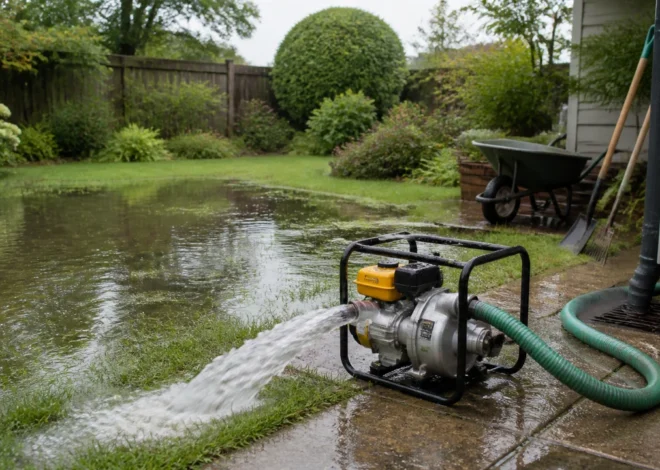
A utility pump is the portable member of the water-pump family. It is commonly used to remove standing clear water, drain a pool cover, empty a shallow basin, transfer water between containers, or move water temporarily after a leak. Most models are not intended to maintain household pressure, handle sewage, or operate unattended for days at a time.
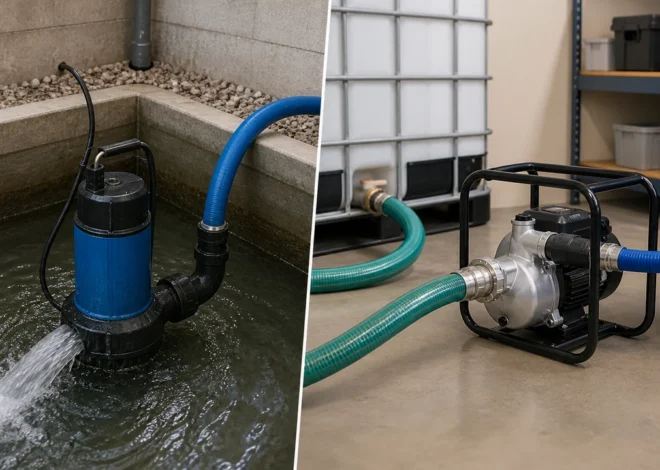
The usual design is a small centrifugal pump with an electric motor, an intake screen or inlet, and a discharge connection. Some utility pumps are submersible, while others sit outside the water and use a suction hose. A float switch may be included, but many portable utility pumps are manual and must be unplugged when the water is gone. Understanding that difference prevents a user from treating a temporary dewatering pump as a permanent sump system.
Quick answer
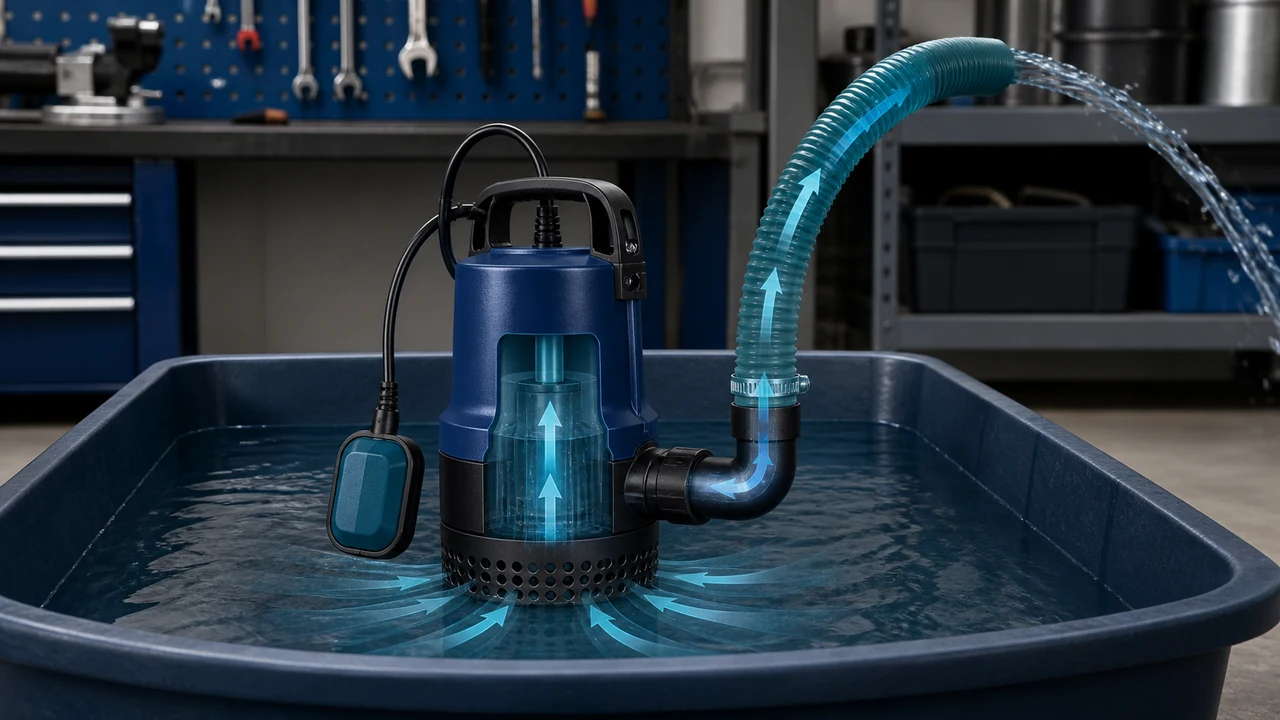
A utility pump works by using an electric motor to spin an impeller. Water enters the pump through the intake, the impeller accelerates it, and the casing directs it into the discharge hose or pipe. The pump moves water only while it has an adequate supply and a free discharge path. Flow falls as lift and hose friction increase, and a manual model will not necessarily shut off when the water is gone.
Parts of a typical utility pump
| Part | How it contributes | What to watch |
|---|---|---|
| Electric motor | Turns the impeller at the speed used for the pump curve. | It needs the rated voltage, dry electrical connections, and adequate cooling. |
| Impeller and volute | Convert motor rotation into moving water and discharge pressure. | Debris, wear, or dry running can reduce flow or damage the seal. |
| Intake screen | Keeps larger debris away from the impeller. | A blocked screen starves the pump and can make the motor sound strained. |
| Discharge port | Connects to hose or pipe that carries water away. | Keep the hose at least the pump outlet size where the manual permits. |
| Float or control | May start and stop the pump automatically at water levels. | Manual models require someone to monitor and unplug them. |
| Base or handle | Keeps a submersible pump stable and makes portable positioning easier. | Do not place it on loose stones or lift it by the cord. |
What happens when the impeller spins
The impeller creates lower pressure near its center and accelerates water toward its outer edge. The volute or diffuser gathers that moving water and guides it to the discharge. The resulting pressure difference causes water to enter through the intake as long as the intake is submerged or the suction line remains full and airtight.
Utility pumps are commonly centrifugal, so their flow changes with head. At zero lift, a model may approach its advertised maximum GPM or GPH. Raising water higher, using a long garden hose, adding elbows, or pushing through a narrow outlet increases resistance and reduces the actual flow. A pump can continue running while producing a weak stream if the working head is near its limit.
Submersible and non-submersible utility pumps
Submersible models
A submersible utility pump is placed directly in the water. The surrounding water floods the intake and helps cool the pump, but the electrical plug and connection must remain out of the water. Set the pump on a stable surface above loose mud, gravel, and debris unless the model is specifically designed for that setting.
Many submersible utility pumps are manual. They can remove water down to a specified shallow level, but they may keep running after the useful water is gone. Monitor the pump and unplug it when the water level reaches the model’s minimum operating depth. Do not lift it while it is plugged in.
Non-submersible models
An external utility or transfer pump stays out of the water and uses a suction hose or inlet connection. The hose must resist collapse and all joints must be airtight. Some designs are self-priming after an initial casing fill, while others require the suction line and pump housing to be filled before startup.
External pumps are useful when the motor must remain dry or when a hose can reach the source. They are less forgiving of air leaks, excessive suction lift, and a source level that falls below the intake. A standard garden hose may be acceptable for a discharge on some models but is not automatically suitable for suction.
How the discharge determines performance
The pump sees the total resistance of the water path. Vertical lift is the height from the source water level to the discharge endpoint. Friction comes from hose length, inside diameter, elbows, valves, filters, and fittings. An open discharge to a nearby floor drain has a different requirement from a hose running up a basement stairwell and across a yard.
Use the pump curve when the height matters. For example, if a utility pump moves 1,500 GPH at zero lift but only 900 GPH at the required discharge height, the second number is closer to the real drainage rate. A restricted discharge can also cause overheating or excessive back pressure. Follow the manual if it prohibits closing the outlet or attaching a spray handle that stops the flow.
Why debris and water type matter
Most utility pumps are designed for clear, clean water with only very small fractional solids. Hair, mulch, stones, sludge, sand, and leaves can block the intake or damage the impeller. A pump marketed for “water removal” is not automatically a trash pump, sewage pump, pond circulation pump, or chemical pump.
If the water contains debris, use the model’s approved screen or place the intake in a clean basket that does not restrict flow. Stop the pump before cleaning the screen. Never put fingers into the intake while the pump is connected to power.
Utility pump versus permanent sump protection
| Requirement | Portable utility pump | Permanent sump system |
|---|---|---|
| Typical duty | Temporary transfer or dewatering. | Recurring groundwater removal from a basin. |
| Automatic control | Often manual, with automatic versions available. | Normally uses a float or level control designed for the basin. |
| Debris tolerance | Usually clear water with small solids. | Also generally clear groundwater, with a stable intake and basin. |
| Monitoring | Manual models must be watched and unplugged. | Designed for unattended operation, often with alarm or backup options. |
| Discharge installation | Portable hose or temporary pipe. | Permanent pipe, check valve, and an outlet that prevents return to the foundation. |
A utility pump can remove water from a sump during an emergency, but it is not automatically a safe permanent replacement. The basin, float, discharge, check valve, cord routing, and unattended operation all need to be suitable. Use a sump pump when the building depends on continuous automatic drainage.
Safe operating sequence
- Read the manual and confirm that the pump is rated for the water and location.
- Inspect the intake, discharge hose, plug, cord, and ground-fault protection.
- Place the pump securely in water or prime the external casing as directed.
- Route the discharge without kinks and keep the outlet away from electrical equipment.
- Start the pump and watch the flow, noise, water level, and hose connection.
- Unplug a manual pump before the source runs dry or before moving or cleaning it.
Frequently asked questions
Does a utility pump shut off automatically?
Many portable utility pumps are manual and keep running until someone unplugs them. Some models include a float or electronic control, but the automatic feature is model-specific. Confirm that the float can move freely and test the shutoff before leaving an automatic pump unattended.
Can a utility pump handle dirty water?
Most utility pumps are intended for clear water with very small solids, not sludge, sewage, or large debris. Dirt can block the intake and accelerate wear, while larger solids can damage the impeller. Use a trash or solids-handling pump only when its manufacturer approves the water and particle size.
Can I use a utility pump to drain a basement?
It can be useful for temporary standing water when someone can monitor it and the discharge is safe. It should not automatically replace a permanent sump pump, especially where groundwater can enter while no one is home. A permanent system needs a suitable basin, level control, check valve, and reliable electrical protection.
Why does a utility pump run but move little water?
Check the intake screen, water depth, hose kinks, discharge height, and outlet restriction. Flow falls as total head increases, so a pump can sound normal while operating beyond the useful part of its curve. Stop the pump before inspecting the impeller or removing debris.
Can I close the discharge hose on a utility pump?
Do not block the discharge unless the manufacturer specifically allows that operating condition. A restriction can increase pressure, reduce cooling flow, and damage a pump that is intended to move water freely. Use a valve only as directed and never leave a manual pump running against a closed outlet.
How do I keep a utility pump from clogging?
Use the approved intake screen, keep the pump off the bottom, and remove leaves, stones, and sediment from the water path. Stop and unplug the pump before cleaning. If the source regularly contains heavy debris, select a pump designed for that material instead of relying on a fine screen that starves the intake.
Final takeaway
A utility pump is a portable centrifugal tool for temporary clear-water movement. Its impeller supplies energy, but the real flow depends on lift, hose friction, intake condition, and whether the model is manual or automatic. Use it within its water and duty limits, monitor manual models, keep power connections dry, and choose a true sump, trash, sewage, or pond pump when the application requires a different category.