Best Pond Pump for Algae: 8 Pond and Water-Feature Options Compared
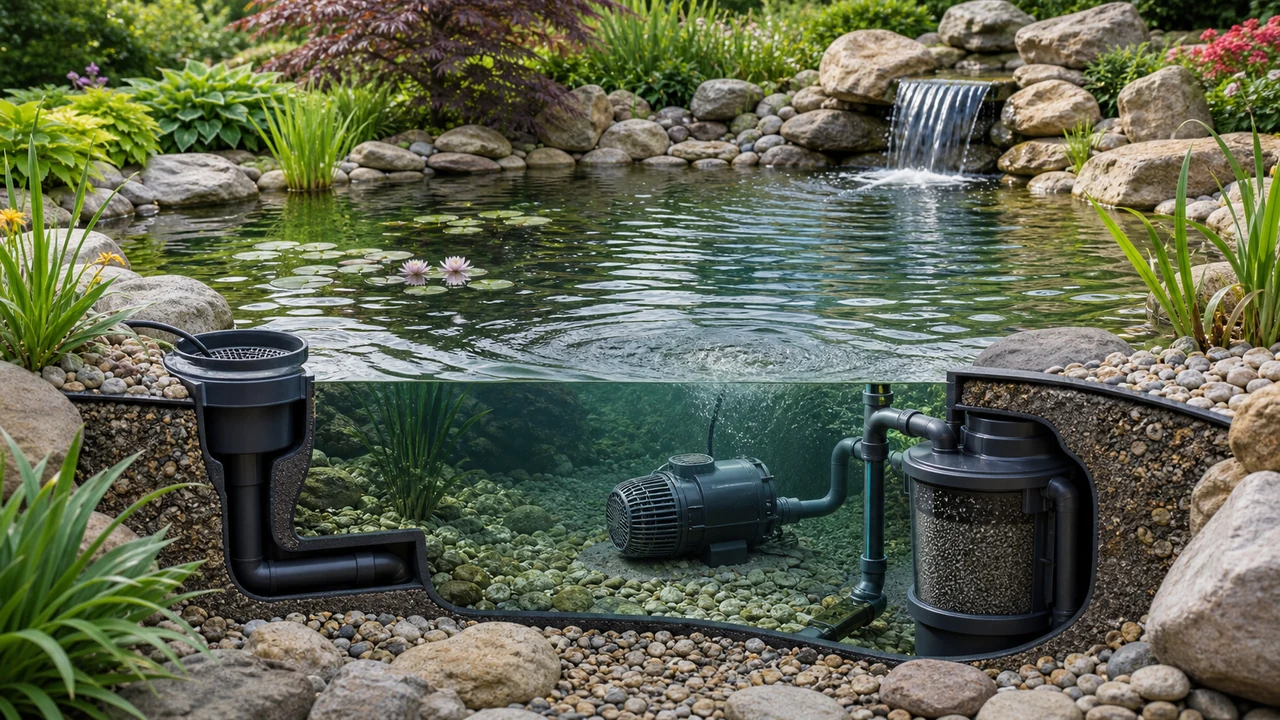
Before shopping for this job, draw the water path on paper. Mark the source, the pump, every vertical rise, the endpoint, and any tank, filter, valve, diffuser, or fixture in between. Then collect the pond volume, desired circulation, return height, tubing, filter resistance, and debris level.
That simple sketch explains why Laguna Max-Flo 2000 is favored for larger pond circulation and filter returns, whereas Aquascape AquaForce 2149 belongs with a larger pond circulation loop or waterfall return. A pump can be powerful and still be the wrong component in the route.
Protect the intake and keep circulation separate from aeration or source-water pumping. The comparisons use manufacturer classifications, relevant technical documents, and the exact Amazon model attached to each affiliate link.
Quick Answer: Size the Pump at the Return Height
If your project is larger pond circulation and filter returns, choose Laguna Max-Flo 2000 first. It is listed as 2,000 GPH pond and waterfall pump format for a 4,000-gallon class feature and is distinguished by a higher-capacity pond pump with a documented pond-size class. For a larger pond circulation loop or waterfall return, Aquascape AquaForce 2149 is the more natural choice; Danner Supreme Model 9.5 addresses medium pond circulation, filters, and waterfalls.
Comparison Table
| Model | Best use | Flow or size class | Main check |
|---|---|---|---|
| Laguna Max-Flo 2000 | larger pond circulation and filter returns | 2,000 GPH pond and waterfall pump format for a 4,000-gallon class feature | The feature may receive much less than 2,000 GPH at its final head. |
| Aquascape AquaForce 2149 | a larger pond circulation loop or waterfall return | pond and waterfall pump format in the 2,149 GPH class | The delivered flow falls as lift and filter resistance increase. |
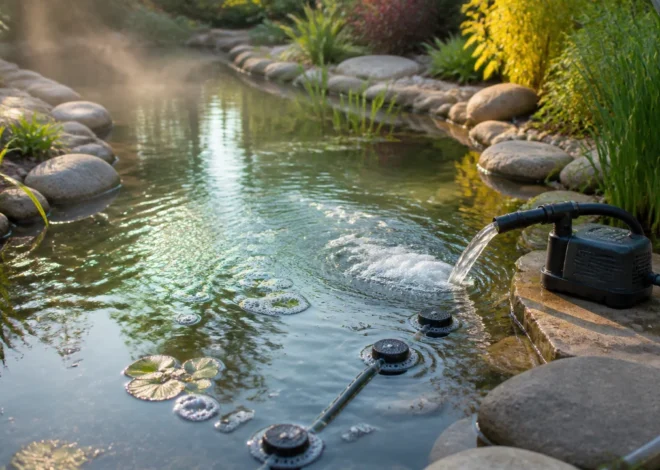
| Danner Supreme Model 9.5 | medium pond circulation, filters, and waterfalls | submersible pond-pump format for circulation and feature returns | A dirty intake can reduce flow and increase maintenance. |
| Laguna Max-Flo 1350 | medium water features and filter returns | pond and waterfall pump format in the 1,350 GPH class | The actual flow changes with vertical lift and tubing resistance. |
| TetraPond Water Garden Pump 26588 | small water gardens, filters, and low waterfalls | 1,000 GPH, 120V pond pump with approximately 7.1-foot head class | The 1,000 GPH figure will fall at higher lift or through a dirty filter. |
| Danner Aqua-Mag 1200 | small ponds, filters, and decorative circulation | submersible water-feature pump in the 1,200 GPH class | Fine debris can reduce intake flow and should be filtered. |
| Laguna Max-Flo 600 | small ponds and gentle water features | compact pond-pump format in the 600 GPH class | It may be undersized for a tall waterfall or restrictive filter. |
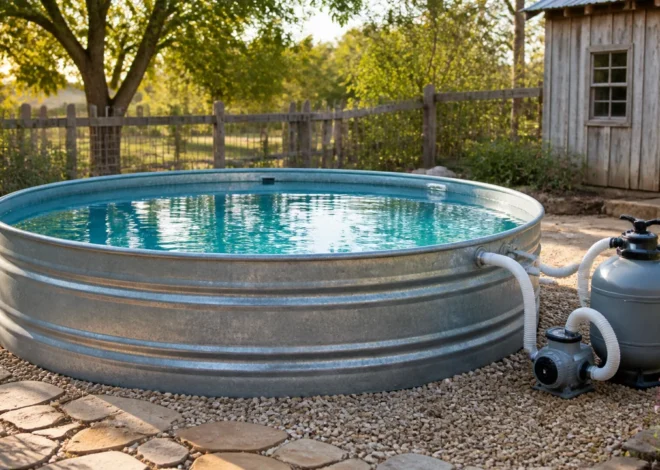
| VIVOSUN 800 GPH Submersible Pump | small ponds, fountains, and aquarium-style water features | compact 800 GPH submersible water-pump format | The flow is modest for a wide or tall waterfall. |
Best for Larger Features: Laguna Max-Flo 2000

For larger pond circulation and filter returns, Laguna Max-Flo 2000 addresses a specific installation need. It offers a higher-capacity pond pump with a documented pond-size class, and the listed configuration is 2,000 GPH pond and waterfall pump format for a 4,000-gallon class feature.
Use Laguna Max-Flo 2000 only when the actual waterfall height, plumbing, and filter restriction are calculated. Its advantage appears in a pond return, filter, or waterfall, because return height, tubing resistance, filter loading, and debris decide the flow the feature actually receives.
For larger pond circulation and filter returns, this model offers a clear path when the installation matches. Pay particular attention to this limitation: The intake and filter need regular service in a debris-heavy pond.
Pros
- The 2,000 GPH class gives a larger pond more circulation headroom.
- The pond-specific design is intended for continuous feature work.
- A stated 4,000-gallon class gives buyers a useful scale reference.
- The model helps separate large-pond needs from compact fountain duty.
Cons
- The feature may receive much less than 2,000 GPH at its final head.
- The intake and filter need regular service in a debris-heavy pond.
Bottom line: The recommendation holds for larger pond circulation and filter returns. It becomes less convincing when this limitation matters: The feature may receive much less than 2,000 GPH at its final head.
Check the current price and availability
Best for a Large Pond: Aquascape AquaForce 2149
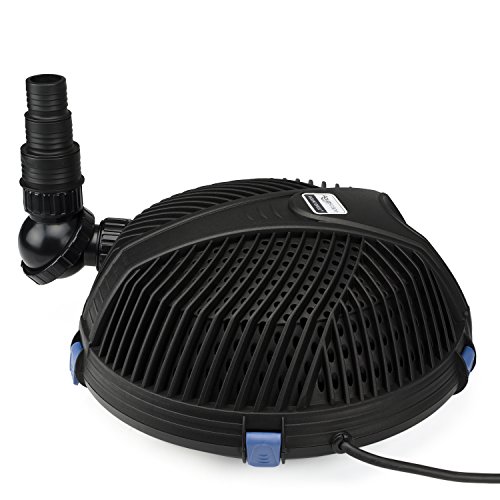
It is easy to confuse Aquascape AquaForce 2149 with a nearby pump class when looking only at the title. Its actual application is a larger pond circulation loop or waterfall return; the combination of a feature-oriented pump with more capacity than small fountain models and pond and waterfall pump format in the 2,149 GPH class explains the difference.
The numbers become useful only after the intake cage, tubing, filter resistance, and return height are included in the calculation. For a pond return, filter, or waterfall, return height, tubing resistance, filter loading, and debris decide the flow the feature actually receives.
If a larger pond circulation loop or waterfall return describes your project, Aquascape AquaForce 2149 has a credible case. It becomes less attractive when this limitation applies: The delivered flow falls as lift and filter resistance increase.
Pros
- The 2,149 GPH class gives it room for a larger feature or filter return.
- The pond-specific intake format is easier to protect than an exposed utility-pump inlet.
- It belongs in a continuous water-feature comparison rather than a temporary drainage list.
- The return height can be checked against the pond layout and tubing size.
Cons
- The delivered flow falls as lift and filter resistance increase.
- The intake still needs regular cleaning in a leaf- or algae-heavy pond.
Bottom line: Aquascape AquaForce 2149 is best reserved for a larger pond circulation loop or waterfall return. One practical point to budget for is The intake still needs regular cleaning in a leaf- or algae-heavy pond.
Check the current price and availability
Best for Medium Circulation: Danner Supreme Model 9.5

Danner Supreme Model 9.5 earns its place through a combination of application and hardware. It is intended for medium pond circulation, filters, and waterfalls, uses a pond pump that can be installed directly in the water path, and is listed at submersible pond-pump format for circulation and feature returns.
Use Danner Supreme Model 9.5 only when the outlet, tubing, and prefilter are sized around the actual head. Its advantage appears in a pond return, filter, or waterfall, because return height, tubing resistance, filter loading, and debris decide the flow the feature actually receives.
The product suits medium pond circulation, filters, and waterfalls, but it is not a universal pump. Buyers should allow for these two tradeoffs: A dirty intake can reduce flow and increase maintenance. Check the exact curve before assuming the nominal model number equals delivered GPH.
Pros
- The submersible form keeps the motor close to the pond intake.
- Its pond-pump construction is more appropriate for feature circulation than a household booster.
- The model offers a middle-capacity choice for filters and returns.
- A removable intake or prefilter can be planned around routine cleaning.
Cons
- A dirty intake can reduce flow and increase maintenance.
- Check the exact curve before assuming the nominal model number equals delivered GPH.
Bottom line: As a match for medium pond circulation, filters, and waterfalls, Danner Supreme Model 9.5 is a reasonable pick. The detail that can change the decision is this: A dirty intake can reduce flow and increase maintenance.
Check the current price and availability
Best Balanced Waterfall Option: Laguna Max-Flo 1350

For medium water features and filter returns, Laguna Max-Flo 1350 addresses a specific installation need. It offers a balanced middle-size option for a feature that needs steady flow, and the listed configuration is pond and waterfall pump format in the 1,350 GPH class.
Use Laguna Max-Flo 1350 only when the return height, filter media, and hose diameter are measured together. Its advantage appears in a pond return, filter, or waterfall, because return height, tubing resistance, filter loading, and debris decide the flow the feature actually receives.
Its strongest use is medium water features and filter returns. The tradeoff is concrete: The actual flow changes with vertical lift and tubing resistance. A second point to allow for is Seasonal intake cleaning is still necessary when the pond carries leaves or silt.
Pros
- The 1,350 GPH class suits many medium pond and waterfall layouts.
- The pump is designed around pond circulation rather than household pressure.
- Its size gives more capacity than a compact tabletop fountain pump.
- The product can be compared at the real waterfall height instead of in open water.
Cons
- The actual flow changes with vertical lift and tubing resistance.
- Seasonal intake cleaning is still necessary when the pond carries leaves or silt.
Bottom line: If medium water features and filter returns is your situation, Laguna Max-Flo 1350 is worth considering. Keep this tradeoff in view: Seasonal intake cleaning is still necessary when the pond carries leaves or silt.
Check the current price and availability
Best Published Small-Pond Reference: TetraPond Water Garden Pump 26588

It is easy to confuse TetraPond Water Garden Pump 26588 with a nearby pump class when looking only at the title. Its actual application is small water gardens, filters, and low waterfalls; the combination of a published 1,000 GPH and head combination for a small pond and 1,000 GPH, 120V pond pump with approximately 7.1-foot head class explains the difference.
The numbers become useful only after the return height and filter media remain within the stated operating range. For a pond return, filter, or waterfall, return height, tubing resistance, filter loading, and debris decide the flow the feature actually receives.
For small water gardens, filters, and low waterfalls, TetraPond Water Garden Pump 26588 is a sound candidate when the rest of the system matches. The main limitation is this: The 1,000 GPH figure will fall at higher lift or through a dirty filter.
Pros
- The 1,000 GPH figure is paired with a defined 7.1-foot head class.
- The 120V format works for a nearby outdoor receptacle with protected power.
- The model is designed for water-garden circulation rather than household supply.
- The moderate size is easier to match to a small filter and return hose.
Cons
- The 1,000 GPH figure will fall at higher lift or through a dirty filter.
- Outdoor electrical protection and intake cleaning remain essential.
Bottom line: TetraPond Water Garden Pump 26588 is a sensible purchase for small water gardens, filters, and low waterfalls when the route and controls are already defined. The main qualification is this: The 1,000 GPH figure will fall at higher lift or through a dirty filter.
Check the current price and availability
Best for Small Filters: Danner Aqua-Mag 1200
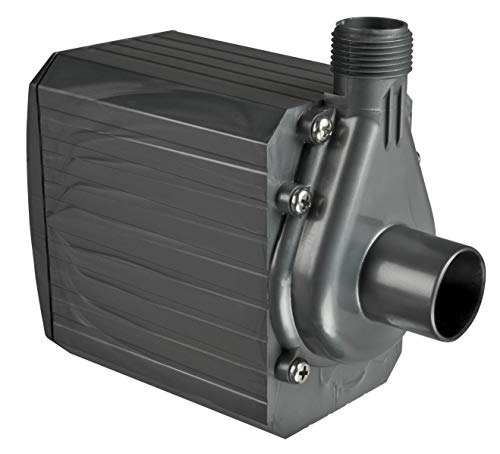
Danner Aqua-Mag 1200 earns its place through a combination of application and hardware. It is intended for small ponds, filters, and decorative circulation, uses a compact pump with more water-feature capacity than a bird-bath unit, and is listed at submersible water-feature pump in the 1,200 GPH class.
Use Danner Aqua-Mag 1200 only when the outlet size and head are kept within the pump curve. Its advantage appears in a pond return, filter, or waterfall, because return height, tubing resistance, filter loading, and debris decide the flow the feature actually receives.
Danner Aqua-Mag 1200 is worth considering for small ponds, filters, and decorative circulation. Keep these two practical limits in view: Fine debris can reduce intake flow and should be filtered. A 1,200 GPH headline does not show the flow at a tall return height.
Pros
- The 1,200 GPH class covers a useful range of small pond features.
- The submersible design simplifies placement in a lined basin.
- The model gives a filter or stream return a different flow option.
- Its size is easier to service than a large external pump assembly.
Cons
- Fine debris can reduce intake flow and should be filtered.
- A 1,200 GPH headline does not show the flow at a tall return height.
Bottom line: Danner Aqua-Mag 1200 makes sense for small ponds, filters, and decorative circulation if the surrounding equipment accommodates it. One limitation remains: A 1,200 GPH headline does not show the flow at a tall return height.
Check the current price and availability
Best for Gentle Flow: Laguna Max-Flo 600

For small ponds and gentle water features, Laguna Max-Flo 600 addresses a specific installation need. It offers a restrained circulation choice for a smaller basin, and the listed configuration is compact pond-pump format in the 600 GPH class.
Use Laguna Max-Flo 600 only when the feature does not need a tall lift or a high-volume filter return. Its advantage appears in a pond return, filter, or waterfall, because return height, tubing resistance, filter loading, and debris decide the flow the feature actually receives.
For small ponds and gentle water features, this model offers a clear path when the installation matches. Pay particular attention to this limitation: Small intakes can still collect algae and settled debris.
Pros
- The 600 GPH class is easier to match to a small feature than a large waterfall pump.
- A compact pump can reduce unnecessary energy use in a modest pond.
- The pond-specific form keeps the use case separate from a household transfer pump.
- The smaller size is easier to remove for cleaning and winter storage.
Cons
- It may be undersized for a tall waterfall or restrictive filter.
- Small intakes can still collect algae and settled debris.
Bottom line: The product’s strongest case is small ponds and gentle water features, not every nearby job. Its practical compromise is this: It may be undersized for a tall waterfall or restrictive filter.
Check the current price and availability
Best Compact Option: VIVOSUN 800 GPH Submersible Pump

It is easy to confuse VIVOSUN 800 GPH Submersible Pump with a nearby pump class when looking only at the title. Its actual application is small ponds, fountains, and aquarium-style water features; the combination of a lower-capacity pump for a compact feature and compact 800 GPH submersible water-pump format explains the difference.
The numbers become useful only after the intake is protected and the feature does not require much lift. For a pond return, filter, or waterfall, return height, tubing resistance, filter loading, and debris decide the flow the feature actually receives.
If small ponds, fountains, and aquarium-style water features describes your project, VIVOSUN 800 GPH Submersible Pump has a credible case. It becomes less attractive when this limitation applies: The flow is modest for a wide or tall waterfall.
Pros
- The 800 GPH class fits a smaller basin or gentle return.
- Submersion makes it easy to install without a separate priming arrangement.
- The compact form can be removed quickly for cleaning.
- It gives small-feature buyers an option below the larger pond-pump sizes.
Cons
- The flow is modest for a wide or tall waterfall.
- Open-pond debris can clog the small intake without a prefilter.
Bottom line: Buy VIVOSUN 800 GPH Submersible Pump for small ponds, fountains, and aquarium-style water features, not as a general replacement. The practical constraint is this: Open-pond debris can clog the small intake without a prefilter.
Check the current price and availability
How to Choose the Right Pond Pump
Calculate the real head
Add vertical rise, hose length, fittings, filter resistance, and the return shape. Read the pump curve at that operating point.
Match flow to the feature
A tall waterfall and a gentle bog filter do not need the same flow. Too much water can cause splash, erosion, and unnecessary energy use.
Protect the intake
Use an intake cage, prefilter, or skimmer appropriate to the pump. Leaves, algae, and settled grit can erase the advantage of a larger motor.
Plan for fish and winter
Keep fish-safe intake spacing and service access in mind. Follow the pump’s cold-weather guidance and prevent trapped water from freezing.
Separate circulation from aeration
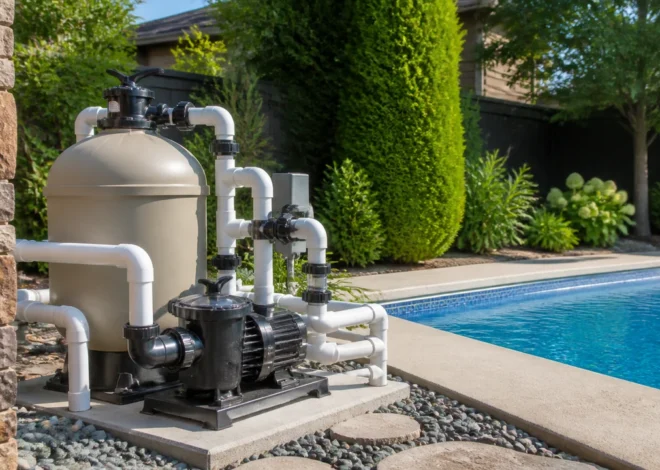
A circulation pump moves water through a filter or return. Aeration uses an air pump and diffuser. Koi and heavily stocked ponds may need both. In this pond pump category, this is where a plausible-looking product can become the wrong tool.
A pond-return calculation
Add vertical rise and estimated friction head, then read the pump curve at that combined point. A pump advertised at 3,000 GPH in open flow may deliver substantially less once a waterfall, filter, and long hose are connected.
A Final Pond-Route Check
When you need a pond pump for algae control, make the final decision with the pond volume, desired circulation, return height, tubing, filter resistance, and debris level written down. The pump has to work in the water path that will exist after the hose, filter, valve, basin, or control is connected.
If the installation looks closer to larger pond circulation and filter returns, start with Laguna Max-Flo 2000. If it resembles small ponds, fountains, and aquarium-style water features, the last model may be the more sensible route. The category boundary still matters in both cases.
Clean the intake and filter before judging the pump. Debris and a narrow hose can remove more useful flow than a small difference between motor ratings.
Frequently Asked Questions
Can a pond pump handle algae?
A prefilter can help, but string algae and grit still require cleaning. Do not assume a water-feature pump passes every type of debris.
What is the difference between a pond pump and a fountain pump?
A pond pump is generally selected for circulation, filtration, or waterfall head. A fountain pump emphasizes compact decorative flow.
Can a pond pump oxygenate water?
Circulation can help exchange water, but a dedicated air pump and diffuser may be more effective when oxygen demand is high. Read the curve at the return height after hose, filter, and fitting losses.
How do I protect a pond pump in winter?
Follow the model instructions for removal, storage, and freezing conditions. Keep trapped water from freezing in the pump or hose.
Will a bigger pond pump make a better waterfall?
Only when the filter, tubing, feature, and return path can use the extra flow. Aeration and circulation may be separate jobs for a heavily stocked pond.
Final recommendation: My overall pick is Laguna Max-Flo 2000, but only for buyers whose system matches larger pond circulation and filter returns. Choose Aquascape AquaForce 2149 when a larger pond circulation loop or waterfall return is the real job, or Danner Supreme Model 9.5 when the installation calls for medium pond circulation, filters, and waterfalls. Measure the pond volume, desired circulation, return height, tubing, filter resistance, and debris level before committing to any of them.