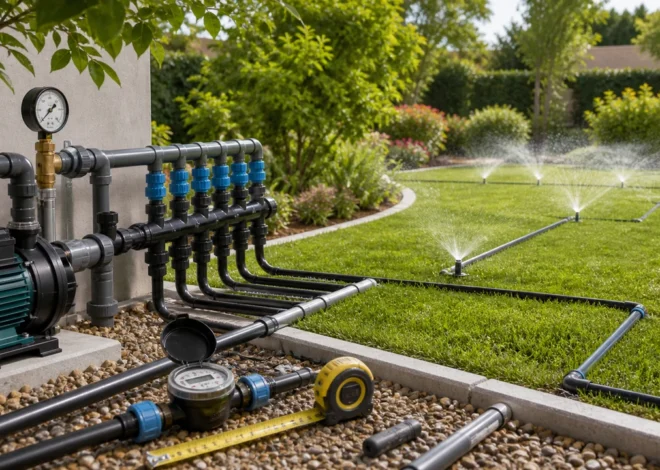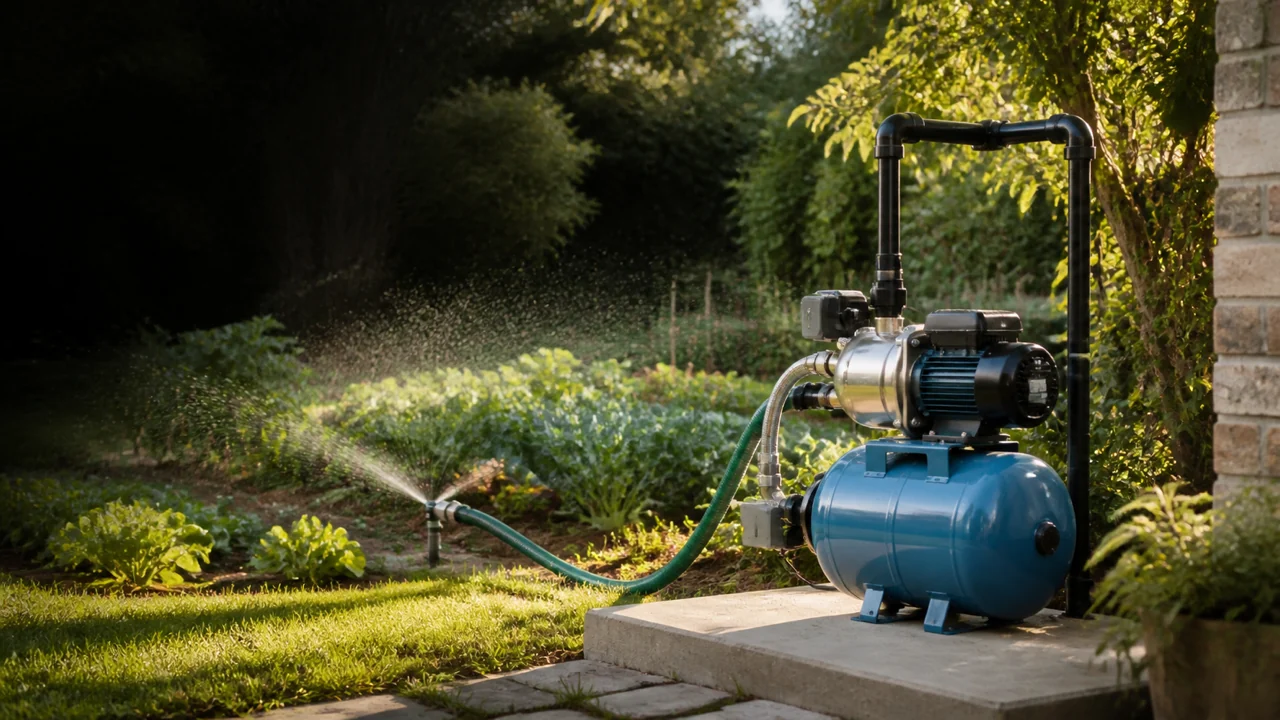
Best Pump for Garden Irrigation: 8 Options Compared
The phrase a pump for garden irrigation can describe a very specific installation. The source, pump position, highest point, discharge, and control hardware should be mapped before a product page is opened. The measurements that shape the decision are zone GPM, required PSI, elevation, pipe losses, filter resistance, and source yield.
This gives Flotec FP5172 a clear role for higher-flow sprinkler or transfer service from a shallow source; AQUASTRONG 1.6 HP Garden Pump is more useful for sprinkler zones and garden irrigation from a tank or open source. The two models should not be judged by the same headline number because sprinkler or emitter flow, elevation, filters, valves, and source recovery determine the pressure at the plants.
In practical terms, the comparison is about an active irrigation zone. A pump earns its place here only when its published design fits the liquid, route, controls, and duty cycle in question.
Quick Answer: Size One Irrigation Zone at a Time
Flotec FP5172 is the best overall choice for buyers seeking a pump for garden irrigation when the project involves higher-flow sprinkler or transfer service from a shallow source. It offers a sprinkler pump, not a shallow-well jet pump, and it is described as 1.5 HP thermoplastic sprinkler-pump format, up to 67 GPM class. AQUASTRONG 1.6 HP Garden Pump is the better fit for sprinkler zones and garden irrigation from a tank or open source, while Superior Pump 94705 is aimed at moderate irrigation from a shallow source.
Comparison Table
| Model | Best use | Pump type | Main check |
|---|---|---|---|
| Flotec FP5172 | higher-flow sprinkler or transfer service from a shallow source | 1.5 HP thermoplastic sprinkler-pump format, up to 67 GPM class | It is not a general deep-well or household pressure pump. |
| AQUASTRONG 1.6 HP Garden Pump | sprinkler zones and garden irrigation from a tank or open source | 1.6 HP surface garden-pump format | Surface suction and priming limit the source arrangement. |
| Superior Pump 94705 | moderate irrigation from a shallow source | 3/4 HP shallow-well jet and tank-system format | It cannot replace a submersible pump for a deep pumping water level. |
| VEVOR 3/4 HP Shallow-Well Jet Pump | a shallow-source garden or sprinkler system | 3/4 HP shallow-well jet-pump format | The source must stay within shallow suction limits. |
| ECO-WORTHY 33-Series 110V | a small tank, greenhouse, or remote irrigation setup | 110V submersible water-pump format for small irrigation and transfer | The pump can be undersized at emitter pressure even when its open-flow number looks large. |
| Red Lion RJS-100-PREM | a fixed shallow-well pressure system or controlled fill line | 1 HP, 115/230V shallow-well jet pump, 23.2 GPM at 30 PSI and 16.8 GPM at 40 PSI at 5-foot lift | The pumping water level must remain within a surface jet system’s practical suction range. |
| Shurflo 2088-554-144 | drip irrigation from a tank or rain barrel | 12V diaphragm demand-pump format in the 3.5 GPM and 45 PSI class | A filter and pressure regulator are important for small emitters. |
| SEAFLO 33 Series 12V | small greenhouse or drip-irrigation zones | 12V diaphragm pump in the 3.0 GPM and 45 PSI class | The system still needs a filter and regulator to protect emitters. |
Best for High-Flow Sprinklers: Flotec FP5172
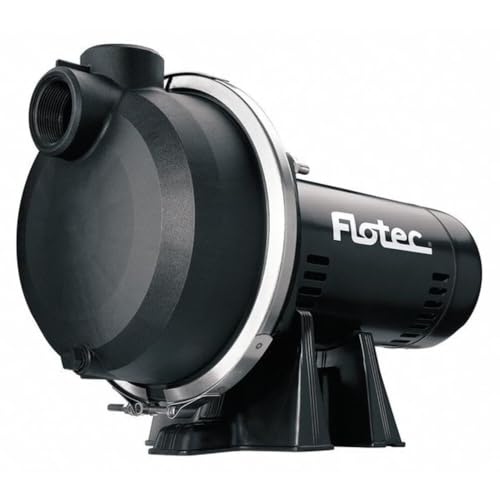
The reason to consider Flotec FP5172 is narrow but practical: it offers a sprinkler pump, not a shallow-well jet pump. That matters for higher-flow sprinkler or transfer service from a shallow source, and the relevant product profile is 1.5 HP thermoplastic sprinkler-pump format, up to 67 GPM class.
Use Flotec FP5172 only when the source depth, 30 PSI operating point, pipe size, and intake screen are matched. Its advantage appears in an active irrigation zone, because sprinkler or emitter flow, elevation, filters, valves, and source recovery determine the pressure at the plants.
Flotec FP5172 is worth considering for higher-flow sprinkler or transfer service from a shallow source. Keep these two practical limits in view: It is not a general deep-well or household pressure pump. High flow requires a source, pipe, and filter that can supply it.
Pros
- The sprinkler-pump classification fits high-flow irrigation better than a household jet label.
- The up-to-67 GPM class gives large zones a useful starting point.
- The thermoplastic format can suit a protected outdoor pump location.
- The model is a clear reminder to compare flow at pressure and lift.
Cons
- It is not a general deep-well or household pressure pump.
- High flow requires a source, pipe, and filter that can supply it.
Bottom line: The product’s strongest case is higher-flow sprinkler or transfer service from a shallow source, not every nearby job. Its practical compromise is this: It is not a general deep-well or household pressure pump.
Check the current price and availability
Best Surface Garden Pump: AQUASTRONG 1.6 HP Garden Pump

Among these options, AQUASTRONG 1.6 HP Garden Pump is the one to examine for sprinkler zones and garden irrigation from a tank or open source. Its advantage is a surface irrigation pump for a higher-flow zone, not a generic promise of more water, pressure, or lift.
The numbers become useful only after the intake screen, suction lift, sprinkler GPM, and pressure requirement are calculated. For an active irrigation zone, sprinkler or emitter flow, elevation, filters, valves, and source recovery determine the pressure at the plants.
Its strongest use is sprinkler zones and garden irrigation from a tank or open source. The tradeoff is concrete: Surface suction and priming limit the source arrangement. A second point to allow for is The zone demand must fit the pump curve and the source yield.
Pros
- The 1.6 HP class gives a larger irrigation zone more capacity than a small transfer pump.
- The surface format keeps the pump accessible beside a tank or intake.
- The product can be compared at sprinkler pressure rather than open flow.
- A screened intake can be planned around lake, cistern, or tank water.
Cons
- Surface suction and priming limit the source arrangement.
- The zone demand must fit the pump curve and the source yield.
Bottom line: Buy AQUASTRONG 1.6 HP Garden Pump for sprinkler zones and garden irrigation from a tank or open source, not as a general replacement. The practical constraint is this: The zone demand must fit the pump curve and the source yield.
Check the current price and availability
Best Tank-System Option: Superior Pump 94705

Superior Pump 94705 belongs in this comparison because it is built for moderate irrigation from a shallow source. Its main differentiator is a pressure-tank-compatible surface pump for a fixed watering system. The specification that matters for this job is 3/4 HP shallow-well jet and tank-system format.
The numbers become useful only after the source is within shallow suction range and the tank and switch are correctly set. For an active irrigation zone, sprinkler or emitter flow, elevation, filters, valves, and source recovery determine the pressure at the plants.
If moderate irrigation from a shallow source describes your project, Superior Pump 94705 has a credible case. It becomes less attractive when this limitation applies: It cannot replace a submersible pump for a deep pumping water level.
Pros
- The 3/4 HP class suits a moderate irrigation demand.
- The tank-system format can reduce cycling on a fixed line.
- The shallow-well classification makes the suction limit visible.
- The pump gives garden irrigation a pressure-oriented option distinct from a utility pump.
Cons
- It cannot replace a submersible pump for a deep pumping water level.
- The zone flow falls with lift, pressure, and pipe friction.
Bottom line: The recommendation holds for moderate irrigation from a shallow source. It becomes less convincing when this limitation matters: It cannot replace a submersible pump for a deep pumping water level.
Check the current price and availability
Best Budget Shallow Source: VEVOR 3/4 HP Shallow-Well Jet Pump
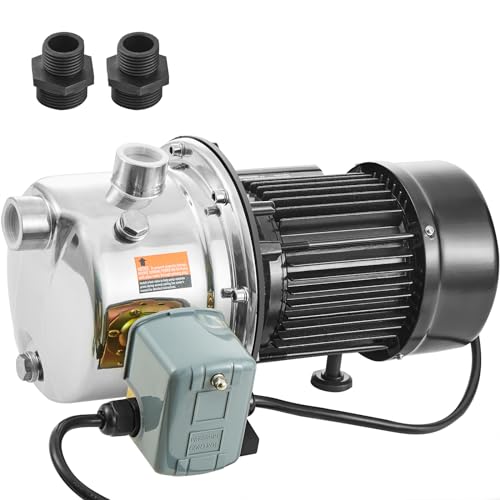
The reason to consider VEVOR 3/4 HP Shallow-Well Jet Pump is narrow but practical: it offers a surface pump for a measured suction lift. That matters for a shallow-source garden or sprinkler system, and the relevant product profile is 3/4 HP shallow-well jet-pump format.
Use VEVOR 3/4 HP Shallow-Well Jet Pump only when the foot valve, pressure switch, suction line, and zone demand are matched. Its advantage appears in an active irrigation zone, because sprinkler or emitter flow, elevation, filters, valves, and source recovery determine the pressure at the plants.
The product suits a shallow-source garden or sprinkler system, but it is not a universal pump. Buyers should allow for these two tradeoffs: The source must stay within shallow suction limits. A shallow suction setup has less source-depth margin than a submersible system.
Pros
- The 3/4 HP size gives a moderate irrigation system a clear comparison point.
- The surface layout keeps the pump available for seasonal service.
- The product works as a source-side option, not a downstream-only booster.
- A measured lift and zone pressure can be compared with its current curve.
Cons
- The source must stay within shallow suction limits.
- A shallow suction setup has less source-depth margin than a submersible system.
Bottom line: VEVOR 3/4 HP Shallow-Well Jet Pump is best reserved for a shallow-source garden or sprinkler system. One practical point to budget for is A shallow suction setup has less source-depth margin than a submersible system.
Check the current price and availability
Best Small Submersible Option: ECO-WORTHY 33-Series 110V
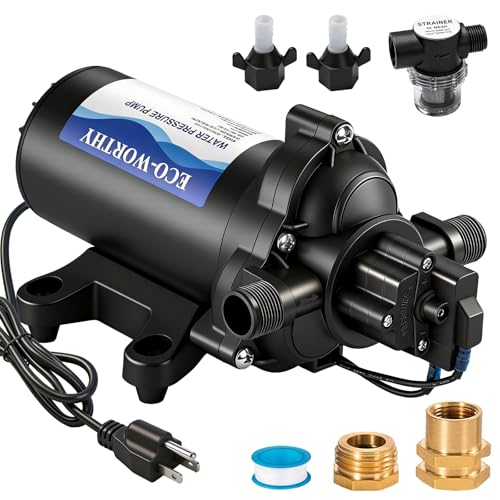
Among these options, ECO-WORTHY 33-Series 110V is the one to examine for a small tank, greenhouse, or remote irrigation setup. Its advantage is a compact submersible choice for low-demand watering, not a generic promise of more water, pressure, or lift.
The numbers become useful only after the controller, filter, hose, and source water level are compatible. For an active irrigation zone, sprinkler or emitter flow, elevation, filters, valves, and source recovery determine the pressure at the plants.
For a small tank, greenhouse, or remote irrigation setup, this model offers a clear path when the installation matches. Pay particular attention to this limitation: The intake needs protection from grit, roots, and plant debris.
Pros
- The 110V input is useful where a small AC source is available.
- Submersion removes the need to prime a long suction line.
- The compact role fits greenhouse or container irrigation better than a large sprinkler pump.
- It gives low-demand growers a distinct alternative to a surface jet pump.
Cons
- The pump can be undersized at emitter pressure even when its open-flow number looks large.
- The intake needs protection from grit, roots, and plant debris.
Bottom line: As a match for a small tank, greenhouse, or remote irrigation setup, ECO-WORTHY 33-Series 110V is a reasonable pick. The detail that can change the decision is this: The pump can be undersized at emitter pressure even when its open-flow number looks large.
Check the current price and availability
Best for Drip Zones: Red Lion RJS-100-PREM

Red Lion RJS-100-PREM belongs in this comparison because it is built for a fixed shallow-well pressure system or controlled fill line. Its main differentiator is a useful published curve point for comparing working pressure. The specification that matters for this job is 1 HP, 115/230V shallow-well jet pump, 23.2 GPM at 30 PSI and 16.8 GPM at 40 PSI at 5-foot lift.
The numbers become useful only after the suction lift, pressure switch, tank, and foot valve are matched as one system. For an active irrigation zone, sprinkler or emitter flow, elevation, filters, valves, and source recovery determine the pressure at the plants.
For a fixed shallow-well pressure system or controlled fill line, Red Lion RJS-100-PREM is a sound candidate when the rest of the system matches. The main limitation is this: The pumping water level must remain within a surface jet system’s practical suction range.
Pros
- The published flow points show how output changes as pressure rises.
- Dual-voltage wiring supports more than one common residential electrical arrangement.
- The 1 HP surface format is accessible for service compared with a deep submersible.
- It is a good comparison for buyers who need both pressure and usable shallow-source flow.
Cons
- The pumping water level must remain within a surface jet system’s practical suction range.
- A deeper installation needs a different ejector or submersible format.
Bottom line: If a fixed shallow-well pressure system or controlled fill line is your situation, Red Lion RJS-100-PREM is worth considering. Keep this tradeoff in view: A deeper installation needs a different ejector or submersible format.
Check the current price and availability
Best 12V Drip Option: Shurflo 2088-554-144
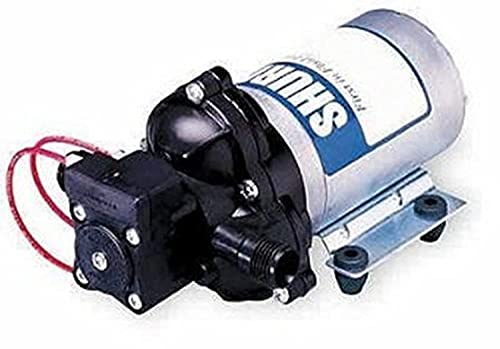
The reason to consider Shurflo 2088-554-144 is narrow but practical: it offers a low-flow pressure pump for emitters rather than sprinkler heads. That matters for drip irrigation from a tank or rain barrel, and the relevant product profile is 12V diaphragm demand-pump format in the 3.5 GPM and 45 PSI class.
Use Shurflo 2088-554-144 only when the strainer, regulator, hose, and battery or power supply are matched. Its advantage appears in an active irrigation zone, because sprinkler or emitter flow, elevation, filters, valves, and source recovery determine the pressure at the plants.
Shurflo 2088-554-144 is worth considering for drip irrigation from a tank or rain barrel. Keep these two practical limits in view: A filter and pressure regulator are important for small emitters. It is not the right choice for a large multi-head sprinkler zone.
Pros
- The 3.5 GPM class is easier to match to a small drip zone than a high-flow sprinkler pump.
- The 12V format suits off-grid or battery-supported watering.
- A pressure switch can respond to a timer or demand valve.
- The diaphragm design keeps the product in the clean-water pressure category.
Cons
- A filter and pressure regulator are important for small emitters.
- It is not the right choice for a large multi-head sprinkler zone.
Bottom line: Shurflo 2088-554-144 is a sensible purchase for drip irrigation from a tank or rain barrel when the route and controls are already defined. The main qualification is this: A filter and pressure regulator are important for small emitters.
Check the current price and availability
Best for Deep-Source Irrigation: SEAFLO 33 Series 12V

Among these options, SEAFLO 33 Series 12V is the one to examine for small greenhouse or drip-irrigation zones. Its advantage is a lower-flow battery-friendly option for controlled watering, not a generic promise of more water, pressure, or lift.
The numbers become useful only after the source filter, regulator, timer, and wiring are protected. For an active irrigation zone, sprinkler or emitter flow, elevation, filters, valves, and source recovery determine the pressure at the plants.
Its strongest use is small greenhouse or drip-irrigation zones. The tradeoff is concrete: The system still needs a filter and regulator to protect emitters. A second point to allow for is Long hose runs and elevation reduce pressure at the far end.
Pros
- The 3.0 GPM class fits small emitters and garden beds.
- 12V power works with a remote battery or solar controller when sized correctly.
- The demand switch can work with a pressure-regulated line.
- The compact pump is easier to place near a barrel or tank.
Cons
- The system still needs a filter and regulator to protect emitters.
- Long hose runs and elevation reduce pressure at the far end.
Bottom line: SEAFLO 33 Series 12V makes sense for small greenhouse or drip-irrigation zones if the surrounding equipment accommodates it. One limitation remains: Long hose runs and elevation reduce pressure at the far end.
Check the current price and availability
Buying Guide: Irrigation pump
Calculate the active zone
Add the GPM of heads or emitters in one zone. Do not size the pump from the total number of heads if they run in separate zones.
Add pressure and elevation
The pump must deliver the required PSI at the heads after elevation, pipe friction, valves, filters, and backflow devices are included.
Match the source
A lake, tank, shallow well, deep well, and rain barrel need different intake arrangements. Screen open water and protect a well from over-pumping. In this irrigation pump category, this is where a plausible-looking product can become the wrong tool.
Choose sprinkler or drip equipment
Sprinklers need more flow and pressure. Drip systems need filtration and regulation, often with a smaller diaphragm pump.
Use controls and storage
Timers, zone valves, float switches, and a storage tank can keep demand predictable and prevent dry running.
A zone-flow calculation
Add the flow of the emitters or sprinkler heads that operate at the same time. A zone with eight 2-GPM heads needs about 16 GPM at working pressure, plus the elevation and filter losses in the route.
Before Opening the Zone
When you need a pump for garden irrigation, make the final decision with zone GPM, required PSI, elevation, pipe losses, filter resistance, and source yield written down. The pump has to work in the water path that will exist after the hose, filter, valve, basin, or control is connected.
Flotec FP5172 and SEAFLO 33 Series 12V are deliberately different: the first is aimed at higher-flow sprinkler or transfer service from a shallow source, while the second suits small greenhouse or drip-irrigation zones. That difference is more useful than comparing their motor labels.
Open the largest zone and measure pressure at the farthest head or emitter. The field reading is the final test of the pump choice.
Frequently Asked Questions
Is a sprinkler pump the same as a shallow-well jet pump?
No. A sprinkler pump may be optimized for high-flow irrigation, while a jet pump is designed around suction and pressure service.
Can irrigation drain a well?
Yes. Pumping faster than the source recovers can lower the water level and interrupt the system.
Do drip emitters need a filter?
Usually a filter and pressure regulator help protect small passages and keep flow even. A source that cannot recover may need a schedule or storage tank rather than a larger motor.
Can a booster fix low sprinkler pressure?
Only after the source flow and restrictions are checked. A booster cannot create water that is not available.
How much flow does an irrigation pump need?
Add the active zone’s GPM and check the pump curve at the working PSI and total head. The pump must meet the zone pressure after filters, valves, and elevation are counted.
Can one pump run several zones?
Yes, when each zone and the source fit the pump curve. Separate zones are usually used to keep demand predictable.
Final recommendation: For buyers who need a pump for garden irrigation, Flotec FP5172 is the best overall choice when the project involves higher-flow sprinkler or transfer service from a shallow source. AQUASTRONG 1.6 HP Garden Pump is the more appropriate alternative for sprinkler zones and garden irrigation from a tank or open source, while Superior Pump 94705 addresses moderate irrigation from a shallow source. The final decision should be based on zone GPM, required PSI, elevation, pipe losses, filter resistance, and source yield.