What Size Well Pump Do I Need: A Practical Guide for Homeowners
Sizing a well pump is a system calculation, not a contest between headline flow ratings. You need to know what the installation must do, where the water starts, how far it travels, and what resistance it meets. Only then can the model’s curve show whether it is genuinely suitable.
The direct answer: size the well pump from the system
To deliver the required household flow without exceeding the well’s sustainable yield, calculate the operating point before comparing models. TDH = vertical lift + pressure head + friction loss. Pressure head is PSI multiplied by about 2.31 for water. Then verify the model’s voltage, inlet and outlet, automatic control, temperature, solids or water-quality limits, and installation requirements.
Inputs that change the answer
| Input | Why it matters | How to obtain it |
|---|---|---|
| required peak flow | It changes the well pump requirement. | Measure, document, or use the exact system manual. |
| pumping water level | It changes the well pump requirement. | Measure, document, or use the exact system manual. |
| elevation to the pressure tank or fixtures | It changes the well pump requirement. | Measure, document, or use the exact system manual. |
| desired endpoint pressure | It changes the well pump requirement. | Measure, document, or use the exact system manual. |
| pipe and fitting friction | It changes the well pump requirement. | Measure, document, or use the exact system manual. |
| well yield and casing | It changes the well pump requirement. | Measure, document, or use the exact system manual. |
The calculation in plain language
TDH = vertical lift + pressure head + friction loss. Pressure head is PSI multiplied by about 2.31 for water.
A system needing 8 GPM at 40 PSI with a 120-foot pumping level and 20 feet of estimated friction would require about 120 + (40 x 2.31) + 20 = 232 feet of total head at 8 GPM. The well must also sustain the selected pumping rate.
Read the pump curve at the operating point
Find the required flow on the horizontal axis and the total head or pressure on the vertical axis. The selected model should deliver the required flow at that intersection, with reasonable margin. Maximum head is usually a zero-flow limit, and maximum flow is usually a near-zero-head limit.
Where each input comes from
Flow or volume
Measure a known volume over time or add the simultaneous fixture, sprinkler, filter, or feature demands. Avoid adding every possible outlet if the system will never operate them together, but do account for the actual peak case.
Lift and pressure
Measure vertical elevation from the source water surface or pumping level to the endpoint. Convert endpoint pressure to head for water using approximately 2.31 feet per PSI, then add it to elevation and friction.
Friction and fittings
Pipe length, diameter, material, valves, filters, check valves, elbows, nozzles, and flow rate all consume head. A smaller pipe can make a pump appear weak even when the motor is healthy.
Source and duty
A well must produce the required flow, a tank must have enough volume, a pond intake must remain submerged, and a solar or battery system must provide energy for the whole runtime. The pump cannot be sized independently of those limits.
The checks that separate a useful calculation from a bad one
Use the pumping water level
A well’s drilled depth is not the lift the pump experiences while water is being used. The pumping water level can fall substantially below the static level, especially during irrigation or a dry season. Use that lower level, add the elevation to the pressure tank or fixtures, and then read the pump curve at the required flow.
Respect sustainable well yield
The pump may be capable of more water than the well can replenish. Compare the desired pumping rate with a documented yield or flow test, and consider storage when the well recovers slowly. Oversizing can make low-water problems and short cycling worse.
Match the pressure system
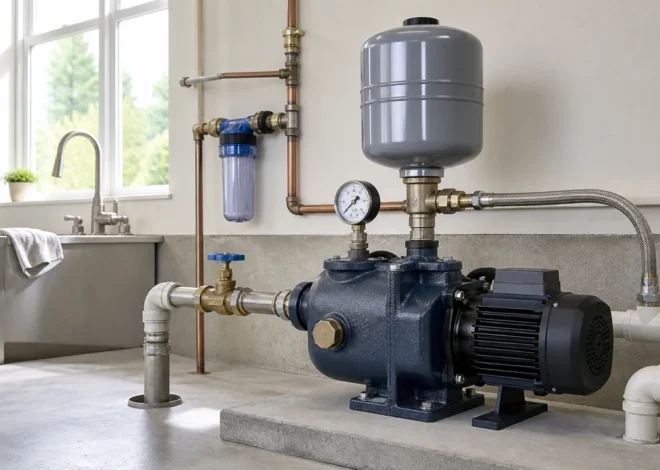
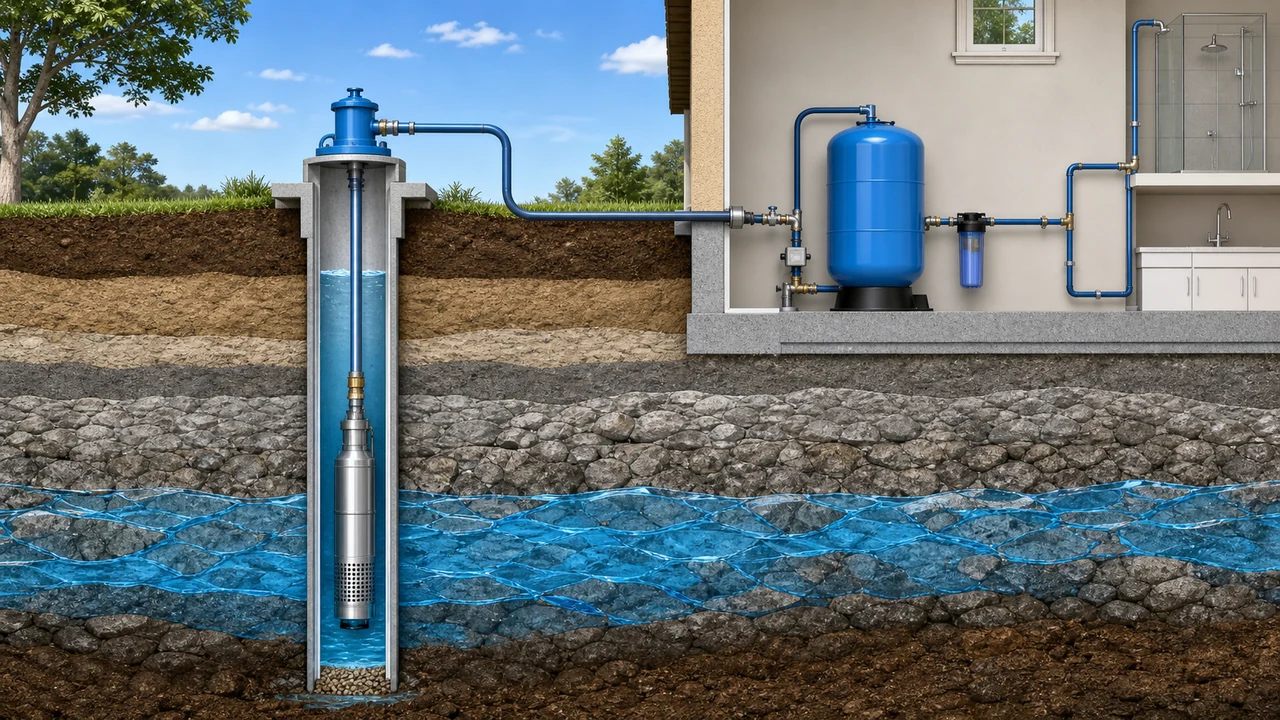
A residential well pump works with a pressure tank, switch, gauge, check valves, and electrical controls. The cut-in and cutout settings, tank precharge, casing diameter, voltage, and control box must all agree with the selected pump.
Separate shallow and deep arrangements
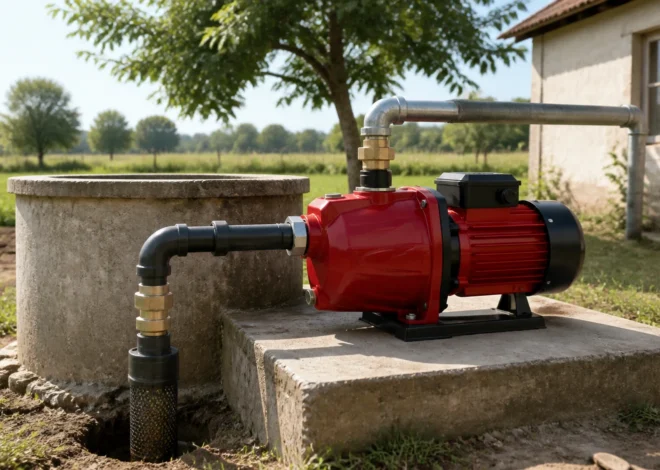
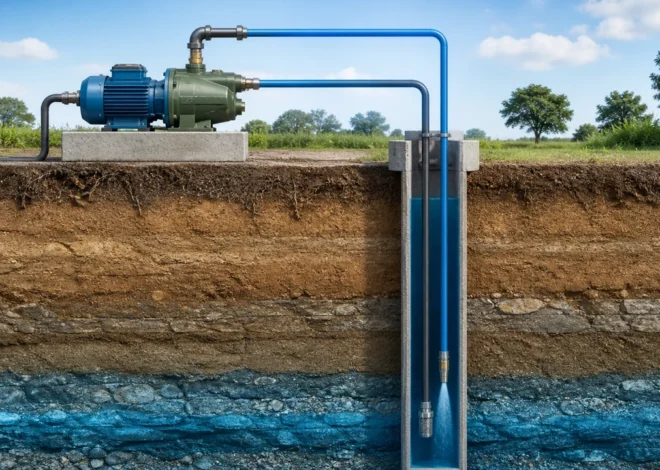
A surface jet pump has a suction-lift and prime limitation. A down-well submersible pushes water and is governed by casing, drop pipe, cable, and pumping-level conditions. They are not interchangeable just because both are described as well pumps.
Allow for the worst useful case
Check the operating point when the water level is lowest and household demand is highest. A model that looks adequate at the static level may fail to reach pressure after the source draws down.
Compare candidates on the same basis
A fair comparison uses the same flow, head, liquid, voltage, and duty for every candidate. This small checklist exposes the most common misleading product claims before price or motor size enters the decision.
| Selection field | Useful evidence | Warning sign |
|---|---|---|
| Required flow | Measured or calculated demand at the endpoint | Maximum GPM with no head stated |
| Required head | Elevation, pressure, and friction at that flow | Maximum lift treated as useful flow |
| Source limit | Well yield, tank level, pond depth, or inlet pressure | Assuming the source can provide anything |
| System fit | Voltage, controls, pipe, basin, filter, and duty | Choosing by horsepower alone |
Account for changing conditions
The operating point can move during the day or the season. A well level may fall, a pond screen may load with debris, a pool filter may become dirty, a condensate rate may rise, or a booster inlet may lose pressure under demand. Check the high-demand or low-source case that matters for well pump and make sure the pump and controls remain inside their limits.
A sensible margin covers known variation, not unknown design. If the calculation is uncertain because the pipe route, source yield, or endpoint pressure is missing, improve that information before buying a larger motor.
Stress-test the calculation
Stress-test the low-water case
Use the pumping water level that occurs while the well is supplying the peak demand, not a convenient static reading. If the source level drops, the pump must still meet the pressure and flow requirement without drawing the well below a safe condition.
Check the source before the motor
A well that recovers slowly cannot provide unlimited GPM. Compare the desired rate with a documented yield and consider storage or a controlled schedule when demand exceeds the source’s sustainable production.
Carry the pressure system through the selection
Tank drawdown, switch range, check valves, casing diameter, cable, control box, and voltage affect the replacement. A pump that fits the well but cannot work with the existing pressure system is not a valid match.
Compare models at one operating point
List the required GPM and TDH beside each candidate’s curve. Ignore a model that only reaches its advertised flow at zero head or reaches its maximum head at zero flow. The curve and source limit should agree at the same point.
Know when to stop calculating
If the pumping level, well yield, casing, or controls are unknown, the uncertainty is too important for a guess based on horsepower. Collect the missing record or have a qualified well professional complete the design.
Mistakes that produce the wrong pump
- using static water level instead of pumping water level
- choosing a pump from horsepower alone
- ignoring well yield
- using shutoff head as working flow
- forgetting pressure-tank and voltage requirements
A practical final check
Write the target flow, total head, source limit, voltage, liquid, control method, and duty cycle on one page. Compare that list with the exact model manual and curve. If the installation involves sewage, a pressure vessel, a well, potable water, pool suction, or electrical controls, have the final selection reviewed by a qualified professional.
Frequently Asked Questions
How deep should a well pump be rated?
Use the pumping water level, not only the drilled depth. The pump must deliver the required flow at the combined lift, pressure, friction, and source conditions.
Does a larger pump increase well yield?
No. It can draw the water level down faster and cause cycling or dry-run problems. Sustainable yield must be measured or established independently.
What pressure should a well pump provide?
Many residential systems use 30/50 or 40/60 PSI switch ranges, but the correct setting depends on the tank, pump, piping, fixtures, and manufacturer.
Do I need a pressure tank?
A conventional residential well system commonly uses one to reduce starts and stabilize pressure, but the tank size and precharge must match the pump and switch.
When is professional sizing needed?
Use a well or pump professional for a deep-well installation, new casing, control-box work, uncertain yield, or a system that supplies potable water.
Bottom line: The correct well pump is the one that delivers the required flow at the real head while respecting the source and installation limits. Start with the calculation, then use the product data to confirm the fit.