Sump Pump Making Loud Noise: A Practical Guide for Homeowners
A sump pump can fail in more than one way, and the first visible symptom does not always identify the failed part. A silent pump, a pump that runs without lowering the basin, and a pump that cycles every few seconds call for different checks. Start with water level, float movement, discharge flow, and power.
The direct answer
For a sump pump making loud noise, watch one complete wet cycle before touching the equipment. The pump should receive power, lower the basin, discharge water away from the foundation, and stop when the switch reaches its off level. A failure at any one point changes the next step.
A closer diagnostic reading
Watch a complete cycle
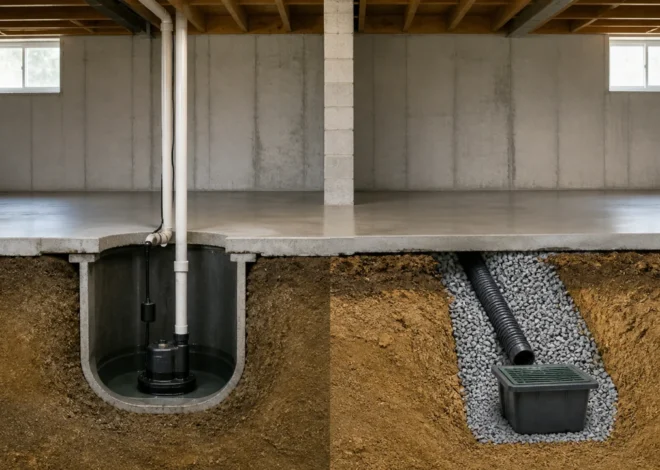
A short glance at a sump pit can be misleading. Note the level when the pump starts, how quickly the level falls, where water exits, when the switch stops the motor, and how much comes back afterward. A pump that runs during a storm is not automatically failing.
Estimate inflow and delivered flow separately
If water enters faster than the pump removes it, the pit may remain high even with a healthy motor. The pump’s useful flow is the curve value at the installed rise and discharge resistance, while inflow comes from groundwater, footing drains, roof drainage, or a plumbing leak.
Inspect the discharge outside
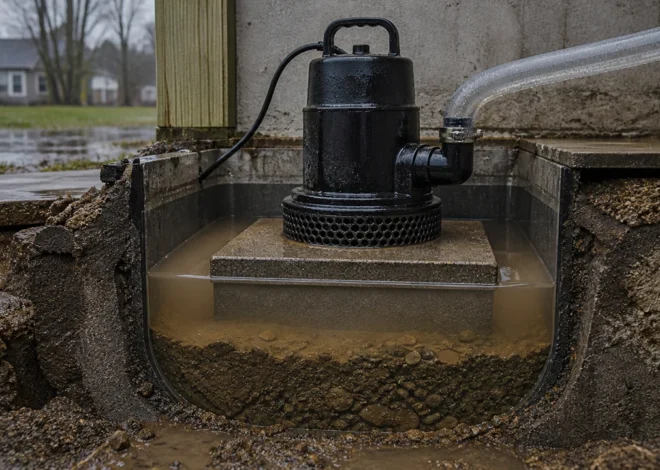
An obstruction may be beyond the basement wall. Check for ice, crushed pipe, a blocked outlet, an extension that has settled, or water returning toward the foundation. Do not disconnect a pressurized or elevated discharge while the pump is running.
Treat float behavior as a mechanical issue
The float needs room to move and the pump needs to remain upright. A cord, basin wall, pipe, lid, sediment, or uneven base can cause a pump to stay on, start too late, or cycle rapidly. Isolate power before touching accessible parts.
Test resilience after the primary pump works
A battery pump, alarm, generator connection, or second discharge is a separate protection layer. Test it with the same care as the primary unit and confirm that its outlet does not simply return water to the same pit.
Read the symptom before touching the pump
| What you observe | What it often suggests | First useful check |
|---|---|---|
| No motor sound | Outlet, GFCI, cord, switch, or motor | Check power safely and look for a tripped protection device. |
| Motor runs but water stays high | Blocked intake, air lock, check valve, or excessive head | Observe outlet flow and the water level. |
| Pump starts repeatedly | Float range, backflow, high inflow, or undersized basin | Watch on/off levels and return flow. |
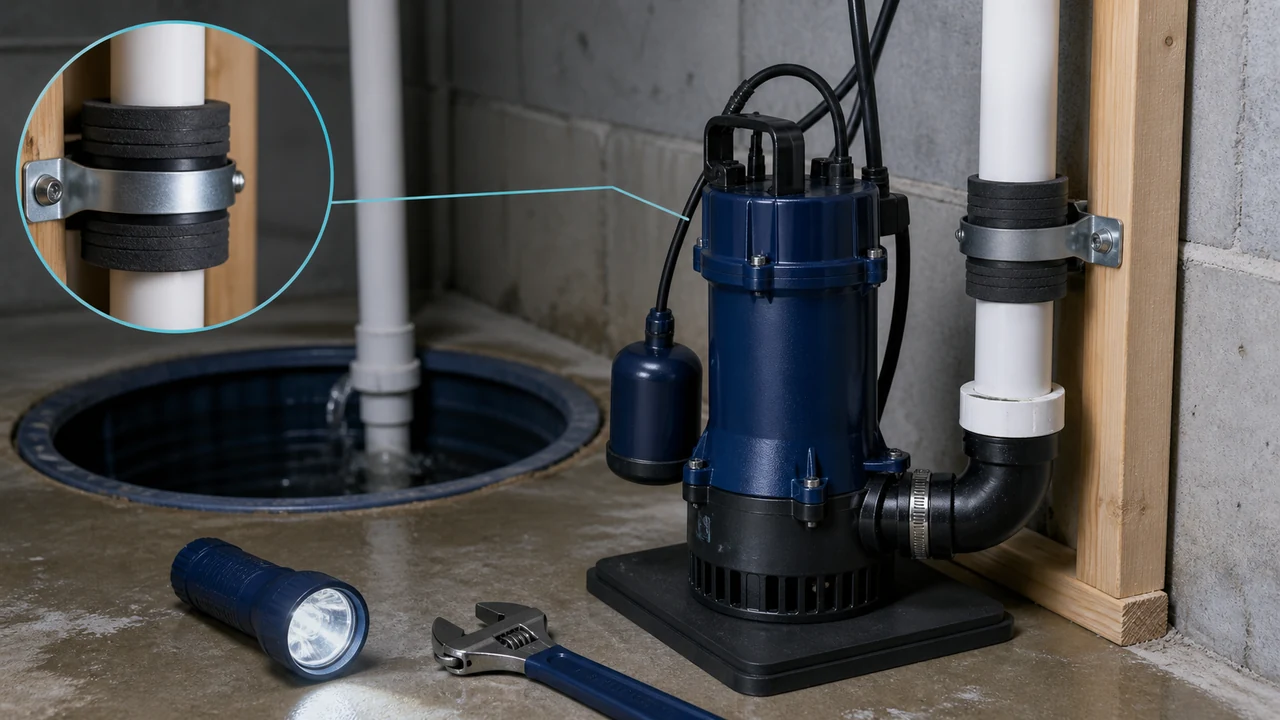
| Loud vibration or grinding | Debris, unstable base, pipe movement, or worn motor | Disconnect power before inspecting accessible parts. |
Do not treat every symptom as proof of a failed motor. A pump curve describes what the pump can do at a particular head, while the switch, source, pipe, filter, and discharge determine whether that operating point is reached.
Likely causes and what separates them
Power or control is missing
A tripped GFCI, loose plug, failed float, damaged cord, or motor overload can leave the pump silent. Do not keep resetting a device that trips again.
The discharge path is not moving water
A frozen outlet, crushed hose, clogged check valve, closed valve, or excessive lift can let the motor run while the basin remains high.
The basin or switch is interfering
A tethered float needs clearance from the basin wall and cord. Sediment can hold a switch on or prevent it from reaching the off position.
The pump is not matched to the inflow
Rainfall and groundwater can exceed the delivered flow at the installed head. Use the curve at actual lift rather than a free-flow label.
A safe diagnostic sequence
- Keep clear of wet electrical equipment. If the outlet, cord, or control is wet, stop and arrange qualified electrical help.
- Observe whether the water level is rising, falling, or unchanged while the pump runs. Note the discharge volume and whether water returns after shutdown.
- After isolating power, check that the float moves freely and the pump sits upright. Remove only accessible debris, and do not enter the basin.
- Inspect the exterior discharge for ice, kinks, crushed sections, or a termination too close to the foundation.
- Compare the installed lift and pipe route with the manufacturer’s pump curve. A pump can have a high maximum GPH and still deliver little at a tall lift.
- If the pit fills faster than the pump can recover, arrange a drainage and capacity assessment instead of relying on a bigger motor alone.
When to stop and call for help
Do not enter the basin or handle an energized, wet connection. Sewage, a flooded electrical area, repeated breaker trips, and a blocked buried discharge need qualified service.
Prevent the same fault from returning
Test the pump and any battery backup before wet weather, keep the outlet away from the foundation, and preserve room for the float and pump to be removed. A high-water alarm should be tested separately.
What to record for the next service visit
| Observation | Useful detail |
|---|---|
| Power and controls | Breaker, fuse, controller light, switch, alarm, and whether the motor starts |
| Water behavior | Source level, inlet condition, discharge flow, return water, and time to clear |
| Hydraulic conditions | Vertical lift, pipe or hose size, filter state, valve position, and any recent changes |
| Operating pattern | Continuous run, short cycling, intermittent output, heat, noise, or vibration |
Verify the repair under a normal load
A pump is not repaired merely because the motor starts. Run the controlled test appropriate to the installation and confirm that the source remains adequate, the outlet carries water, the switch reaches its normal stop point, and no leak, alarm, overheating, or unsafe pressure appears. Do not create a larger load simply to prove capacity.
Three patterns that deserve a second look
During a storm
Continuous runtime can be normal if the level rises and falls in response to a sustained inflow. It becomes a fault when the motor runs with little discharge, the basin does not recover, or the motor overheats. Record the start level, stop level, and water leaving the building.
After the pump stops
Watch for water returning through the discharge. A failed check valve or an outlet too close to the foundation can refill the pit and create short cycling. That returning volume is part of the system problem, not proof that the pump needs more horsepower.
When the pit is nearly empty
A motor that continues to run may have a switch caught on the cord or basin, a sensor set below the safe intake level, or a control fault. Isolate power before moving anything. Do not keep a pump running dry just to see whether it will stop.
A deeper read of the symptom
Check capacity and backflow separately
Measure or estimate how much water enters during the event and observe how much the pump removes at the actual lift. Then watch what returns after shutdown. A pit that refills because of backflow needs a different correction from a pit that is receiving more groundwater than the pump can handle.
Use the float range as a diagnostic
Mark the start and stop levels with the pump isolated and the basin safe to observe. If the float catches, the switch may be a mechanical issue. If the water stays high while the pump is clearly running, focus on intake, discharge, check valve, head, and delivered flow.
Know when a second pump is justified
A backup helps with power loss or primary failure, but it should not disguise an undersized discharge or a pump that cannot keep up with normal inflow. Size its own flow at head, power, alarm, and runtime, and make sure the two outlets do not create a common point of failure.
Record the storm conditions
Note rainfall intensity, water level, start and stop points, discharge location, runtime, and whether the outlet froze or drained back. Those details help distinguish a one-time extreme event from a recurring capacity, switch, or drainage problem.
Category-specific checks
Compare the symptom with the installation
A motor, impeller, switch, controller, source, pipe, filter, and outlet can each be the first failed point. Use the liquid, head, flow, and duty to narrow the diagnosis instead of treating the pump label as the answer.
Look for a change rather than a single reading
Pressure, flow, water level, runtime, noise, and temperature become more useful when compared with the system’s normal baseline. A single maximum or minimum value rarely identifies the fault by itself.
Make the next repair reversible
Use approved cleaning, fittings, replacement parts, and settings. Avoid cutting a line, bypassing a safety device, or changing a fuse until the exact manual and installation requirements support that action.
End with a normal operating record
Save the successful flow, pressure, level, cycle, and maintenance result. That record makes a recurrence easier to recognize and reduces unnecessary replacement of a pump that is still serviceable.
Keep the next diagnosis simple
Save the model number, manual, normal pressure or water level, typical runtime, and any replacement part information. A short record made when the system is healthy often prevents a future technician from having to guess whether a changed sound or cycle is new.
Frequently Asked Questions
Can a sump pump run dry?
A brief loss of water can damage some pumps or cause overheating, while model-specific designs may tolerate limited exposure. Keep the intake submerged as the manual requires and investigate a switch that runs the pump below its normal off level.
How do I know if the check valve is bad?
After shutdown, watch for a sudden return of water through the discharge and a quick rise that restarts the pump. A valve that leaks, sticks, or is installed backward should be replaced with a compatible size.
Why does a sump pump hum but not pump?
A jammed impeller, locked motor, air lock, blocked discharge, or low water can produce that symptom. Disconnect power before checking accessible debris and avoid repeated attempts that can overheat the motor.
Should I use a utility pump instead?
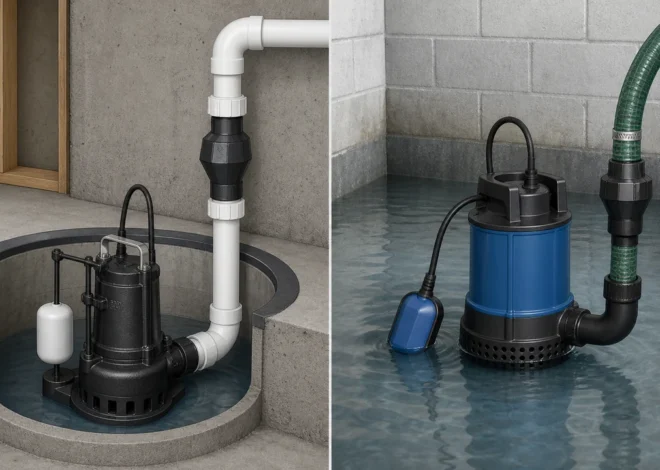
Only for a temporary, clean-water transfer if the product is rated for the liquid and the installation is supervised. A utility pump is not automatically a substitute for an automatic sump pump with a proper switch.
When should I replace a sump pump?
Replacement becomes reasonable when the motor, switch, housing, or power cord is unreliable and repair parts are not practical. Confirm that the replacement has the required flow at lift and fits the basin.
Bottom line: Follow the water through the basin, pump, check valve, and discharge. That simple path usually reveals whether the failure is electrical, mechanical, hydraulic, or simply a capacity problem.