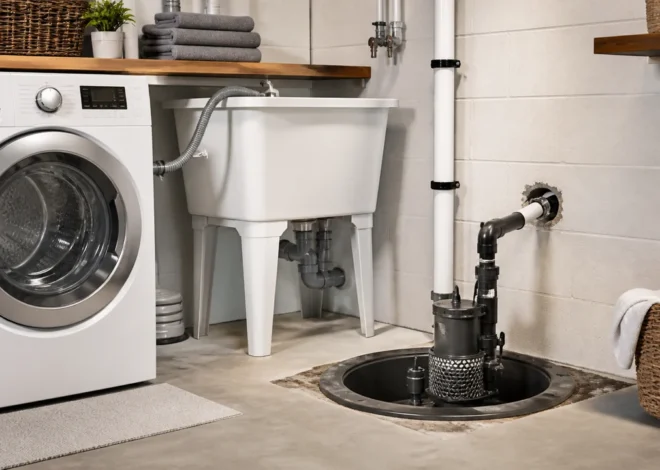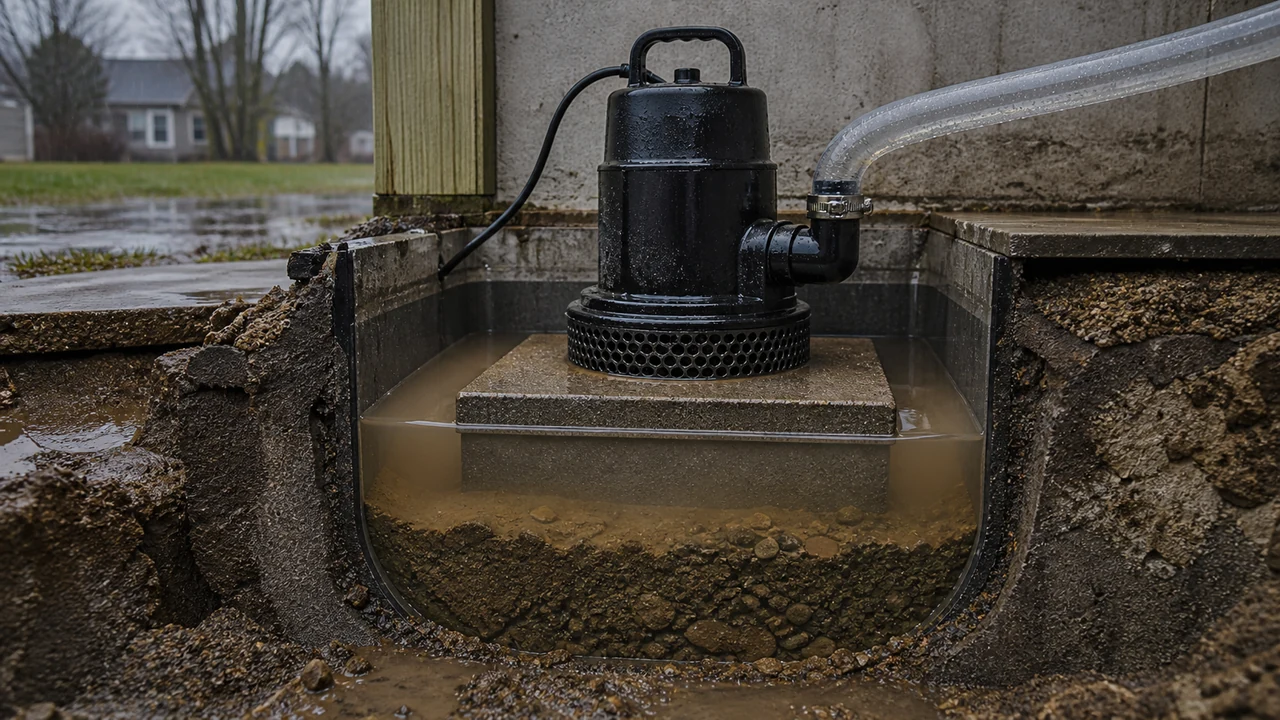
Best Sump Pump for Muddy Water: 7 Sediment-Tolerant Options Compared
A basement pump earns its keep during the worst inflow, not during a quiet bucket test with the discharge wide open. The phrase “a sump pump for muddy water” is therefore easy to misread if the buyer starts with an open-flow number instead of delivered flow at the discharge head. This is a groundwater basin, and the pumping head, basin size, inflow rate, discharge pipe, and switch clearance determine whether the motor can do the job reliably.
WAYNE CDU980E leads this comparison because it offers a higher-capacity primary sump option for demanding inflow. Zoeller M53 is here for compact residential sump basins and routine groundwater, a genuinely different set of conditions. Inflow, head, pipe friction, and float clearance decide whether the basement stays protected.
The comparison stays within the sump pump category and keeps the recommendation tied to the installation. These are specification-led recommendations, not claims of hands-on testing. Neighboring pump categories remain separate when they call for different equipment.
Quick Answer: Size the Sump Pump at Its Working Head
WAYNE CDU980E is the best overall choice for buyers seeking a sump pump for muddy water when the project involves deep or high-inflow residential sump basins. It offers a higher-capacity primary sump option for demanding inflow, and it is described as 1 HP, 120V submersible sump-pump format with 1-1/2-inch discharge. Zoeller M53 is the better fit for compact residential sump basins and routine groundwater, while Zoeller M98 is aimed at higher-flow sump pits and demanding residential drainage.
Comparison Table
| Model | Best use | Useful specification | Main check |
|---|---|---|---|
| WAYNE CDU980E | deep or high-inflow residential sump basins | 1 HP, 120V submersible sump-pump format with 1-1/2-inch discharge | A larger pump must be matched to the discharge pipe and check valve. |
| Zoeller M53 | compact residential sump basins and routine groundwater | 1/3 HP, 115V cast-iron sump-pump format with a 1-1/2-inch discharge | The pump is less forgiving of a high discharge head than a larger-capacity model. |
| Zoeller M98 | higher-flow sump pits and demanding residential drainage | 1/2 HP, 115V submersible pump with a 1-1/2-inch discharge and high-flow sump/effluent class | The extra capacity should be balanced against the basin volume and switch settings. |
| Liberty 257 | a durable residential sump basin | 1/3 HP, 115V cast-iron sump-pump format with 1-1/2-inch discharge | The pump is less forgiving of a high discharge head than a larger-capacity model. |
| Liberty 237 | a smaller fixed basement or crawl-space pit | 1/3 HP, 115V residential sump-pump format | A high water table or long vertical discharge may require a stronger curve. |
| Superior Pump 92341 | a conventional basin with limited float clearance | 1/3 HP cast-iron sump pump, 1-1/2-inch discharge, vertical switch, 3/8-inch solids handling | The vertical switch needs a clean, unobstructed path in the pit. |
| Little Giant 6EC | sump drainage and lighter effluent service | 1/3 HP, 115V pump with 1-1/2-inch discharge, 53 GPM at 5 feet, 28-foot shutoff class | It is not suitable for every solids-bearing sewage application. |
Best for High Inflow: WAYNE CDU980E

Unlike a generic pump, WAYNE CDU980E is built around deep or high-inflow residential sump basins. The combination of a higher-capacity primary sump option for demanding inflow and 1 HP, 120V submersible sump-pump format with 1-1/2-inch discharge explains why it belongs in this particular comparison.
The numbers become useful only after the basin, check valve, electrical circuit, and discharge can accept the capacity. For a groundwater basin, inflow, head, pipe friction, and float clearance decide whether the basement stays protected.
WAYNE CDU980E is worth considering for deep or high-inflow residential sump basins. Keep these two practical limits in view: A larger pump must be matched to the discharge pipe and check valve. Its capacity is unnecessary for a small, low-inflow pit and can increase cycling if the basin is undersized.
Pros
- The 1 HP class gives it room for higher inflow and longer discharge routes.
- A submersible motor keeps the operating unit below the waterline in the basin.
- The 1-1/2-inch outlet matches common residential sump plumbing.
- It gives a high-water-table comparison a more substantial option than a small utility pump.
Cons
- A larger pump must be matched to the discharge pipe and check valve.
- Its capacity is unnecessary for a small, low-inflow pit and can increase cycling if the basin is undersized.
Bottom line: The product’s strongest case is deep or high-inflow residential sump basins, not every nearby job. Its practical compromise is this: A larger pump must be matched to the discharge pipe and check valve.
Check the current price and availability
Best Conventional Sump: Zoeller M53
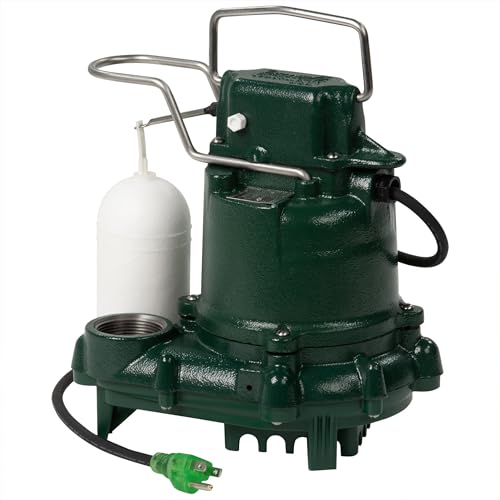
Zoeller M53 is best understood through its intended job. It is meant for compact residential sump basins and routine groundwater, with a widely used mid-capacity sump format with a compact footprint and 1/3 HP, 115V cast-iron sump-pump format with a 1-1/2-inch discharge defining the useful operating range.
The numbers become useful only after the pit has room for the float and the discharge is protected from backflow. For a groundwater basin, inflow, head, pipe friction, and float clearance decide whether the basement stays protected.
For compact residential sump basins and routine groundwater, this model offers a clear path when the installation matches. Pay particular attention to this limitation: A float and basin with restricted clearance can cause nuisance cycling.
Pros
- The cast-iron construction is suited to a fixed sump installation.
- The 1/3 HP size fits many ordinary residential pits without jumping to a high-capacity motor.
- The 1-1/2-inch discharge fits common sump plumbing layouts.
- The model is a true sump-pump choice rather than a clean-water fountain or transfer pump.
Cons
- The pump is less forgiving of a high discharge head than a larger-capacity model.
- A float and basin with restricted clearance can cause nuisance cycling.
Bottom line: Buy Zoeller M53 for compact residential sump basins and routine groundwater, not as a general replacement. The practical constraint is this: A float and basin with restricted clearance can cause nuisance cycling.
Check the current price and availability
Best for Higher Flow: Zoeller M98

On a project involving higher-flow sump pits and demanding residential drainage, Zoeller M98 deserves attention for a concrete reason. It is listed as 1/2 HP, 115V submersible pump with a 1-1/2-inch discharge and high-flow sump/effluent class and brings more flow capacity than a typical 1/3 HP sump choice to that role.
Use Zoeller M98 only when the basin, discharge, and circuit are sized for the higher current and flow. Its advantage appears in a groundwater basin, because inflow, head, pipe friction, and float clearance decide whether the basement stays protected.
If higher-flow sump pits and demanding residential drainage describes your project, Zoeller M98 has a credible case. It becomes less attractive when this limitation applies: The extra capacity should be balanced against the basin volume and switch settings.
Pros
- The 1/2 HP motor gives a flooded-basement installation a stronger high-inflow alternative.
- Its submersible design keeps the motor in the basin and the working area compact.
- The 1-1/2-inch discharge fits a familiar residential pipe size.
- It can serve as a bridge between a conventional sump pump and a heavier wastewater pump.
Cons
- The extra capacity should be balanced against the basin volume and switch settings.
- Its solids and liquid limits are narrower than those of a sewage-rated pump.
Bottom line: The recommendation holds for higher-flow sump pits and demanding residential drainage. It becomes less convincing when this limitation matters: The extra capacity should be balanced against the basin volume and switch settings.
Check the current price and availability
Best Cast-Iron Alternative: Liberty 257
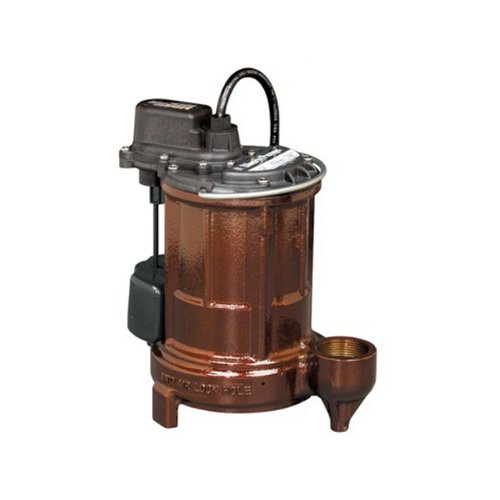
Unlike a generic pump, Liberty 257 is built around a durable residential sump basin. The combination of a compact Liberty cast-iron option for fixed basement drainage and 1/3 HP, 115V cast-iron sump-pump format with 1-1/2-inch discharge explains why it belongs in this particular comparison.
The numbers become useful only after the switch movement and discharge fittings match the existing basin. For a groundwater basin, inflow, head, pipe friction, and float clearance decide whether the basement stays protected.
The product suits a durable residential sump basin, but it is not a universal pump. Buyers should allow for these two tradeoffs: The pump is less forgiving of a high discharge head than a larger-capacity model. The basin and float need clearances that match the Liberty switch arrangement.
Pros
- The cast-iron body is appropriate for a permanent sump installation.
- The 1/3 HP rating keeps it in the common residential capacity range.
- The model gives the comparison a Liberty alternative to Zoeller and Wayne designs.
- Its conventional discharge makes replacement planning easier when the existing pipe is compatible.
Cons
- The pump is less forgiving of a high discharge head than a larger-capacity model.
- The basin and float need clearances that match the Liberty switch arrangement.
Bottom line: Liberty 257 is best reserved for a durable residential sump basin. One practical point to budget for is The basin and float need clearances that match the Liberty switch arrangement.
Check the current price and availability
Best Compact Liberty Option: Liberty 237

Liberty 237 is best understood through its intended job. It is meant for a smaller fixed basement or crawl-space pit, with a compact Liberty sump choice for ordinary groundwater protection and 1/3 HP, 115V residential sump-pump format defining the useful operating range.
The numbers become useful only after the pit has enough room for the float and the discharge route is not unusually high. For a groundwater basin, inflow, head, pipe friction, and float clearance decide whether the basement stays protected.
Its strongest use is a smaller fixed basement or crawl-space pit. The tradeoff is concrete: A high water table or long vertical discharge may require a stronger curve. A second point to allow for is The switch needs a basin with enough room for reliable start and stop levels.
Pros
- The 1/3 HP class suits routine groundwater without defaulting to a large motor.
- The fixed submersible format keeps priming out of the installation.
- It provides a second Liberty design for buyers comparing switch and footprint details.
- The product belongs to the sump category rather than the utility or condensate category.
Cons
- A high water table or long vertical discharge may require a stronger curve.
- The switch needs a basin with enough room for reliable start and stop levels.
Bottom line: As a match for a smaller fixed basement or crawl-space pit, Liberty 237 is a reasonable pick. The detail that can change the decision is this: A high water table or long vertical discharge may require a stronger curve.
Check the current price and availability
Best Vertical-Switch Option: Superior Pump 92341
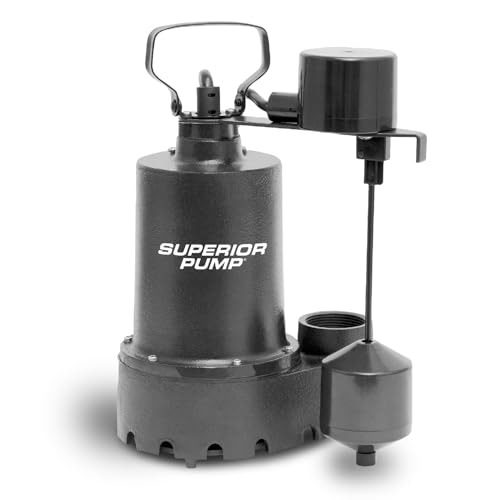
On a project involving a conventional basin with limited float clearance, Superior Pump 92341 deserves attention for a concrete reason. It is listed as 1/3 HP cast-iron sump pump, 1-1/2-inch discharge, vertical switch, 3/8-inch solids handling and brings a vertical-switch sump design with a published 25-foot class lift to that role.
Use Superior Pump 92341 only when the basin supports a side discharge and the vertical switch can move freely. Its advantage appears in a groundwater basin, because inflow, head, pipe friction, and float clearance decide whether the basement stays protected.
For a conventional basin with limited float clearance, Superior Pump 92341 is a sound candidate when the rest of the system matches. The main limitation is this: The vertical switch needs a clean, unobstructed path in the pit.
Pros
- The vertical switch is useful where a tethered float would be awkward.
- The cast-iron body and stainless impeller suit repeated basement service.
- The published 3/8-inch solids handling is useful for ordinary groundwater grit.
- The manufacturer publishes a performance curve that can be checked against the discharge head.
Cons
- The vertical switch needs a clean, unobstructed path in the pit.
- The 1/3 HP size is not a substitute for a high-head or sewage pump.
Bottom line: If a conventional basin with limited float clearance is your situation, Superior Pump 92341 is worth considering. Keep this tradeoff in view: The 1/3 HP size is not a substitute for a high-head or sewage pump.
Check the current price and availability
Best for Sump and Light Effluent: Little Giant 6EC

Unlike a generic pump, Little Giant 6EC is built around sump drainage and lighter effluent service. The combination of a continuous-duty pump with a useful published operating point and 1/3 HP, 115V pump with 1-1/2-inch discharge, 53 GPM at 5 feet, 28-foot shutoff class explains why it belongs in this particular comparison.
The numbers become useful only after the basin and liquid remain within the manufacturer-specified temperature and solids limits. For a groundwater basin, inflow, head, pipe friction, and float clearance decide whether the basement stays protected.
Little Giant 6EC is worth considering for sump drainage and lighter effluent service. Keep these two practical limits in view: It is not suitable for every solids-bearing sewage application. The float, basin, and check valve still need room for reliable operation.
Pros
- The published 53 GPM at 5 feet gives a more useful reference than an open-flow headline alone.
- The continuous-duty format suits a pump that may cycle regularly in a wet basement.
- The 1/2-inch semi-solids class is more forgiving than a clean-water utility pump.
- The model covers sump work while also showing where effluent service begins to differ.
Cons
- It is not suitable for every solids-bearing sewage application.
- The float, basin, and check valve still need room for reliable operation.
Bottom line: Little Giant 6EC is a sensible purchase for sump drainage and lighter effluent service when the route and controls are already defined. The main qualification is this: It is not suitable for every solids-bearing sewage application.
Check the current price and availability
How to Choose the Right Sump Pump
Check the discharge pipe
The pump, check valve, and pipe should be treated as one hydraulic path. Reducing a large outlet too early can erase the capacity you paid for. Write the result down before comparing product specifications.
Account for storm inflow
High water tables and heavy rain can overwhelm a low-capacity pump. Compare the likely inflow with the pump’s usable flow, not the open-flow headline.
Add backup and alarms
A high-water alarm, battery backup, or second pump can be worthwhile where a failure would damage finished space. Keep every control accessible.
Measure total dynamic head
Add the vertical rise to the outlet and the friction from pipe, elbows, check valves, and fittings. Choose using the delivered curve at that head.
Match the basin and switch
A tethered float needs room to swing. A vertical switch needs a clear vertical path. An undersized pit can cause cycling regardless of motor size.
A sump-capacity check
The pump must deliver more flow at the full discharge head than the basin receives during the design storm. For example, a 20 GPM inflow requires more than 20 GPM at the pipe outlet, not 20 GPM at open discharge.
Before Installing in the Basin
When you need a sump pump for muddy water, make the final decision with the pumping head, basin size, inflow rate, discharge pipe, and switch clearance written down. The pump has to work in the water path that will exist after the hose, filter, valve, basin, or control is connected.
WAYNE CDU980E and Little Giant 6EC are deliberately different: the first is aimed at deep or high-inflow residential sump basins, while the second suits sump drainage and lighter effluent service. That difference is more useful than comparing their motor labels.
Test the float, check valve, alarm, and backup plan as a set. A reliable pump is only one part of basement protection.
Frequently Asked Questions
How do I size a sump pump?
Use the inflow rate and the pump’s delivered flow at the full discharge head. Horsepower alone is not enough.
Can a sump pump handle muddy water?
Only within its stated solids limits. Heavy grit can wear an impeller and clog the switch or check valve.
Can I use a sump pump for sewage?
No. A conventional sump pump is not automatically rated for toilet solids or sanitary wastewater.
What basin size does a sump pump need?
The basin must fit the pump and allow the switch to move through its on and off levels without obstruction. The curve must be read at the full discharge height, including the check valve.
Why does a sump pump cycle rapidly?
A small basin, missing or leaking check valve, short discharge, or a faulty switch can cause short cycling. A high-water alarm or backup can be worthwhile when the basement is finished.
Is a bigger sump pump always better?
No. Oversizing can increase cycling and may overwhelm the pipe or check valve. Match the pump to the water and discharge system.
Final recommendation: For buyers who need a sump pump for muddy water, WAYNE CDU980E is the best overall choice when the project involves deep or high-inflow residential sump basins. Zoeller M53 is the more appropriate alternative for compact residential sump basins and routine groundwater, while Zoeller M98 addresses higher-flow sump pits and demanding residential drainage. The final decision should be based on the pumping head, basin size, inflow rate, discharge pipe, and switch clearance.