Booster Pump for Garden Hose: 7 Practical Options Compared
Imagine the system at its least forgiving moment: the hose is fully extended, the source is low, or the filter has accumulated resistance. That is when a buyer seeking a booster for a garden-hose line discovers whether the pump was sized for a real operating point. Start by recording inlet pressure, available inlet flow, target downstream pressure, controls, and pipe size.
Grundfos SCALA2 3-45 is aimed at a home with an existing supply but unstable or low downstream pressure, while Davey BT20-30 takes a different route with a compact downstream booster for a defined pressure shortfall. Both can be sensible, but only in the water path they were designed to serve.
The distinction matters more than a small difference in horsepower. Measure dynamic inlet pressure and install isolation and protection around the booster. The comparisons use manufacturer classifications, relevant technical documents, and the exact Amazon model attached to each affiliate link.
Quick Answer: Confirm the Inlet Before Chasing Pressure
Grundfos SCALA2 3-45 is the best overall choice for buyers seeking a booster for a garden-hose line when the project involves a home with an existing supply but unstable or low downstream pressure. It offers integrated pressure control for a domestic booster position, and it is described as integrated constant-pressure booster format. Davey BT20-30 is the better fit for a small home pressure-boosting job, while AQUASTRONG Smart 45 is aimed at a home or irrigation branch with a measured pressure gap.
Comparison Table
| Model | Best use | Booster type | Main check |
|---|---|---|---|
| Grundfos SCALA2 3-45 | a home with an existing supply but unstable or low downstream pressure | integrated constant-pressure booster format | It cannot create water when the inlet supply is empty or severely restricted. |
| Davey BT20-30 | a small home pressure-boosting job | compact domestic booster-pump format | The incoming supply must provide enough water for the pump to use. |
| AQUASTRONG Smart 45 | a home or irrigation branch with a measured pressure gap | automatic pressure-booster format for a downstream line | The installation may need additional isolation or control hardware around the booster. |
| K2 WPS07505PCK | a compact domestic pressure-support installation | home water-pressure booster format | It cannot overcome a dry, low-flow, or restricted inlet. |
| BACOENG P0097 | a fixed tank-fed or pressurized line | 0.6 HP, 110V booster format with 1-inch ports and automatic/dry-run features | It must receive water at the inlet and cannot lift from a deep well by itself. |
| GWANZI H600 PRO 1.2 HP Booster Pump | a home, apartment, or tank-fed line with a measured pressure shortfall | Amazon-listed 1.2 HP, 115/120V variable-speed whole-house booster with app-control features | The larger motor class can be excessive for a single fixture or a lightly loaded branch. |
| Pentair Simer 4075SS-01 | a home supplied by a marginal city-water or storage-tank line | 3/4 HP, 115V pressure-booster pump with 1-inch female NPT connections and a 40 PSI boost class | It must receive water at the inlet and cannot create well yield or tank volume. |
Best Constant-Pressure Platform: Grundfos SCALA2 3-45

For a home with an existing supply but unstable or low downstream pressure, Grundfos SCALA2 3-45 addresses a specific installation need. It offers integrated pressure control for a domestic booster position, and the listed configuration is integrated constant-pressure booster format.
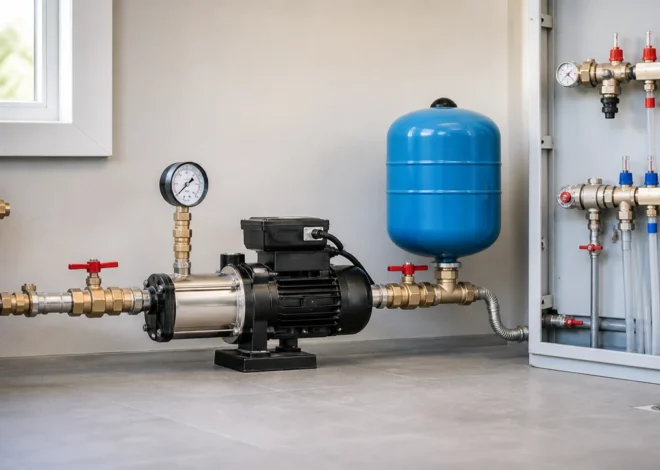
Start with the inlet can supply the pump and the plumbing has isolation and check-valve provisions. In this role, a booster can add pressure only when its inlet already has enough water and flow.
Its strongest use is a home with an existing supply but unstable or low downstream pressure. The tradeoff is concrete: It cannot create water when the inlet supply is empty or severely restricted. A second point to allow for is Controller settings and inlet protection need to match the plumbing.
Pros
- Integrated controls reduce the number of separate pressure components to coordinate.
- Constant-pressure behavior suits a home where demand changes from one fixture to another.
- The compact package can fit a domestic equipment area.
- The model belongs after an existing water source, not at the bottom of a well.
Cons
- It cannot create water when the inlet supply is empty or severely restricted.
- Controller settings and inlet protection need to match the plumbing.
Bottom line: If a home with an existing supply but unstable or low downstream pressure is your situation, Grundfos SCALA2 3-45 is worth considering. Keep this tradeoff in view: Controller settings and inlet protection need to match the plumbing.
Check the current price and availability
Best Compact Home Booster: Davey BT20-30

It is easy to confuse Davey BT20-30 with a nearby pump class when looking only at the title. Its actual application is a small home pressure-boosting job; the combination of a compact downstream booster for a defined pressure shortfall and compact domestic booster-pump format explains the difference.
Compatibility hinges on the inlet flow, target pressure, and electrical service are confirmed. Once the system is running, A booster can add pressure only when its inlet already has enough water and flow.
For a small home pressure-boosting job, Davey BT20-30 is a sound candidate when the rest of the system matches. The main limitation is this: The incoming supply must provide enough water for the pump to use.
Pros
- The compact format suits a localized pressure problem.
- Its downstream role is easier to isolate from the source pump.
- The compact domestic format fits a localized pressure problem without a larger commercial package.
- A short inlet and discharge route can make the installation tidy and serviceable.
Cons
- The incoming supply must provide enough water for the pump to use.
- Isolation, bypass, or pressure-control hardware may be needed around the pump.
Bottom line: Davey BT20-30 is a sensible purchase for a small home pressure-boosting job when the route and controls are already defined. The main qualification is this: The incoming supply must provide enough water for the pump to use.
Check the current price and availability
Best Automatic Marketplace Option: AQUASTRONG Smart 45

AQUASTRONG Smart 45 earns its place through a combination of application and hardware. It is intended for a home or irrigation branch with a measured pressure gap, uses automatic controls in a marketplace booster package, and is listed at automatic pressure-booster format for a downstream line.
Start with the inlet, pressure settings, connections, and dry-run behavior are confirmed. In this role, a booster can add pressure only when its inlet already has enough water and flow.
AQUASTRONG Smart 45 is worth considering for a home or irrigation branch with a measured pressure gap. Keep these two practical limits in view: The installation may need additional isolation or control hardware around the booster. A booster cannot correct a low-yield well or a blocked supply line.
Pros
- Automatic operation can reduce the need for a separate manual switch.
- The downstream format gives it a clear role after a healthy water source.
- Its pressure-focused design fits a downstream line where a source pump is already present.
- A compact package can be useful in a branch line or equipment room.
Cons
- The installation may need additional isolation or control hardware around the booster.
- A booster cannot correct a low-yield well or a blocked supply line.
Bottom line: AQUASTRONG Smart 45 makes sense for a home or irrigation branch with a measured pressure gap if the surrounding equipment accommodates it. One limitation remains: A booster cannot correct a low-yield well or a blocked supply line.
Check the current price and availability
Best Compact Pressure Support: K2 WPS07505PCK

For a compact domestic pressure-support installation, K2 WPS07505PCK addresses a specific installation need. It offers a smaller booster comparison for an existing pressurized line, and the listed configuration is home water-pressure booster format.
Start with the target pressure, inlet condition, and bypass or isolation valves are planned. In this role, a booster can add pressure only when its inlet already has enough water and flow.
For a compact domestic pressure-support installation, this model offers a clear path when the installation matches. Pay particular attention to this limitation: The pump needs a reliable inlet and should not be used to draw from an unpressurized deep source.
Pros
- The compact format can suit a confined mechanical area.
- The model is intended for downstream pressure support rather than source pumping.
- A defined pressure role makes it easier to compare with an existing system.
- Service valves can be planned around a straightforward booster layout.
Cons
- It cannot overcome a dry, low-flow, or restricted inlet.
- The pump needs a reliable inlet and should not be used to draw from an unpressurized deep source.
Bottom line: The product’s strongest case is a compact domestic pressure-support installation, not every nearby job. Its practical compromise is this: It cannot overcome a dry, low-flow, or restricted inlet.
Check the current price and availability
Best With Dry-Run Features: BACOENG P0097

It is easy to confuse BACOENG P0097 with a nearby pump class when looking only at the title. Its actual application is a fixed tank-fed or pressurized line; the combination of automatic restart and dry-run protection in a compact booster package and 0.6 HP, 110V booster format with 1-inch ports and automatic/dry-run features explains the difference.
Compatibility hinges on water reaches the inlet with enough flow and the 1-inch connections are supported. Once the system is running, A booster can add pressure only when its inlet already has enough water and flow.
If a fixed tank-fed or pressurized line describes your project, BACOENG P0097 has a credible case. It becomes less attractive when this limitation applies: It must receive water at the inlet and cannot lift from a deep well by itself.
Pros
- The 1-inch ports provide a clear plumbing starting point.
- Automatic restart can be useful on a fixed line when the source behavior is stable.
- The dry-run feature adds a useful protection point to a tank-fed installation.
- The 0.6 HP class is appropriate to compare with smaller domestic boosters.
Cons
- It must receive water at the inlet and cannot lift from a deep well by itself.
- The controller and inlet conditions limit where the booster can be installed.
Bottom line: Buy BACOENG P0097 for a fixed tank-fed or pressurized line, not as a general replacement. The practical constraint is this: The controller and inlet conditions limit where the booster can be installed.
Check the current price and availability
Best Variable-Speed Marketplace Option: GWANZI H600 PRO 1.2 HP Booster Pump
GWANZI H600 PRO 1.2 HP Booster Pump earns its place through a combination of application and hardware. It is intended for a home, apartment, or tank-fed line with a measured pressure shortfall, uses a variable-speed marketplace booster with wireless monitoring and an automatic pressure role, and is listed at Amazon-listed 1.2 HP, 115/120V variable-speed whole-house booster with app-control features.
Start with the inlet has a dependable water supply, the electrical circuit is sized for the motor, and the bypass/isolation layout is serviceable. In this role, a booster can add pressure only when its inlet already has enough water and flow.
The product suits a home, apartment, or tank-fed line with a measured pressure shortfall, but it is not a universal pump. Buyers should allow for these two tradeoffs: The larger motor class can be excessive for a single fixture or a lightly loaded branch. The advertised maximums are not a substitute for delivered pressure at the home’s simultaneous flow demand.
Pros
- Variable-speed control can respond more smoothly than a simple fixed-speed pressure switch when demand changes.
- The 1.2 HP and 115/120V listing gives higher-demand homes a distinct comparison point.
- The app-oriented control package offers more visibility than a basic manual booster.
- The listing identifies domestic pressure boosting, city mains, roof tanks, and clean-water transfer as intended applications.
Cons
- The larger motor class can be excessive for a single fixture or a lightly loaded branch.
- The advertised maximums are not a substitute for delivered pressure at the home’s simultaneous flow demand.
Bottom line: The recommendation holds for a home, apartment, or tank-fed line with a measured pressure shortfall. It becomes less convincing when this limitation matters: The larger motor class can be excessive for a single fixture or a lightly loaded branch.
Check the current price and availability
Best 115V Pressure Booster: Pentair Simer 4075SS-01

For a home supplied by a marginal city-water or storage-tank line, Pentair Simer 4075SS-01 addresses a specific installation need. It offers a single-stage pressure booster with published boost points across several flow rates, and the listed configuration is 3/4 HP, 115V pressure-booster pump with 1-inch female NPT connections and a 40 PSI boost class.
Start with the inlet pressure remains within the manufacturer limit and the discharge is isolated with suitable valves. In this role, a booster can add pressure only when its inlet already has enough water and flow.
Its strongest use is a home supplied by a marginal city-water or storage-tank line. The tradeoff is concrete: It must receive water at the inlet and cannot create well yield or tank volume. A second point to allow for is A fixed booster installation still needs isolation, check-valve, and pressure-control planning.
Pros
- The official pressure-booster classification keeps it in the downstream, not source-pump, category.
- The 115V supply suits many residential mechanical spaces.
- The 1-inch female NPT connections give the plumbing a defined connection size.
- Published boost points from low to higher flow are more useful than a single open-flow headline.
Cons
- It must receive water at the inlet and cannot create well yield or tank volume.
- A fixed booster installation still needs isolation, check-valve, and pressure-control planning.
Bottom line: Pentair Simer 4075SS-01 is best reserved for a home supplied by a marginal city-water or storage-tank line. One practical point to budget for is A fixed booster installation still needs isolation, check-valve, and pressure-control planning.
Check the current price and availability
Buying Guide: Water-pressure booster
Set the target pressure
Define the pressure required at the fixture or sprinkler zone while water is moving. Pressure at a closed outlet is not the same as working pressure.
Check controls
Automatic boosters may need pressure sensors, check valves, bypasses, or an accumulator. Match the controls to the source and demand. Write the result down before comparing product specifications.
Protect the pump
Use inlet filtration, isolation valves, and dry-run protection where appropriate. Make service access part of the pipe layout.
Do not confuse source and downstream pumps
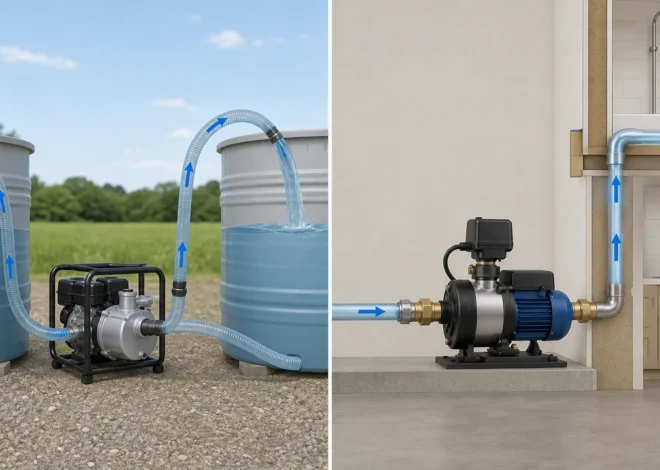
A well pump lifts water from the source. A booster only helps after water is available at its inlet.
Prove the inlet problem
Measure pressure and flow at the point where the booster will sit. A clogged filter, undersized pipe, or weak source can be the real cause.
A pressure-gap calculation
Required boost equals target dynamic pressure minus measured dynamic inlet pressure. If the fixture needs 45 PSI while the inlet falls to 25 PSI during flow, the system needs about 20 PSI of useful boost, provided inlet flow is adequate.
Before Adding Pressure
When you need a booster for a garden-hose line, make the final decision with inlet pressure, available inlet flow, target downstream pressure, controls, and pipe size written down. The pump has to work in the water path that will exist after the hose, filter, valve, basin, or control is connected.
Grundfos SCALA2 3-45 and Pentair Simer 4075SS-01 are deliberately different: the first is aimed at a home with an existing supply but unstable or low downstream pressure, while the second suits a home supplied by a marginal city-water or storage-tank line. That difference is more useful than comparing their motor labels.
Take the inlet reading while the fixture or zone is flowing. That distinguishes a pressure shortage from a blocked filter, valve, or undersized supply pipe.
Frequently Asked Questions
Can a booster run a sprinkler system?
It can help a measured pressure shortfall when the source and zone flow are adequate. Isolation valves make service easier and help protect the rest of the system.
When should I use a booster pump?
Use one when an existing supply reaches the inlet but pressure at a fixture or zone is insufficient. A booster cannot create water when the inlet is dry or restricted.
Can a booster pump draw from a well?
Only if the pump is designed for that inlet and the system provides adequate flow. A generic booster cannot replace a well pump.
Will a booster increase well yield?
No. It can raise downstream pressure but cannot make groundwater or a low-yield source produce more.
Why does a booster cycle rapidly?
Leaks, incorrect settings, a small accumulator, a blocked inlet, or mismatched controls can be involved. A booster cannot create water when the inlet is dry or restricted.
Do I need a pressure tank?
Some systems use one to smooth demand and reduce cycling. The size and pre-charge must match the pump.
Final recommendation: My overall pick is Grundfos SCALA2 3-45, but only for buyers whose system matches a home with an existing supply but unstable or low downstream pressure. Choose Davey BT20-30 when a small home pressure-boosting job is the real job, or AQUASTRONG Smart 45 when the installation calls for a home or irrigation branch with a measured pressure gap. Measure inlet pressure, available inlet flow, target downstream pressure, controls, and pipe size before committing to any of them.