Best Booster Pump for Home Water Pressure: 7 Options Compared
Pressure complaints are often described as “the pump is too small,” but the cause may be a restriction or a demand peak. This comparison begins with incoming flow and then considers the pressure each design can add.
Each option assumes a different source and control arrangement. Measure the pressure and flow at the inlet first, then check whether the downstream line and fixture can use the added pressure. A booster is most useful after water is already available at the inlet and the target fixture or branch has a defined pressure shortfall.
Quick Answer: Confirm the Inlet First
When choosing a booster pump for home water pressure, prove that water reaches the inlet with enough flow before considering pressure gain. Grundfos SCALA2 3-45 is an early comparison for whole-house constant pressure because its 115v, adjustable 22–58 psi, variable speed, integrated tank and controls is intended for a downstream position.
Booster Pump Options at a Glance
| Model | What it suits | Useful listed detail | Plan for |
|---|---|---|---|
| Grundfos SCALA2 3-45 | Whole-house constant pressure | 115V, adjustable 22–58 PSI, variable speed, integrated tank and controls | Incoming water must be sufficient. |
| Pentair Simer 4075SS-01 | Simple inline pressure boost | 3/4 HP, 115V, up to 40 PSI additional pressure, 1-inch connections | It is intended for transfer work, while sewage calls for a solids-rated design. |
| Davey BT20-30 | Higher-flow homes and multiple fixtures | 120V, up to 20 GPM, Torrium2 controller, stainless construction | Use the correct inlet protection and controls. |
| AQUASTRONG Smart 45 | Variable-speed pressure control at a lower entry point | 115V, adjustable 22–80 PSI, self-priming, published 1500 GPH and 150 ft head | It is worth confirming the current connection and control details. |
| K2 WPS07505PCK | Municipal boost or tankless shallow-well use | 3/4 HP, 115V, up to 10 GPM, 66 PSI maximum, 1-inch NPT | A quick check of the system pressure range is worthwhile. |
| BACOENG P0097 | Budget-conscious automatic boost | 0.6 HP, 110/115V, 1-inch ports, automatic restart and dry-run shutoff | It is intended to work after water reaches the inlet rather than lift from a deep source. |
| Goulds J5S | Shallow-well or tank-based pressure systems | 1/2 HP, 115/230V, 30–50 PSI pressure switch, regulator included | The installation should stay within its practical suction range. |
Best Constant-Pressure Option: Grundfos SCALA2 3-45

For this pressure-zone project, Grundfos SCALA2 3-45 offers a compact boosting route. Measure the weak point in the line before assuming the model’s pressure range will solve it.
Check the pressure range, controller, fittings, and electrical service as one set. Rapid cycling is often a system symptom rather than proof that the motor needs to be larger.
Pros
- Its connections and controls can be compared with the existing installation.
- The model can be judged at the required lift or pressure instead of by horsepower alone.
- The model has a clear role when the job is whole-house constant pressure.
- The pump’s place in the water path is straightforward to explain before purchase.
Cons
- Incoming water must be sufficient.
- Controller settings and plumbing need to be matched.
Bottom line: Grundfos SCALA2 3-45 is a sensible choice for whole-house constant pressure when its actual flow and pressure remain within the stated limits. The final decision should follow the water path, not the headline number.
Check the current price and availability
Best Compact Home Booster: Pentair Simer 4075SS-01

Consider Pentair Simer 4075SS-01 when the installation needs simple inline pressure boost. The 3/4 hp, 115v, up to 40 psi additional pressure, 1-inch connections should be checked against incoming flow, target pressure, fittings, and control behavior.
If the source is a tank or well, verify the source pump and storage behavior before adding a second pump. A downstream booster is most useful after the first stage is stable.
Pros
- Its format suits simple inline pressure boost when the surrounding system is matched to it.
- The important source, endpoint, and duty-cycle checks are visible before ordering.
- It gives buyers a defined alternative when the source or endpoint changes.
- Product details list 3/4 hp, 115v, up to 40 psi additional pressure, 1-inch connections, giving the model a concrete starting point.
Cons
- It is intended for transfer work, while sewage calls for a solids-rated design.
- Adding protection for the motor from dry running is a sensible precaution.
Bottom line: The short version: Pentair Simer 4075SS-01 fits a defined situation—simple inline pressure boost—provided the source, lift, water condition, and service requirements line up.
Check the current price and availability
Best for an Existing Open Line: Davey BT20-30

Davey BT20-30 makes sense when the upstream system is healthy and higher-flow homes and multiple fixtures is the remaining issue. Keep isolation and service access in the layout.
Measure pressure at the inlet and at the problem fixture or zone while water is flowing. That tells you whether the issue is a real downstream pressure gap or a restriction that should be repaired first.
Pros
- The model can be judged at the required lift or pressure instead of by horsepower alone.
- The model has a clear role when the job is higher-flow homes and multiple fixtures.
- The pump’s place in the water path is straightforward to explain before purchase.
- Its connections and controls can be compared with the existing installation.
Cons
- Use the correct inlet protection and controls.
- It cannot solve an empty or restricted supply.
Bottom line: Davey BT20-30 earns its place when the installation matches higher-flow homes and multiple fixtures. Verify the exact variant and the small connection or control details that determine whether the replacement will be straightforward.
Check the current price and availability
Best Automatic Pressure Alternative: AQUASTRONG Smart 45

The case for AQUASTRONG Smart 45 is a downstream one: variable-speed pressure control at a lower entry point, with the listed 115v, adjustable 22–80 psi, self-priming, published 1500 gph and 150 ft head to check against the line. It is not the first pump to reach for when the source itself is empty or restricted.
Keep the booster supplied with water and give it the isolation, check-valve, and filtration arrangement the manual requires. A pump cannot create flow that is missing at its inlet.
Pros
- The important source, endpoint, and duty-cycle checks are visible before ordering.
- It gives buyers a defined alternative when the source or endpoint changes.
- Product details list 115v, adjustable 22–80 psi, self-priming, published 1500 gph and 150 ft head, giving the model a concrete starting point.
- Its format suits variable-speed pressure control at a lower entry point when the surrounding system is matched to it.
Cons
- It is worth confirming the current connection and control details.
- The source should deliver adequate flow before the booster is added.
Bottom line: Consider AQUASTRONG Smart 45 when variable-speed pressure control at a lower entry point and the listed 115v, adjustable 22–80 psi, self-priming, published 1500 gph and 150 ft head match the measured installation. Check the current curve, listing, and controls before ordering.
Check the current price and availability
Best for a Small Pressure System: K2 WPS07505PCK

K2 WPS07505PCK belongs after the source, where it can serve municipal boost or tankless shallow-well use. Its 3/4 hp, 115v, up to 10 gpm, 66 psi maximum, 1-inch npt is useful only when adequate water is already present at the inlet.
Check the pressure range, controller, fittings, and electrical service as one set. Rapid cycling is often a system symptom rather than proof that the motor needs to be larger.
Pros
- The model has a clear role when the job is municipal boost or tankless shallow-well use.
- The pump’s place in the water path is straightforward to explain before purchase.
- Its connections and controls can be compared with the existing installation.
- The model can be judged at the required lift or pressure instead of by horsepower alone.
Cons
- A quick check of the system pressure range is worthwhile.
- A booster should be installed after source diagnosis.
Bottom line: K2 WPS07505PCK is a sensible choice for municipal boost or tankless shallow-well use when its actual flow and pressure remain within the stated limits. The final decision should follow the water path, not the headline number.
Check the current price and availability
Best for an Established Source: BACOENG P0097

For this pressure-zone project, BACOENG P0097 offers a compact boosting route. Measure the weak point in the line before assuming the model’s pressure range will solve it.
If the source is a tank or well, verify the source pump and storage behavior before adding a second pump. A downstream booster is most useful after the first stage is stable.
Pros
- It gives buyers a defined alternative when the source or endpoint changes.
- Product details list 0.6 hp, 110/115v, 1-inch ports, automatic restart and dry-run shutoff, giving the model a concrete starting point.
- Its format suits budget-conscious automatic boost when the surrounding system is matched to it.
- The important source, endpoint, and duty-cycle checks are visible before ordering.
Cons
- It is intended to work after water reaches the inlet rather than lift from a deep source.
- The incoming supply should be checked before the booster is installed.
Bottom line: The short version: BACOENG P0097 fits a defined situation—budget-conscious automatic boost—provided the source, lift, water condition, and service requirements line up.
Check the current price and availability
Best Downstream Comparison: Goulds J5S
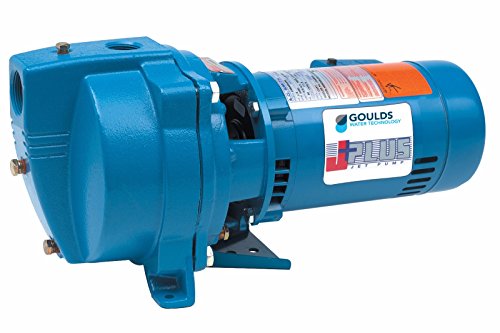
Consider Goulds J5S when the installation needs shallow-well or tank-based pressure systems. The 1/2 hp, 115/230v, 30–50 psi pressure switch, regulator included should be checked against incoming flow, target pressure, fittings, and control behavior.
Measure pressure at the inlet and at the problem fixture or zone while water is flowing. That tells you whether the issue is a real downstream pressure gap or a restriction that should be repaired first.
Pros
- The pump’s place in the water path is straightforward to explain before purchase.
- Its connections and controls can be compared with the existing installation.
- The model can be judged at the required lift or pressure instead of by horsepower alone.
- The model has a clear role when the job is shallow-well or tank-based pressure systems.
Cons
- The installation should stay within its practical suction range.
- The inlet must stay flooded and airtight.
Bottom line: Goulds J5S earns its place when the installation matches shallow-well or tank-based pressure systems. Verify the exact variant and the small connection or control details that determine whether the replacement will be straightforward.
Check the current price and availability
How to Choose a Booster Pump
Measure pressure and flow at the booster inlet and at the fixture or zone while it is operating. This establishes whether a downstream pressure increase is needed and whether the source can support it.
Match the pump to the source, controller, pressure range, check valve, filter, and endpoint. A booster should not be used to cover an empty tank, blocked filter, leaking line, or low-yield well.
Leave room for isolation and service, and check the electrical requirements. If the pump cycles quickly, investigate leaks, inlet supply, and accumulator settings before changing the motor.
Frequently Asked Questions
Can a booster pump draw from a tank?
Some can, but the inlet must provide enough flow and the controls must suit the tank, check valve, and pressure settings.
Is a booster better than a pressure tank?
They solve different problems. A tank stores water and reduces cycling; a booster adds pressure when the source can support the demand.
Why does a booster cycle rapidly?
Leaks, a small or missing accumulator, incorrect settings, a blocked inlet, and control mismatch are common possibilities.
Do I need a bypass or check valve?
Many systems benefit from isolation and check-valve planning to limit backflow and make service easier. Follow the instructions and local requirements.
Can a booster fix a low-yield well?
No. A booster cannot create groundwater. It can help a downstream zone only after the source pump and storage system are healthy.
When should I use a booster pump?
Use one when a real incoming supply exists but pressure at a fixture or zone is inadequate. Diagnose a restriction before adding a booster.
Final recommendation: A booster is worthwhile when the source is healthy and a measured downstream pressure gap remains. Fix restrictions first, then match the booster’s inlet, controls, pressure range, and electrical requirements to the line. The right booster improves a measured weak point without starving its inlet or causing rapid cycling.