Transfer Pump vs Booster Pump: A Practical Guide for Homeowners
These two labels often appear beside one another in search results, yet they describe different installation decisions. Transfer pump begins with source level, while booster pump is governed by dynamic inlet pressure. That distinction matters more than a shared horsepower or voltage figure.
Transfer pump and Booster pump are not interchangeable. Transfer pump is a pump used to move water or another approved liquid from one container, source, or low point to another; Booster pump is a downstream pump that raises pressure for water already available at its inlet. The better choice follows from the source, liquid, endpoint, and control problem rather than the word pump or the motor size.
The quick difference
| Question | Transfer pump | Booster pump |
|---|---|---|
| Primary job | a pump used to move water or another approved liquid from one container, source, or low point to another | a downstream pump that raises pressure for water already available at its inlet |
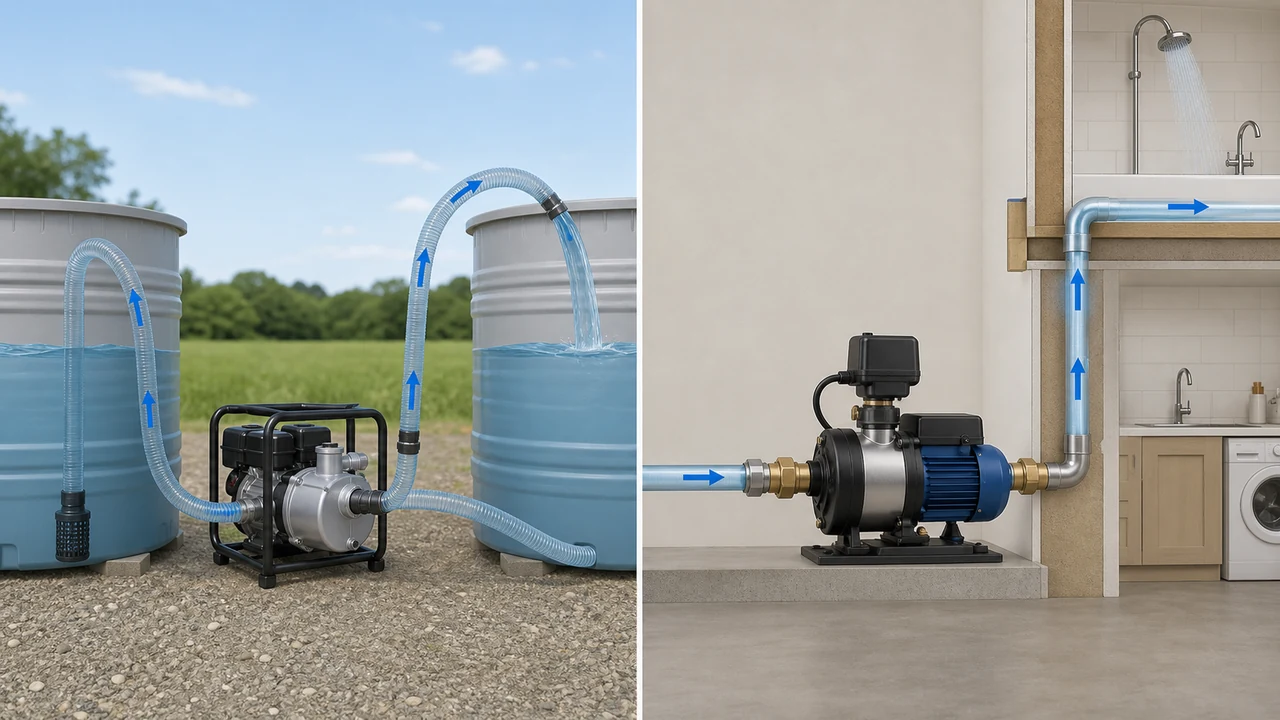
| How water moves | The pump draws from a source and pushes to an endpoint; it is selected around lift, hose friction, priming, and the liquid. | The booster adds head to incoming water; it cannot create well yield or replace a source pump. |
| Main sizing check | source level, suction or flooded inlet, total lift, hose size, liquid, and duty cycle | dynamic inlet pressure, available inlet flow, target pressure, pressure boost, controls, and maximum inlet pressure |
| Common wrong substitution | not a pressure tank, well pump, or sanitary wastewater pump merely because the outlet has a hose thread | not a well pump, pressure tank, or centrifugal category by itself |
How Transfer pump works
The pump draws from a source and pushes to an endpoint; it is selected around lift, hose friction, priming, and the liquid. Keep the intake submerged or primed as required, use the specified hose size, and secure the discharge before starting.
How Booster pump works
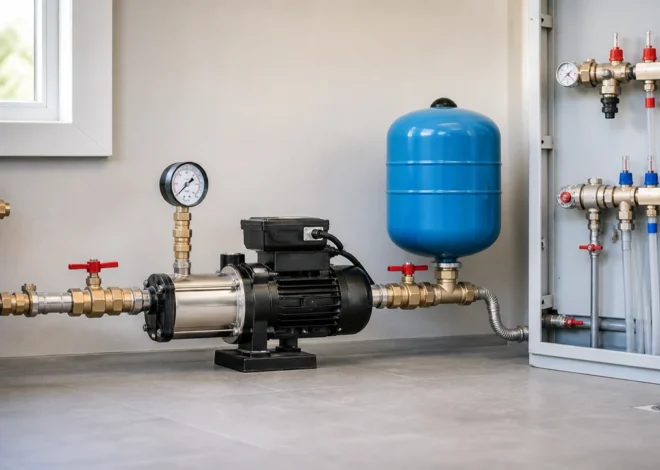
The booster adds head to incoming water; it cannot create well yield or replace a source pump. Inlet restrictions, bypass, check valves, sensors, tank or accumulator, and electrical controls are part of the system.
When Transfer pump is the better fit
Choose transfer pump when the project is governed by source level, suction or flooded inlet, total lift, hose size, liquid, and duty cycle. It belongs in that role because a pump used to move water or another approved liquid from one container, source, or low point to another. The important boundary is this: not a pressure tank, well pump, or sanitary wastewater pump merely because the outlet has a hose thread.
When Booster pump is the better fit
Choose a booster pump when the installation needs dynamic inlet pressure, available inlet flow, target pressure, pressure boost, controls, and maximum inlet pressure. If low household water pressure is the problem you are trying to solve, see our guide to the best booster pumps for home water pressure for suitable options. It is designed for a downstream pump that raises pressure for water already available at its inlet. Do not stretch it into the other role just because the listing shows a similar voltage or horsepower.
What the labels do not tell you
Neither category can be judged from its name, maximum GPM, or motor rating alone. For transfer pump, the decisive question is whether source level, suction or flooded inlet, total lift, hose size, liquid, and duty cycle are satisfied. For booster pump, the installation must be checked against dynamic inlet pressure, available inlet flow, target pressure, pressure boost, controls, and maximum inlet pressure. The liquid and the control arrangement can also rule out an otherwise similar-looking model.
A pump curve matters when both candidates are centrifugal designs, but it does not erase differences in solids handling, priming, basin use, pressure control, or source conditions. A model that works in one position in the water path may be unsuitable in the other.
Installation and maintenance are part of the difference
Keep the intake submerged or primed as required, use the specified hose size, and secure the discharge before starting.
Inlet restrictions, bypass, check valves, sensors, tank or accumulator, and electrical controls are part of the system.
Maintenance follows the liquid and the control system. Clean strainers, drain the pump before freezing, and do not leave a manual transfer pump unattended. Monitor pressure under demand, protect the inlet from starvation, and service controls as specified.
A comparison checklist for the actual site
| Question | Why it decides the choice | Evidence to collect |
|---|---|---|
| Where does water enter? | The source determines whether transfer pump or booster pump can start and operate correctly. | Source level, inlet pressure, or basin condition |
| Where must it go? | Elevation, endpoint pressure, pipe, and fittings determine the working head. | Lift, pipe length, diameter, valves, and outlet |
| What is in the liquid? | Solids, debris, chemicals, or clean water require different hydraulic ends and materials. | Liquid description and manufacturer limits |
| How is it controlled? | A float, switch, tank, controller, or manual start changes duty and cycling. | Control type, settings, alarm, and power |
| What happens if it stops? | The consequence determines whether automatic backup, alarm, or professional installation is needed. | Flooding, sanitation, irrigation, or equipment risk |
How the choice changes at the job site
When the source is the real problem
If the installation cannot provide source level, changing to booster pump may not solve anything. Likewise, a system with the conditions described by dynamic inlet pressure may be asking transfer pump to work outside its intended role. Check the source and inlet before comparing motor ratings.
When the endpoint changes the answer
The outlet, basin, filter, fixture, or feature determines how much head and control the system needs. A model can look adequate in an open container and fail after it is connected to the route. Compare both categories at the flow and head created by the actual endpoint.
When the consequences are different
A portable transfer mistake may waste time, while a wrong sewage, well, pressure, pool, or basement-drainage choice can create sanitation, flooding, or equipment risk. The higher the consequence of a missed cycle, the more important the basin, alarm, control, service access, and professional review become.
The details that settle the choice
Source and liquid
Start by identifying where the water enters and what it contains. Transfer pump is built around source level, suction or flooded inlet, total lift, hose size, liquid, and duty cycle, while booster pump is governed by dynamic inlet pressure, available inlet flow, target pressure, pressure boost, controls, and maximum inlet pressure. A clean-water transfer, a raw-wastewater basin, a pond, and a pressurized household line can require different materials, impellers, controls, and installation rules even when the products look similar.
Flow at the actual head
Write the desired flow beside the total head or dynamic pressure. Include vertical rise, pipe or hose friction, fittings, filters, valves, check valves, nozzles, and the pressure that must remain at the endpoint. Compare both categories at that point, not at a free-flow or shutoff endpoint.
Control and duty
Ask how transfer pump starts, stops, and handles an unattended cycle, then ask the same of booster pump. A float, pressure switch, tank, controller, timer, or manual plug can change the category decision. Continuous duty, short cycling, dry running, and service access are practical differences, not secondary details.
Connection does not equal compatibility
A threaded outlet, hose barb, or similar voltage can make two products appear interchangeable. It does not establish the required flow, pressure, solids passage, suction condition, temperature, or control logic. Adapters should follow the manufacturer’s arrangement rather than substitute for it.
A buyer’s short worksheet
| Question | Record before ordering |
|---|---|
| What is the pump’s job? | a pump used to move water or another approved liquid from one container, source, or low point to another or a downstream pump that raises pressure for water already available at its inlet |
| What enters the inlet? | Source level, pressure, liquid, debris, and temperature |
| What must leave the outlet? | Flow, elevation, pressure, pipe, filter, and endpoint |
| How often will it run? | Manual, intermittent, automatic, or continuous duty |
| What happens if it stops? | Flooding, sanitation, irrigation loss, equipment damage, or inconvenience |
When the two categories overlap
There may be a narrow situation in which either category can move the same clean water, especially for a supervised temporary transfer. That does not make them equal choices for a permanent system. Use the manufacturer’s approved application and the consequences of failure to decide whether the overlap is acceptable.
Three decision examples
- If the project involves source level, start with transfer pump.
- If the problem is better described by dynamic inlet pressure, investigate booster pump instead.
- If both descriptions seem possible, map the liquid, source, endpoint, lift, flow, pressure, and controls before buying anything.
Mistakes that create expensive substitutions
- Choosing by the label instead of the actual job: not a pressure tank, well pump, or sanitary wastewater pump merely because the outlet has a hose thread.
- Comparing maximum flow without head, pressure, elevation, or friction.
- Replacing a control, tank, valve, or pipe restriction with a different pump category.
- Assuming the installation can use booster pump just because its connection appears to match transfer pump.
- Ignoring the liquid, duty cycle, or service access until after the pump is installed.
How to make the final call
Write the required flow, head, source condition, liquid, voltage, controls, and duty on one page. If those facts point to source level, transfer pump is the more coherent choice. If they point to dynamic inlet pressure, choose booster pump and verify its curve and installation limits. When the job involves a well, sewage, a pressure vessel, pool suction, or buried piping, have the final design reviewed before ordering.
Frequently Asked Questions
Is transfer pump always more powerful than booster pump?
No. They are designed for different duties, and horsepower does not establish suitability. Compare the actual flow and head requirement with the equipment’s documentation.
Can I replace transfer pump with booster pump?
Only when the manufacturer supports the application and the source, liquid, controls, connections, and operating point match. Similar fittings do not prove interchangeability.
Which specification should I compare first?
Start with the job each category is meant to do, then compare flow at head, liquid limits, power, controls, and duty. For this pair, source level and dynamic inlet pressure are especially important.
Does a pump curve matter for both choices?
Yes. A free-flow or maximum-head number is incomplete. The useful comparison is the delivered flow at the total head and pressure the installation creates.
When should a professional review the choice?
Use qualified help for wells, sewage, pressure vessels, pool suction systems, buried force mains, and electrical controls. The classification decision can be made early, but the installation still needs a system review.
Bottom line: Transfer pump is the sensible answer when the system is defined by source level; Booster pump takes the lead when the installation is defined by dynamic inlet pressure. Keep the category boundary visible before comparing price or motor size.