Best Jet Pump for Shallow Well: 8 Surface Options Compared
The consequence of a wrong choice is different in every pump category. A drain pump can stop above the desired waterline, a jet pump can lose prime, a booster can starve at its inlet, and an aerator can lose air at depth. When buyers need a jet pump for a shallow well, the pumping water level, suction lift, pipe arrangement, pressure setting, and priming condition are the useful starting facts.
Red Lion RJS-100-PREM receives the overall recommendation for a fixed shallow-well pressure system or controlled fill line. WAYNE SWS100 is the stronger alternative for a measured shallow source with a conventional pressure system because its design addresses a different operating problem.
Each review explains the product’s intended job, the numbers that matter, and the tradeoffs in plain installation language. An airtight prime and the correct shallow or convertible arrangement are essential to delivered pressure. A pump earns its place here only when its published design fits the liquid, route, controls, and duty cycle in question.
Quick Answer: Identify the Suction Arrangement First
Red Lion RJS-100-PREM is the best overall choice for buyers seeking a jet pump for a shallow well when the project involves a fixed shallow-well pressure system or controlled fill line. It offers a useful published curve point for comparing working pressure, and it is described as 1 HP, 115/230V shallow-well jet pump, 23.2 GPM at 30 PSI and 16.8 GPM at 40 PSI at 5-foot lift. WAYNE SWS100 is the better fit for a measured shallow source with a conventional pressure system, while Goulds J10S is aimed at higher-demand shallow-well household or irrigation service.
Comparison Table
| Model | Best use | Pump arrangement | Main check |
|---|---|---|---|
| Red Lion RJS-100-PREM | a fixed shallow-well pressure system or controlled fill line | 1 HP, 115/230V shallow-well jet pump, 23.2 GPM at 30 PSI and 16.8 GPM at 40 PSI at 5-foot lift | The pumping water level must remain within a surface jet system’s practical suction range. |
| WAYNE SWS100 | a measured shallow source with a conventional pressure system | 1 HP dual-voltage shallow-well jet pump, 30/50 PSI, 0 to 25-foot class | The practical limit is the pumping water level, not the depth of the drilled hole. |
| Goulds J10S | higher-demand shallow-well household or irrigation service | 1 HP, 115/230V shallow-well jet-pump format with 30/50 PSI class controls | A larger motor cannot overcome a deep pumping water level. |
| Goulds J5S | a shallow source with an accessible pump-house location | surface shallow-well jet-pump format for a residential pressure system | Suction lift remains the governing limit even if the hose is long. |
| Superior Pump 94525 | a compact shallow-well pressure package | 1/2 HP dual-voltage shallow-well jet system, 20/40 PSI, 24-liter tank, 25-foot class | The integrated tank may not provide enough drawdown for a large household. |
| BURCAM 506227P | a compact shallow-well source with a built-in tank | 3/4 HP, 115/230V shallow-well pressure package with a 7-gallon tank and 25-foot suction class | The tank still needs room and an appropriate pre-charge setting. |
| Simer 3310P | a system that already uses a matched downhole ejector | 1 HP convertible shallow/deep jet-pump format with 115/230V service | Deep operation depends on the correct ejector kit and pipe arrangement. |
| VEVOR 3/4 HP Shallow-Well Jet Pump | a budget-conscious shallow source with a surface installation | 3/4 HP shallow-well jet-pump format | The surface suction range is narrower than that of a properly sized submersible system. |
Best Published Curve: Red Lion RJS-100-PREM

The reason to consider Red Lion RJS-100-PREM is narrow but practical: it offers a useful published curve point for comparing working pressure. That matters for a fixed shallow-well pressure system or controlled fill line, and the relevant product profile is 1 HP, 115/230V shallow-well jet pump, 23.2 GPM at 30 PSI and 16.8 GPM at 40 PSI at 5-foot lift.
One practical check comes first: the suction lift, pressure switch, tank, and foot valve are matched as one system. An airtight prime and the correct shallow or convertible arrangement are essential to delivered pressure.
For a fixed shallow-well pressure system or controlled fill line, this model offers a clear path when the installation matches. Pay particular attention to this limitation: A deeper installation needs a different ejector or submersible format.
Pros
- The published flow points show how output changes as pressure rises.
- Dual-voltage wiring supports more than one common residential electrical arrangement.
- The 1 HP surface format is accessible for service compared with a deep submersible.
- It is a good comparison for buyers who need both pressure and usable shallow-source flow.
Cons
- The pumping water level must remain within a surface jet system’s practical suction range.
- A deeper installation needs a different ejector or submersible format.
Bottom line: Buy Red Lion RJS-100-PREM for a fixed shallow-well pressure system or controlled fill line, not as a general replacement. The practical constraint is this: A deeper installation needs a different ejector or submersible format.
Check the current price and availability
Best Dual-Voltage Shallow Option: WAYNE SWS100

Among these options, WAYNE SWS100 is the one to examine for a measured shallow source with a conventional pressure system. Its advantage is dual-voltage service and a clearly defined shallow-well limit, not a generic promise of more water, pressure, or lift.
A buyer using WAYNE SWS100 should confirm the suction line is airtight, primed, and within the pumping-water-level limit. That matters because an airtight prime and the correct shallow or convertible arrangement are essential to delivered pressure.
If a measured shallow source with a conventional pressure system describes your project, WAYNE SWS100 has a credible case. It becomes less attractive when this limitation applies: The practical limit is the pumping water level, not the depth of the drilled hole.
Pros
- The 115/230V motor gives more wiring flexibility than a single-voltage surface pump.
- The 30/50 PSI switch arrangement fits a familiar residential pressure setup.
- The 0 to 25-foot application class makes the suction boundary visible before purchase.
- Its shallow-well classification prevents it from being confused with a deep submersible.
Cons
- The practical limit is the pumping water level, not the depth of the drilled hole.
- Flow changes with pressure and lift, so the 50 PSI performance point should not be treated as a constant output.
Bottom line: The recommendation holds for a measured shallow source with a conventional pressure system. It becomes less convincing when this limitation matters: The practical limit is the pumping water level, not the depth of the drilled hole.
Check the current price and availability
Best for Higher Shallow Demand: Goulds J10S

Goulds J10S belongs in this comparison because it is built for higher-demand shallow-well household or irrigation service. Its main differentiator is more motor capacity within the shallow-well category. The specification that matters for this job is 1 HP, 115/230V shallow-well jet-pump format with 30/50 PSI class controls.
A buyer using Goulds J10S should confirm the source remains shallow and the pressure tank is sized for the demand. That matters because an airtight prime and the correct shallow or convertible arrangement are essential to delivered pressure.
Goulds J10S is worth considering for higher-demand shallow-well household or irrigation service. Keep these two practical limits in view: A larger motor cannot overcome a deep pumping water level. The surface suction arrangement has less depth margin than a submersible pump.
Pros
- The 1 HP class gives it more room for a higher-demand shallow system.
- Dual-voltage wiring can simplify matching an existing service panel.
- The 30/50 PSI arrangement is familiar to many residential pressure systems.
- It separates a higher-demand shallow application from a small tank package.
Cons
- A larger motor cannot overcome a deep pumping water level.
- The surface suction arrangement has less depth margin than a submersible pump.
Bottom line: Goulds J10S is best reserved for higher-demand shallow-well household or irrigation service. One practical point to budget for is The surface suction arrangement has less depth margin than a submersible pump.
Check the current price and availability
Best Traditional Surface Option: Goulds J5S
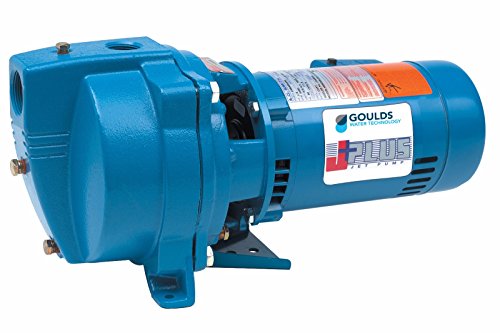
The reason to consider Goulds J5S is narrow but practical: it offers a traditional surface jet design from a long-established pump line. That matters for a shallow source with an accessible pump-house location, and the relevant product profile is surface shallow-well jet-pump format for a residential pressure system.
One practical check comes first: the inlet stays flooded and the pressure tank and switch are correctly set. An airtight prime and the correct shallow or convertible arrangement are essential to delivered pressure.
Its strongest use is a shallow source with an accessible pump-house location. The tradeoff is concrete: Suction lift remains the governing limit even if the hose is long. A second point to allow for is The replacement is less flexible when the existing system uses a different switch or motor configuration.
Pros
- The surface-mounted arrangement keeps the pump available for inspection.
- Its shallow-well role is appropriate for a source within suction limits.
- The established manufacturer line gives the buyer a documented alternative to marketplace-only models.
- A conventional pressure-tank layout can be planned around its inlet and discharge.
Cons
- Suction lift remains the governing limit even if the hose is long.
- The replacement is less flexible when the existing system uses a different switch or motor configuration.
Bottom line: As a match for a shallow source with an accessible pump-house location, Goulds J5S is a reasonable pick. The detail that can change the decision is this: Suction lift remains the governing limit even if the hose is long.
Check the current price and availability
Best Compact Tank System: Superior Pump 94525
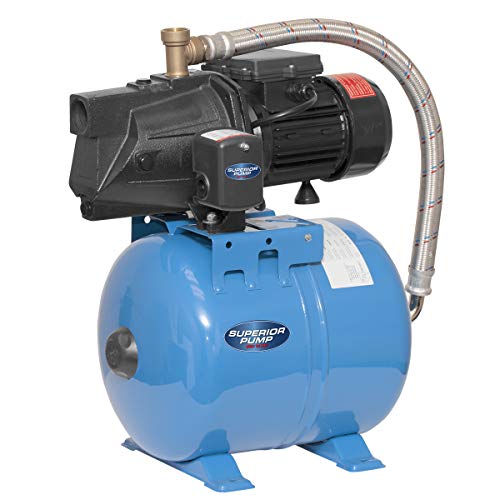
Among these options, Superior Pump 94525 is the one to examine for a compact shallow-well pressure package. Its advantage is a pre-assembled tank system rather than a bare pump, not a generic promise of more water, pressure, or lift.
A buyer using Superior Pump 94525 should confirm the shallow source and the included tank footprint fit the installation. That matters because an airtight prime and the correct shallow or convertible arrangement are essential to delivered pressure.
For a compact shallow-well pressure package, Superior Pump 94525 is a sound candidate when the rest of the system matches. The main limitation is this: The integrated tank may not provide enough drawdown for a large household.
Pros
- The pre-mounted pressure tank reduces the number of separate components to source.
- The dual-voltage motor can suit either 115V or 230V service when wired correctly.
- The 20/40 PSI setting is a clear starting point for a smaller pressure system.
- The 25-foot shallow-well class makes its intended source depth explicit.
Cons
- The integrated tank may not provide enough drawdown for a large household.
- It remains limited by shallow suction and needs an airtight inlet.
Bottom line: If a compact shallow-well pressure package is your situation, Superior Pump 94525 is worth considering. Keep this tradeoff in view: It remains limited by shallow suction and needs an airtight inlet.
Check the current price and availability
Best Larger Tank Package: BURCAM 506227P

BURCAM 506227P belongs in this comparison because it is built for a compact shallow-well source with a built-in tank. Its main differentiator is a larger tank package for a surface pressure installation. The specification that matters for this job is 3/4 HP, 115/230V shallow-well pressure package with a 7-gallon tank and 25-foot suction class.
A buyer using BURCAM 506227P should confirm the tank footprint, suction lift, and pressure settings are confirmed before installation. That matters because an airtight prime and the correct shallow or convertible arrangement are essential to delivered pressure.
The product suits a compact shallow-well source with a built-in tank, but it is not a universal pump. Buyers should allow for these two tradeoffs: The tank still needs room and an appropriate pre-charge setting. It cannot replace a submersible pump when the water level is beyond surface suction range.
Pros
- The integrated 7-gallon tank gives the list a distinct pressure-storage option.
- The 3/4 HP class sits between small tank packages and larger 1 HP systems.
- Dual-voltage service can match more than one common household setup.
- The shallow-well limitation is clear enough to prevent a deep-source mismatch.
Cons
- The tank still needs room and an appropriate pre-charge setting.
- It cannot replace a submersible pump when the water level is beyond surface suction range.
Bottom line: BURCAM 506227P is a sensible purchase for a compact shallow-well source with a built-in tank when the route and controls are already defined. The main qualification is this: The tank still needs room and an appropriate pre-charge setting.
Check the current price and availability
Best Convertible Jet: Simer 3310P
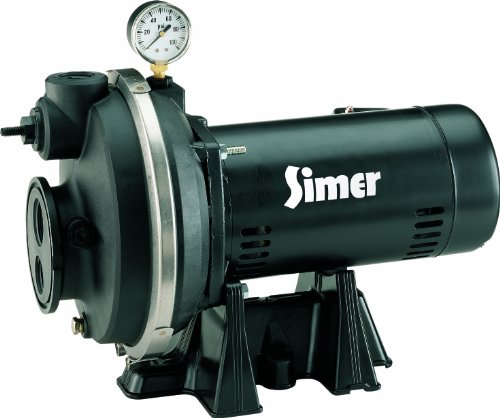
The reason to consider Simer 3310P is narrow but practical: it offers convertibility when the installation may need more than shallow suction. That matters for a system that already uses a matched downhole ejector, and the relevant product profile is 1 HP convertible shallow/deep jet-pump format with 115/230V service.
One practical check comes first: the ejector, two-pipe layout, priming ports, and pressure controls are all compatible. An airtight prime and the correct shallow or convertible arrangement are essential to delivered pressure.
For a system that already uses a matched downhole ejector, this model offers a clear path when the installation matches. Pay particular attention to this limitation: Two-pipe systems require more careful priming and air-leak diagnosis.
Pros
- The convertible format covers more than a basic one-pipe shallow setup.
- Dual-voltage service leaves room for different existing electrical arrangements.
- It gives deep-jet buyers an option without pretending the surface pump works alone at depth.
- The pump can be serviced at the surface while the ejector remains matched below.
Cons
- Deep operation depends on the correct ejector kit and pipe arrangement.
- Two-pipe systems require more careful priming and air-leak diagnosis.
Bottom line: Simer 3310P makes sense for a system that already uses a matched downhole ejector if the surrounding equipment accommodates it. One limitation remains: Two-pipe systems require more careful priming and air-leak diagnosis.
Check the current price and availability
Best Budget Shallow Option: VEVOR 3/4 HP Shallow-Well Jet Pump
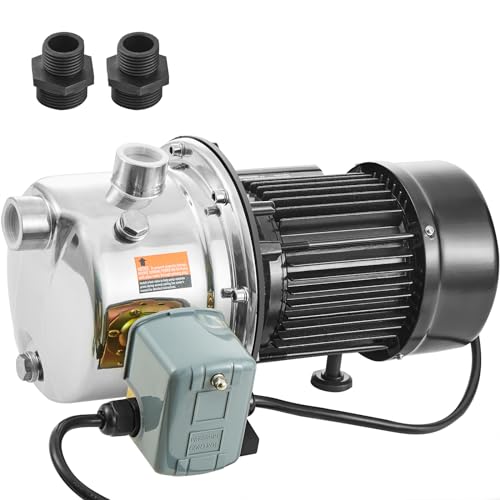
Among these options, VEVOR 3/4 HP Shallow-Well Jet Pump is the one to examine for a budget-conscious shallow source with a surface installation. Its advantage is a lower-cost surface option for comparison, not a generic promise of more water, pressure, or lift.
A buyer using VEVOR 3/4 HP Shallow-Well Jet Pump should confirm the current pressure switch, ports, and suction limit are verified. That matters because an airtight prime and the correct shallow or convertible arrangement are essential to delivered pressure.
If a budget-conscious shallow source with a surface installation describes your project, VEVOR 3/4 HP Shallow-Well Jet Pump has a credible case. It becomes less attractive when this limitation applies: The surface suction range is narrower than that of a properly sized submersible system.
Pros
- The 3/4 HP rating gives it a middle ground between compact and full-size surface pumps.
- A surface installation keeps the motor and priming point accessible.
- The product provides another comparison within the actual shallow-well category.
- Its value is easiest to judge against a measured lift and pressure requirement.
Cons
- The surface suction range is narrower than that of a properly sized submersible system.
- It still needs a properly primed, airtight suction line and cannot serve a deep source by itself.
Bottom line: The product’s strongest case is a budget-conscious shallow source with a surface installation, not every nearby job. Its practical compromise is this: The surface suction range is narrower than that of a properly sized submersible system.
Check the current price and availability
What Matters When Buying a jet pump
Measure the pumping water level
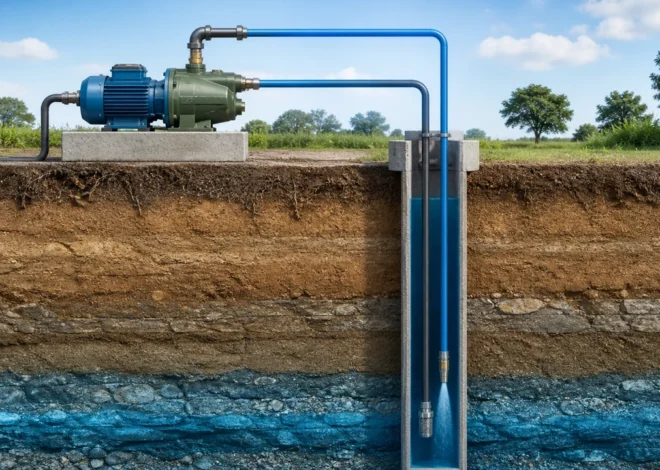
A well’s total depth does not tell you whether a surface pump can lift water. Use the lowest operating water level and keep the suction limit in view.
Choose one pipe or two
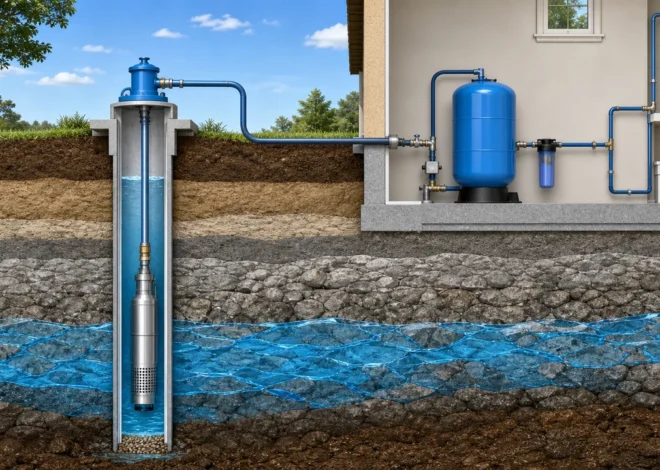
Shallow systems commonly keep the ejector at the surface. Deep convertible systems send a matched ejector down the well and need two pipes.
Protect the prime
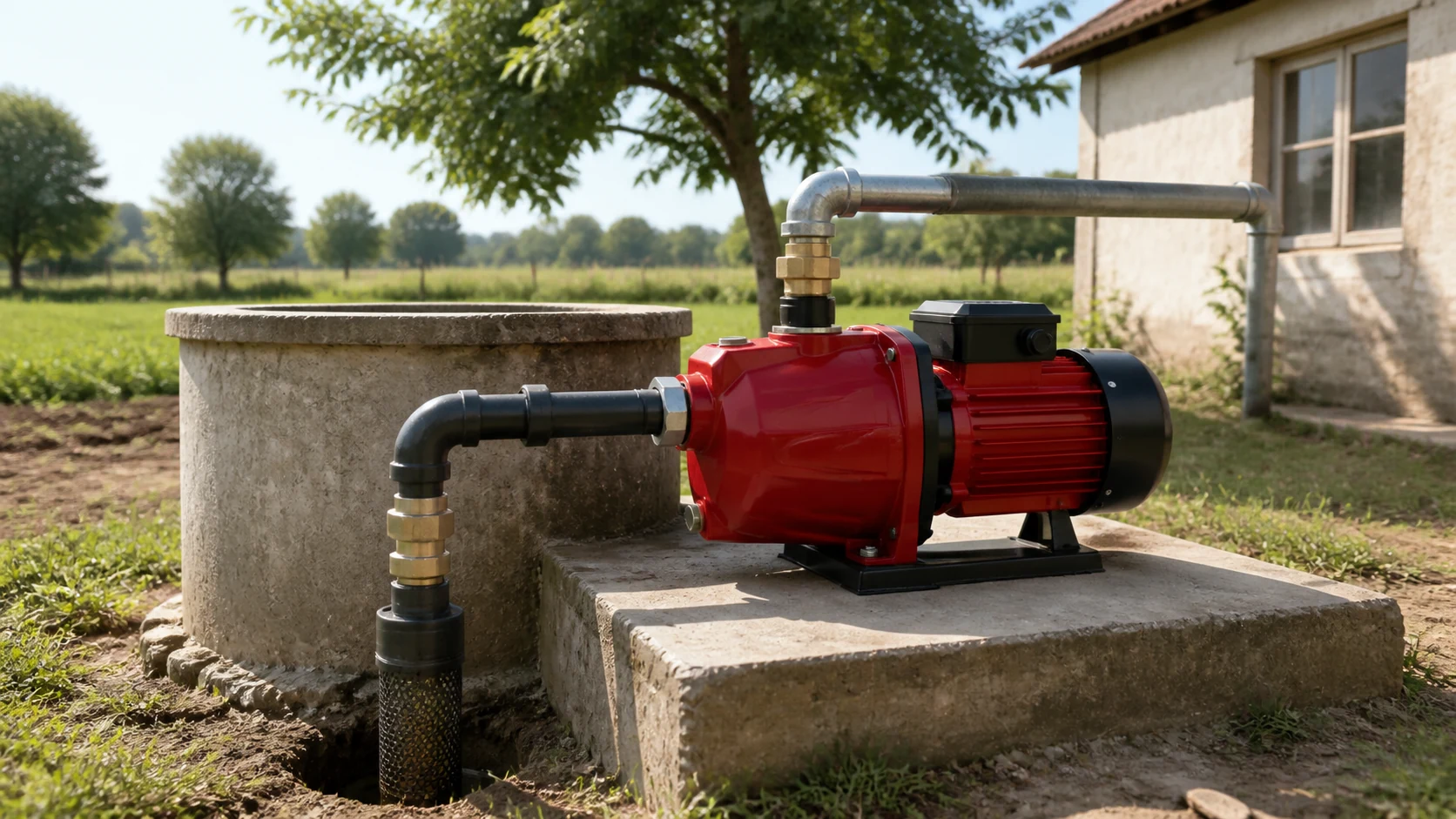
Use a sound foot valve, airtight fittings, and the correct priming procedure. A small air leak can look like an undersized motor.
Match the tank and pressure switch
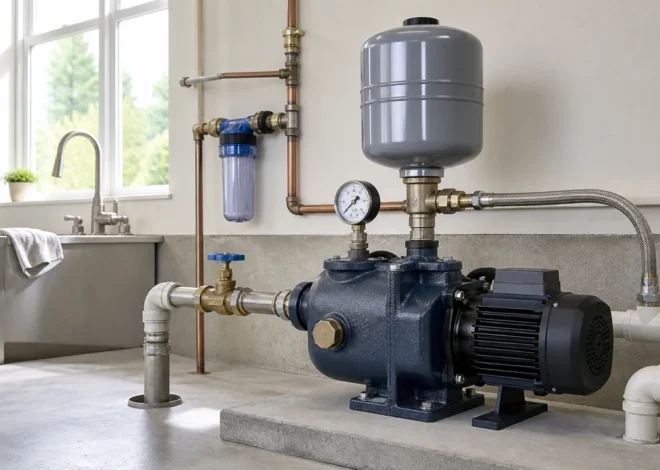
Tank size, pre-charge, cut-in, and cut-out settings affect cycling and usable pressure. Treat them as part of the pump selection.
Know when to choose a submersible
If the pumping level is beyond practical suction range or priming remains unreliable, a submersible format may be the more direct solution. Write the result down before comparing product specifications.
A suction-limit calculation
The pressure equivalent is useful here: 1 PSI is about 2.31 feet of water, but a surface jet pump also loses practical suction margin to friction and air leaks. Use the pumping level, not the drilled depth, when deciding whether the surface arrangement is viable.
Before Priming the Pump
When you need a jet pump for a shallow well, make the final decision with the pumping water level, suction lift, pipe arrangement, pressure setting, and priming condition written down. The pump has to work in the water path that will exist after the hose, filter, valve, basin, or control is connected.
The lead model emphasizes a useful published curve point for comparing working pressure; the final option emphasizes a lower-cost surface option for comparison. Use the pumping water level, suction lift, pipe arrangement, pressure setting, and priming condition to decide which tradeoff suits the job.
A pressure test that will not hold points to an inlet or foot-valve problem, not a need for a larger motor. Solve the prime before changing the pump.
Frequently Asked Questions
What is a convertible jet pump?
It is a surface pump that can work with a matched downhole ejector for deeper service, usually through a two-pipe arrangement. A deeper pumping level may require a matched ejector or submersible pump.
Why does a jet pump lose prime?
Air leaks, a bad foot valve, low water, poor priming, or a suction line that is too long or restrictive can be involved. Pressure-tank settings affect cycling and the water available between starts.
Does a jet pump need a pressure tank?
Many automatic residential systems use one to reduce cycling and store usable water. A sound foot valve and airtight suction line are essential to holding the prime.
Can a jet pump draw from a lake or cistern?
It can when the suction lift, intake screen, water quality, and priming arrangement are suitable. A deeper pumping level may require a matched ejector or submersible pump.
Is a jet pump better than a submersible?
Neither is universally better. Surface access favors a jet pump, while deeper sources often favor a submersible.
How deep can a shallow jet pump draw?
The practical limit is usually around the mid-20-foot range for the pumping water level, but the exact installation and curve control. A sound foot valve and airtight suction line are essential to holding the prime.
Final recommendation: For buyers who need a jet pump for a shallow well, Red Lion RJS-100-PREM is the best overall choice when the project involves a fixed shallow-well pressure system or controlled fill line. WAYNE SWS100 is the more appropriate alternative for a measured shallow source with a conventional pressure system, while Goulds J10S addresses higher-demand shallow-well household or irrigation service. The final decision should be based on the pumping water level, suction lift, pipe arrangement, pressure setting, and priming condition.