Best Pump for Well Water: 8 Residential Supply Options Compared
Free-flow ratings and maximum lift figures are useful only as first screens. When buyers need a pump for a well water, the system has to cope with the pumping water level, well yield, casing size, required flow, and total dynamic head, and each of those conditions can reduce the result at the outlet or diffuser.
Hallmark RapidFlo 1 HP is the best overall fit for a conventional 4-inch residential deep-well system because it offers a higher-capacity submersible choice for a productive source. Red Lion RL22G10-3W2V is the better answer for a deeper 4-inch well with an established 3-wire control system, where a different design matters more.
The product choice has to follow the category, not the largest horsepower label. Match the casing, cable, controls, tank, and destination cutoff before installation. These are specification-led recommendations, not claims of hands-on testing. Neighboring pump categories remain separate when they call for different equipment.
Quick Answer: Start With the Pumping Water Level
I would put Hallmark RapidFlo 1 HP first for a conventional 4-inch residential deep-well system. The combination of a higher-capacity submersible choice for a productive source and 1 HP deep-well submersible format with a 33 GPM and 207-foot class listing makes it a strong match for this search; Red Lion RL22G10-3W2V is more appropriate for a deeper 4-inch well with an established 3-wire control system, while WAYNE SWS100 is aimed at a measured shallow source with a conventional pressure system.
Comparison Table
| Model | Best use | Pump type and power | Main check |
|---|---|---|---|
| Hallmark RapidFlo 1 HP | a conventional 4-inch residential deep-well system | 1 HP deep-well submersible format with a 33 GPM and 207-foot class listing | The pump must be sized to the pumping water level and sustainable well yield. |
| Red Lion RL22G10-3W2V | a deeper 4-inch well with an established 3-wire control system | 1 HP, 230V, 3-wire deep-well format with a 22 GPM and 260-foot shutoff class | A high-head pump can draw a low-yield well down too quickly. |
| WAYNE SWS100 | a measured shallow source with a conventional pressure system | 1 HP dual-voltage shallow-well jet pump, 30/50 PSI, 0 to 25-foot class | The practical limit is the pumping water level, not the depth of the drilled hole. |
| Red Lion RJS-100-PREM | a fixed shallow-well pressure system or controlled fill line | 1 HP, 115/230V shallow-well jet pump, 23.2 GPM at 30 PSI and 16.8 GPM at 40 PSI at 5-foot lift | The pumping water level must remain within a surface jet system’s practical suction range. |
| Goulds J10S | higher-demand shallow-well household or irrigation service | 1 HP, 115/230V shallow-well jet-pump format with 30/50 PSI class controls | A larger motor cannot overcome a deep pumping water level. |
| Simer 3310P | a system that already uses a matched downhole ejector | 1 HP convertible shallow/deep jet-pump format with 115/230V service | Deep operation depends on the correct ejector kit and pipe arrangement. |
| Superior Pump 94525 | a compact shallow-well pressure package | 1/2 HP dual-voltage shallow-well jet system, 20/40 PSI, 24-liter tank, 25-foot class | The integrated tank may not provide enough drawdown for a large household. |
| Hallmark MA0343X-4 1/2 HP | moderate household demand from a compatible 4-inch well | 1/2 HP, 115V submersible well-pump format with a 25 GPM and 150-foot class listing | A long discharge route can require more head than the headline flow suggests. |
Best Higher-Demand Deep-Well Option: Hallmark RapidFlo 1 HP
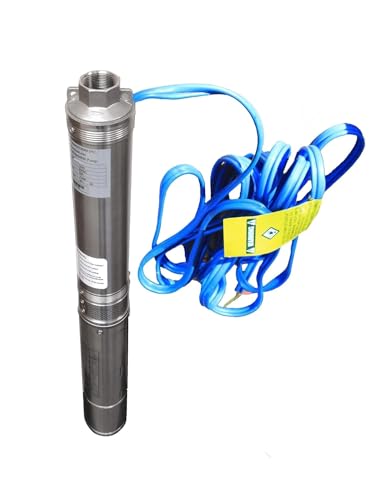
The reason to consider Hallmark RapidFlo 1 HP is narrow but practical: it offers a higher-capacity submersible choice for a productive source. That matters for a conventional 4-inch residential deep-well system, and the relevant product profile is 1 HP deep-well submersible format with a 33 GPM and 207-foot class listing.
A buyer using Hallmark RapidFlo 1 HP should confirm the casing, setting depth, cable, control box, and well yield are verified. That matters because the pumping water level and sustainable well yield set the useful operating range.
For a conventional 4-inch residential deep-well system, this model offers a clear path when the installation matches. Pay particular attention to this limitation: Casing clearance, cable, and controls need to match the exact installation.
Pros
- The submersible format avoids the surface suction limit of a shallow jet pump.
- The 1 HP class gives it a place in a higher-demand deep-well comparison.
- The 4-inch style is familiar for many residential well casings.
- The listed head class encourages a curve and yield check before installation.
Cons
- The pump must be sized to the pumping water level and sustainable well yield.
- Casing clearance, cable, and controls need to match the exact installation.
Bottom line: The product’s strongest case is a conventional 4-inch residential deep-well system, not every nearby job. Its practical compromise is this: The pump must be sized to the pumping water level and sustainable well yield.
Check the current price and availability
Best 3-Wire High-Head Option: Red Lion RL22G10-3W2V

Among these options, Red Lion RL22G10-3W2V is the one to examine for a deeper 4-inch well with an established 3-wire control system. Its advantage is a high-head 3-wire arrangement with a separate control box, not a generic promise of more water, pressure, or lift.
One practical check comes first: the control box, cable, casing, and pump curve are matched. The pumping water level and sustainable well yield set the useful operating range.
If a deeper 4-inch well with an established 3-wire control system describes your project, Red Lion RL22G10-3W2V has a credible case. It becomes less attractive when this limitation applies: A high-head pump can draw a low-yield well down too quickly.
Pros
- The 3-wire format gives serviceable control-box access at the surface.
- The 230V design is appropriate for a higher-head installation with suitable electrical service.
- The 260-foot shutoff class makes it relevant to deeper system calculations.
- A 22 GPM maximum class offers useful capacity when the well can sustain it.
Cons
- A high-head pump can draw a low-yield well down too quickly.
- The 3-wire control arrangement is not a drop-in match for every two-wire system.
Bottom line: Buy Red Lion RL22G10-3W2V for a deeper 4-inch well with an established 3-wire control system, not as a general replacement. The practical constraint is this: The 3-wire control arrangement is not a drop-in match for every two-wire system.
Check the current price and availability
Best Shallow-Well Option: WAYNE SWS100

WAYNE SWS100 belongs in this comparison because it is built for a measured shallow source with a conventional pressure system. Its main differentiator is dual-voltage service and a clearly defined shallow-well limit. The specification that matters for this job is 1 HP dual-voltage shallow-well jet pump, 30/50 PSI, 0 to 25-foot class.
One practical check comes first: the suction line is airtight, primed, and within the pumping-water-level limit. The pumping water level and sustainable well yield set the useful operating range.
WAYNE SWS100 is worth considering for a measured shallow source with a conventional pressure system. Keep these two practical limits in view: The practical limit is the pumping water level, not the depth of the drilled hole. Flow changes with pressure and lift, so the 50 PSI performance point should not be treated as a constant output.
Pros
- The 115/230V motor gives more wiring flexibility than a single-voltage surface pump.
- The 30/50 PSI switch arrangement fits a familiar residential pressure setup.
- The 0 to 25-foot application class makes the suction boundary visible before purchase.
- Its shallow-well classification prevents it from being confused with a deep submersible.
Cons
- The practical limit is the pumping water level, not the depth of the drilled hole.
- Flow changes with pressure and lift, so the 50 PSI performance point should not be treated as a constant output.
Bottom line: The recommendation holds for a measured shallow source with a conventional pressure system. It becomes less convincing when this limitation matters: The practical limit is the pumping water level, not the depth of the drilled hole.
Check the current price and availability
Best Published Shallow-Well Curve: Red Lion RJS-100-PREM

The reason to consider Red Lion RJS-100-PREM is narrow but practical: it offers a useful published curve point for comparing working pressure. That matters for a fixed shallow-well pressure system or controlled fill line, and the relevant product profile is 1 HP, 115/230V shallow-well jet pump, 23.2 GPM at 30 PSI and 16.8 GPM at 40 PSI at 5-foot lift.
A buyer using Red Lion RJS-100-PREM should confirm the suction lift, pressure switch, tank, and foot valve are matched as one system. That matters because the pumping water level and sustainable well yield set the useful operating range.
Its strongest use is a fixed shallow-well pressure system or controlled fill line. The tradeoff is concrete: The pumping water level must remain within a surface jet system’s practical suction range. A second point to allow for is A deeper installation needs a different ejector or submersible format.
Pros
- The published flow points show how output changes as pressure rises.
- Dual-voltage wiring supports more than one common residential electrical arrangement.
- The 1 HP surface format is accessible for service compared with a deep submersible.
- It is a good comparison for buyers who need both pressure and usable shallow-source flow.
Cons
- The pumping water level must remain within a surface jet system’s practical suction range.
- A deeper installation needs a different ejector or submersible format.
Bottom line: Red Lion RJS-100-PREM is best reserved for a fixed shallow-well pressure system or controlled fill line. One practical point to budget for is A deeper installation needs a different ejector or submersible format.
Check the current price and availability
Best for Higher Shallow Demand: Goulds J10S

Among these options, Goulds J10S is the one to examine for higher-demand shallow-well household or irrigation service. Its advantage is more motor capacity within the shallow-well category, not a generic promise of more water, pressure, or lift.
One practical check comes first: the source remains shallow and the pressure tank is sized for the demand. The pumping water level and sustainable well yield set the useful operating range.
For higher-demand shallow-well household or irrigation service, Goulds J10S is a sound candidate when the rest of the system matches. The main limitation is this: A larger motor cannot overcome a deep pumping water level.
Pros
- The 1 HP class gives it more room for a higher-demand shallow system.
- Dual-voltage wiring can simplify matching an existing service panel.
- The 30/50 PSI arrangement is familiar to many residential pressure systems.
- It separates a higher-demand shallow application from a small tank package.
Cons
- A larger motor cannot overcome a deep pumping water level.
- A deep installation may need separate controls, cable, or a control box.
Bottom line: As a match for higher-demand shallow-well household or irrigation service, Goulds J10S is a reasonable pick. The detail that can change the decision is this: A larger motor cannot overcome a deep pumping water level.
Check the current price and availability
Best Convertible Jet Option: Simer 3310P
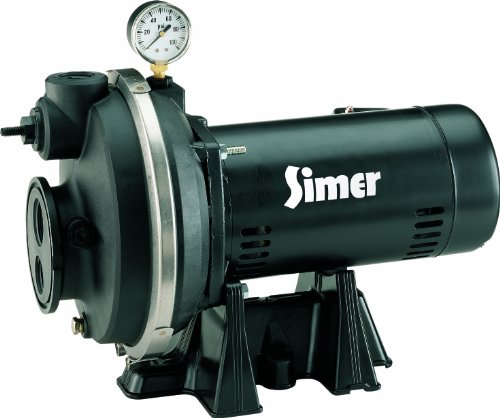
Simer 3310P belongs in this comparison because it is built for a system that already uses a matched downhole ejector. Its main differentiator is convertibility when the installation may need more than shallow suction. The specification that matters for this job is 1 HP convertible shallow/deep jet-pump format with 115/230V service.
One practical check comes first: the ejector, two-pipe layout, priming ports, and pressure controls are all compatible. The pumping water level and sustainable well yield set the useful operating range.
The product suits a system that already uses a matched downhole ejector, but it is not a universal pump. Buyers should allow for these two tradeoffs: Deep operation depends on the correct ejector kit and pipe arrangement. Two-pipe systems require more careful priming and air-leak diagnosis.
Pros
- The convertible format covers more than a basic one-pipe shallow setup.
- Dual-voltage service leaves room for different existing electrical arrangements.
- It gives deep-jet buyers an option without pretending the surface pump works alone at depth.
- The pump can be serviced at the surface while the ejector remains matched below.
Cons
- Deep operation depends on the correct ejector kit and pipe arrangement.
- Two-pipe systems require more careful priming and air-leak diagnosis.
Bottom line: If a system that already uses a matched downhole ejector is your situation, Simer 3310P is worth considering. Keep this tradeoff in view: Two-pipe systems require more careful priming and air-leak diagnosis.
Check the current price and availability
Best Compact Pressure Package: Superior Pump 94525
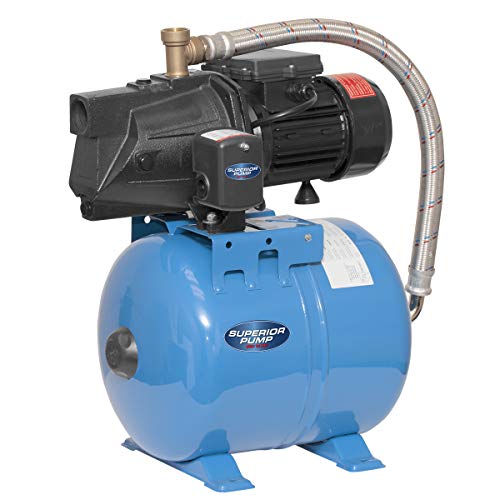
The reason to consider Superior Pump 94525 is narrow but practical: it offers a pre-assembled tank system rather than a bare pump. That matters for a compact shallow-well pressure package, and the relevant product profile is 1/2 HP dual-voltage shallow-well jet system, 20/40 PSI, 24-liter tank, 25-foot class.
A buyer using Superior Pump 94525 should confirm the shallow source and the included tank footprint fit the installation. That matters because the pumping water level and sustainable well yield set the useful operating range.
For a compact shallow-well pressure package, this model offers a clear path when the installation matches. Pay particular attention to this limitation: It remains limited by shallow suction and needs an airtight inlet.
Pros
- The pre-mounted pressure tank reduces the number of separate components to source.
- The dual-voltage motor can suit either 115V or 230V service when wired correctly.
- The 20/40 PSI setting is a clear starting point for a smaller pressure system.
- The 25-foot shallow-well class makes its intended source depth explicit.
Cons
- The integrated tank may not provide enough drawdown for a large household.
- It remains limited by shallow suction and needs an airtight inlet.
Bottom line: Superior Pump 94525 is a sensible purchase for a compact shallow-well pressure package when the route and controls are already defined. The main qualification is this: The integrated tank may not provide enough drawdown for a large household.
Check the current price and availability
Best Moderate-Demand Deep-Well Option: Hallmark MA0343X-4 1/2 HP
Among these options, Hallmark MA0343X-4 1/2 HP is the one to examine for moderate household demand from a compatible 4-inch well. Its advantage is a smaller motor and 115V service for a moderate source, not a generic promise of more water, pressure, or lift.
One practical check comes first: the casing, cable, setting depth, and controller match the selected model documentation. The pumping water level and sustainable well yield set the useful operating range.
If moderate household demand from a compatible 4-inch well describes your project, Hallmark MA0343X-4 1/2 HP has a credible case. It becomes less attractive when this limitation applies: A long discharge route can require more head than the headline flow suggests.
Pros
- The 1/2 HP format is useful when a full 1 HP pump would exceed the source need.
- 115V service can be convenient for a modest replacement installation.
- The submersible design works below the water level rather than by suction.
- Its moderate head class provides a useful counterpoint to high-head models.
Cons
- A long discharge route can require more head than the headline flow suggests.
- A long discharge route can use more head than the marketplace headline suggests.
Bottom line: Hallmark MA0343X-4 1/2 HP makes sense for moderate household demand from a compatible 4-inch well if the surrounding equipment accommodates it. One limitation remains: A long discharge route can use more head than the marketplace headline suggests.
Check the current price and availability
How to Choose the Right Deep-Well or Well Pump
Record standing and pumping levels
The static water depth is not the operating point. Measure or obtain the pumping level under demand so the pump is not selected from the well’s total drilled depth alone.
Check the well yield
A pump can be too large for the water source. Compare the required flow with recovery rate, storage, and the pressure tank or destination controls. In this well pump category, this is where a plausible-looking product can become the wrong tool.
Match casing and wiring
Confirm casing diameter, pump length, cable, two-wire or three-wire design, control box, and voltage before ordering a replacement.
Calculate total dynamic head
Add lift from the pumping level, pressure required at the tank or fixtures, and pipe friction. Use the manufacturer curve at that combined point.
Protect the destination
A pond, storage tank, or irrigation line needs a float, pressure switch, timer, or other positive cutoff so the well pump does not run indefinitely.
A well-pump sizing line
Use total dynamic head as pumping-level lift plus pressure head plus pipe loss. Since 1 PSI equals about 2.31 feet of water, a 40 PSI delivery target represents roughly 92 feet of pressure head before elevation and friction are added.
The Last Well-System Check
When you need a pump for a well water, make the final decision with the pumping water level, well yield, casing size, required flow, and total dynamic head written down. The pump has to work in the water path that will exist after the hose, filter, valve, basin, or control is connected.
The lead model emphasizes a higher-capacity submersible choice for a productive source; the final option emphasizes a smaller motor and 115V service for a moderate source. Use the pumping water level, well yield, casing size, required flow, and total dynamic head to decide which tradeoff suits the job.
Keep the well report, pump curve, cable plan, and pressure controls together. That record is more useful than selecting from horsepower alone.
Frequently Asked Questions
How deep can a submersible well pump go?
Use the setting depth and the curve, not a maximum-depth title alone. Cable, casing, water level, and head all affect the design.
Do I need a pressure tank?
Most automatic residential well systems use a tank and switch, but the size and pre-charge must match the pump and demand. A qualified installer is wise when the pump, wiring, or drinking-water system is being changed.
When should a well professional size the pump?
Use qualified help when the yield is uncertain, wiring changes, the pump is deep, or the system supplies drinking water. The pumping level can be much different from the well’s static or drilled depth.
Can a well pump fill a pond?
Yes, if the well yield and pump curve support the route and a float or other level cutoff prevents overflow. Storage and pressure controls help prevent the pump from chasing short demand peaks.
Is horsepower enough to choose a well pump?
No. Use the pump curve at the required head and confirm that the well can recover at the selected flow.
What is the difference between a well pump and a booster pump?
A well pump lifts water from the source. A booster receives water that already reaches its inlet and raises pressure downstream.
Can a deep-well pump run a house and irrigation?
It can when the source yield, storage, pressure, and peak flow are all adequate. Schedule irrigation so it does not starve household demand.
Final recommendation: My overall pick is Hallmark RapidFlo 1 HP, but only for buyers whose system matches a conventional 4-inch residential deep-well system. Choose Red Lion RL22G10-3W2V when a deeper 4-inch well with an established 3-wire control system is the real job, or WAYNE SWS100 when the installation calls for a measured shallow source with a conventional pressure system. Measure the pumping water level, well yield, casing size, required flow, and total dynamic head before committing to any of them.