Best Sewage Pump with Grinder: 7 Wastewater Options Compared
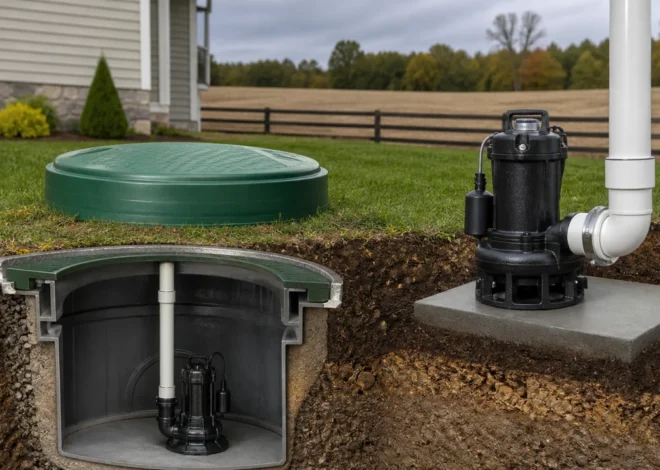
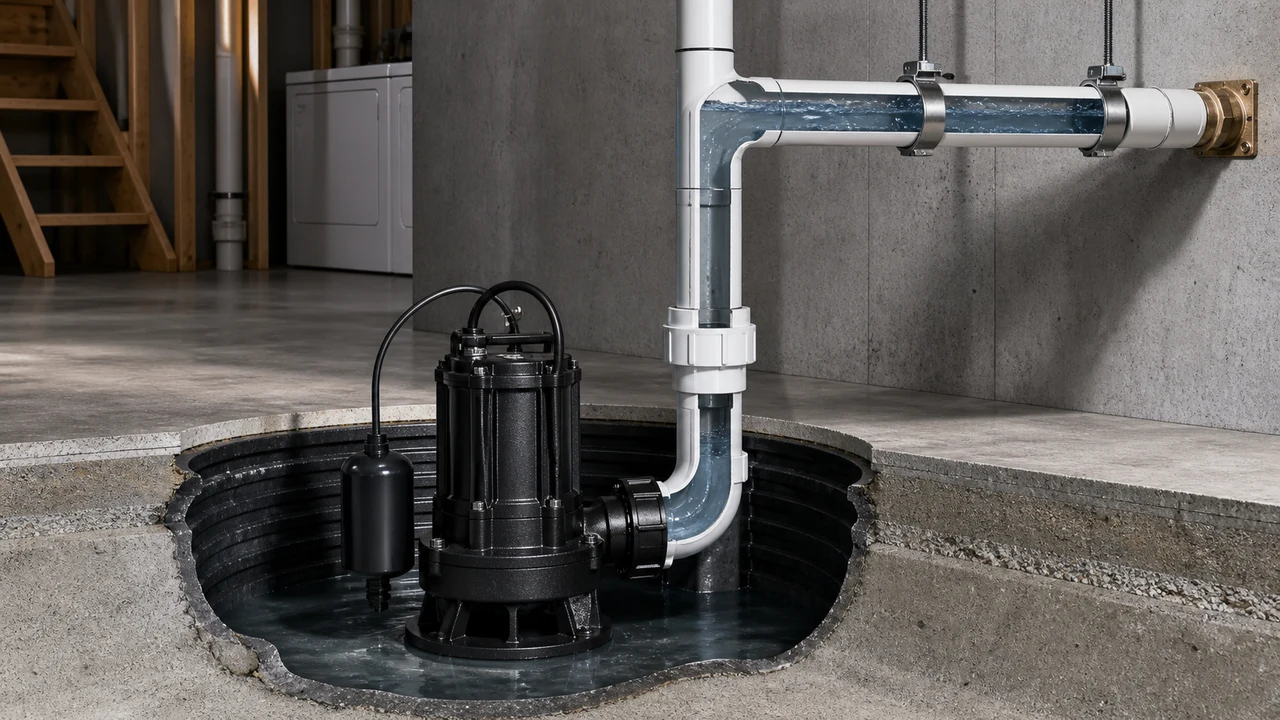
A grinder earns its place when the discharge layout needs macerated solids. More horsepower alone does not make a conventional ejector a grinder. The phrase “a sewage pump with grinder” is therefore easy to misread if the buyer starts with the biggest motor before deciding whether a cutter is required. This is a pressurized wastewater route, and fixture layout, force-main size, solids, lift, basin, alarm, and electrical service determine whether the motor can do the job reliably.
Liberty PRG101A ProVore leads this comparison because it offers a true residential grinder with V-Slice cutter technology. Liberty Pumps LCU-20ST is here for a basement bathroom or fixture layout designed for maceration, a genuinely different set of conditions. Force-main size, solids, lift, basin, alarm, and cutter access determine whether grinding is justified.
The comparison stays within the grinder or macerating pump category and keeps the recommendation tied to the installation. The important evidence is the intended duty, useful operating data, control method, and installation limits, not a marketplace headline by itself.
Quick Answer: Use a Grinder Only When the Discharge Design Calls for It
I would put Liberty PRG101A ProVore first for a basement sewage system requiring macerated discharge. The combination of a true residential grinder with V-Slice cutter technology and 1 HP residential grinder-pump format with 2-inch discharge class makes it a strong match for this search; Liberty Pumps LCU-20ST is more appropriate for a basement bathroom or fixture layout designed for maceration, while SFA SANIFLO Saniaccess 3 is aimed at an above-floor or basement bathroom without a conventional floor basin.
Comparison Table
| Model | Best use | Pump format | Main check |
|---|---|---|---|
| Liberty PRG101A ProVore | a basement sewage system requiring macerated discharge | 1 HP residential grinder-pump format with 2-inch discharge class | A grinder is unnecessary when a conventional 2-inch gravity-fed ejector will do. |
| Liberty Pumps LCU-20ST | a basement bathroom or fixture layout designed for maceration | macerating sewage-pump format for a difficult discharge route | It must be used only with compatible fixtures and the intended discharge layout. |
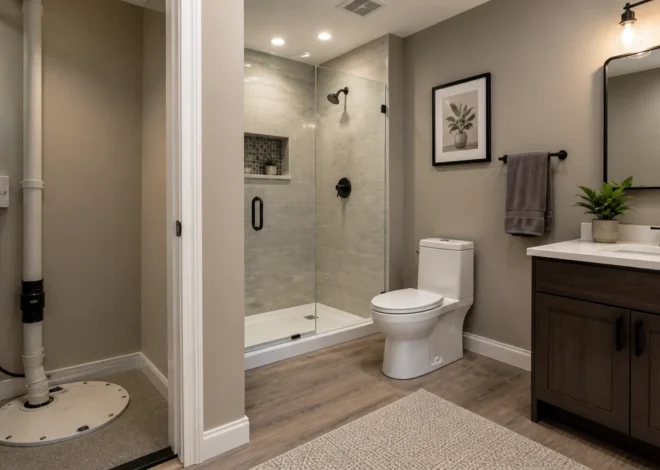
| SFA SANIFLO Saniaccess 3 | an above-floor or basement bathroom without a conventional floor basin | macerating bathroom-pump format for a rear-discharge toilet system | The compatible toilet and fixture layout are not optional details. |
| Saniflo SaniPLUS | a full bathroom installed where gravity drainage is unavailable | macerating upflush toilet-system format | The bathroom fixture restrictions must be followed exactly. |
| AQUASTRONG SEP100CA-LV | a residential sewage basin needing a budget grinder option | 1 HP, 115V sewage grinder pump with 2-inch discharge and 40-foot class lift | The grinder still requires a properly designed basin, discharge, alarm, and service arrangement. |
| HUNKING 1 HP Sewage Grinder Pump | a residential basin where a grinder is genuinely required | 1 HP automatic grinder-pump format with approximately 40-foot class lift | The cutter adds service needs compared with a conventional sewage ejector. |
| SCHRAIBERPUMP 1 HP Sewage Grinder | a force-main sewage application with suitable 230V service | 1 HP, 230V grinder-pump format with stainless and cast-iron construction | 230V service and control-panel requirements narrow its audience. |
Best Residential Grinder: Liberty PRG101A ProVore

Among these options, Liberty PRG101A ProVore is the one to examine for a basement sewage system requiring macerated discharge. Its advantage is a true residential grinder with V-Slice cutter technology, not a generic promise of more water, pressure, or lift.
One practical check comes first: the force-main diameter, basin, vent, alarm, and electrical circuit are designed for a grinder. Force-main size, solids, lift, basin, alarm, and cutter access determine whether grinding is justified.
If a basement sewage system requiring macerated discharge describes your project, Liberty PRG101A ProVore has a credible case. It becomes less attractive when this limitation applies: A grinder is unnecessary when a conventional 2-inch gravity-fed ejector will do.
Pros
- The cutter is designed for difficult solids that can jam ordinary sewage impellers.
- The 1 HP class provides a defined residential grinder category.
- The 2-inch discharge can serve a compact force-main layout when specified.
- The ProVore platform gives a documented alternative to generic sewage pumps.
Cons
- A grinder is unnecessary when a conventional 2-inch gravity-fed ejector will do.
- The basin and force-main installation need more specialized planning than a standard sump.
Bottom line: Liberty PRG101A ProVore is a sensible purchase for a basement sewage system requiring macerated discharge when the route and controls are already defined. The main qualification is this: A grinder is unnecessary when a conventional 2-inch gravity-fed ejector will do.
Check the current price and availability
Best Macerating Basin Option: Liberty Pumps LCU-20ST

Liberty Pumps LCU-20ST belongs in this comparison because it is built for a basement bathroom or fixture layout designed for maceration. Its main differentiator is a macerating unit rather than a conventional basin sewage pump. The specification that matters for this job is macerating sewage-pump format for a difficult discharge route.
One practical check comes first: the approved fixtures, small discharge line, check valve, and venting follow the manual. Force-main size, solids, lift, basin, alarm, and cutter access determine whether grinding is justified.
Liberty Pumps LCU-20ST is worth considering for a basement bathroom or fixture layout designed for maceration. Keep these two practical limits in view: It must be used only with compatible fixtures and the intended discharge layout. Service access and clean-water flushing requirements matter more than with a simple ejector.
Pros
- Maceration reduces waste to a slurry for an approved small-diameter discharge.
- The format can help when cutting a full gravity drain is impractical.
- The compact unit gives a basement remodel a different installation path.
- The product has a clearly defined macerating role rather than being mislabeled as a sump.
Cons
- It must be used only with compatible fixtures and the intended discharge layout.
- Service access and clean-water flushing requirements matter more than with a simple ejector.
Bottom line: Liberty Pumps LCU-20ST makes sense for a basement bathroom or fixture layout designed for maceration if the surrounding equipment accommodates it. One limitation remains: Service access and clean-water flushing requirements matter more than with a simple ejector.
Check the current price and availability
Best Service-Access Macerator: SFA SANIFLO Saniaccess 3

The reason to consider SFA SANIFLO Saniaccess 3 is narrow but practical: it offers an accessible macerating path for a full bathroom layout. That matters for an above-floor or basement bathroom without a conventional floor basin, and the relevant product profile is macerating bathroom-pump format for a rear-discharge toilet system.
A buyer using SFA SANIFLO Saniaccess 3 should confirm the toilet, optional sink or shower, discharge lift, and venting match the instructions. That matters because force-main size, solids, lift, basin, alarm, and cutter access determine whether grinding is justified.
Its strongest use is an above-floor or basement bathroom without a conventional floor basin. The tradeoff is concrete: The compatible toilet and fixture layout are not optional details. A second point to allow for is It is not a conventional grinder pump for a large underground force-main basin.
Pros
- The macerating format can avoid breaking up a finished floor.
- A service-access panel makes maintenance planning part of the installation.
- The unit is designed for bathroom fixtures rather than open utility water.
- It gives remodelers a distinct alternative to a basin-mounted sewage ejector.
Cons
- The compatible toilet and fixture layout are not optional details.
- It is not a conventional grinder pump for a large underground force-main basin.
Bottom line: The product’s strongest case is an above-floor or basement bathroom without a conventional floor basin, not every nearby job. Its practical compromise is this: The compatible toilet and fixture layout are not optional details.
Check the current price and availability
Best Full-Bathroom Upflush System: Saniflo SaniPLUS
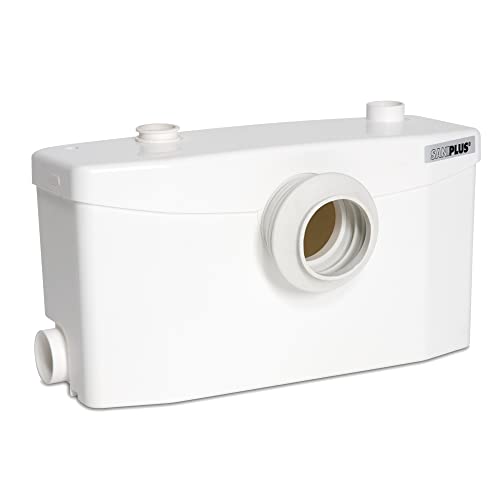
Among these options, Saniflo SaniPLUS is the one to examine for a full bathroom installed where gravity drainage is unavailable. Its advantage is a complete upflush bathroom route with a standard toilet option, not a generic promise of more water, pressure, or lift.
One practical check comes first: the toilet, discharge pipe, venting, and added fixtures are installed to the product instructions. Force-main size, solids, lift, basin, alarm, and cutter access determine whether grinding is justified.
For a full bathroom installed where gravity drainage is unavailable, Saniflo SaniPLUS is a sound candidate when the rest of the system matches. The main limitation is this: The bathroom fixture restrictions must be followed exactly.
Pros
- The kit approach can simplify an above-floor bathroom project.
- The macerator handles toilet waste before it enters the smaller discharge line.
- The system can accept approved additional fixtures in the right configuration.
- It is a clear alternative to excavating a basement floor for a gravity drain.
Cons
- The bathroom fixture restrictions must be followed exactly.
- It is not interchangeable with a standalone basin grinder pump.
Bottom line: Buy Saniflo SaniPLUS for a full bathroom installed where gravity drainage is unavailable, not as a general replacement. The practical constraint is this: It is not interchangeable with a standalone basin grinder pump.
Check the current price and availability
Best High-Lift Marketplace Grinder: AQUASTRONG SEP100CA-LV
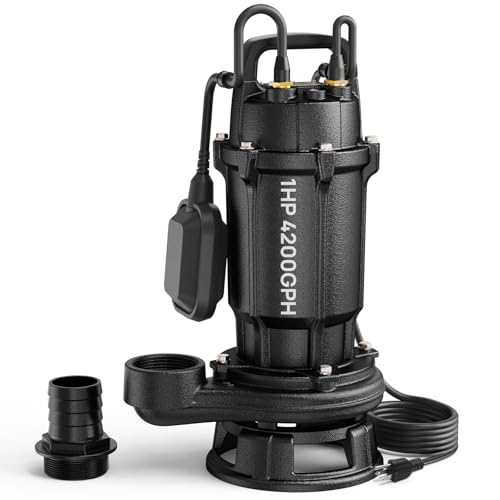
AQUASTRONG SEP100CA-LV belongs in this comparison because it is built for a residential sewage basin needing a budget grinder option. Its main differentiator is a marketplace grinder with a high-lift specification. The specification that matters for this job is 1 HP, 115V sewage grinder pump with 2-inch discharge and 40-foot class lift.
One practical check comes first: the basin, force main, float, power, and the model documentation match. Force-main size, solids, lift, basin, alarm, and cutter access determine whether grinding is justified.
The product suits a residential sewage basin needing a budget grinder option, but it is not a universal pump. Buyers should allow for these two tradeoffs: The grinder still requires a properly designed basin, discharge, alarm, and service arrangement. A grinder system still needs an alarm, check valve, and serviceable basin.
Pros
- The 1 HP motor and cutter give it a clear grinder classification.
- The 2-inch discharge suits a residential force-main comparison.
- The 40-foot class lift is relevant to a higher-head route.
- Automatic float operation can be considered in a compatible basin.
Cons
- The grinder still requires a properly designed basin, discharge, alarm, and service arrangement.
- A grinder system still needs an alarm, check valve, and serviceable basin.
Bottom line: The recommendation holds for a residential sewage basin needing a budget grinder option. It becomes less convincing when this limitation matters: The grinder still requires a properly designed basin, discharge, alarm, and service arrangement.
Check the current price and availability
Best Automatic Budget Grinder: HUNKING 1 HP Sewage Grinder Pump

The reason to consider HUNKING 1 HP Sewage Grinder Pump is narrow but practical: it offers a marketplace grinder comparison with automatic float control. That matters for a residential basin where a grinder is genuinely required, and the relevant product profile is 1 HP automatic grinder-pump format with approximately 40-foot class lift.
A buyer using HUNKING 1 HP Sewage Grinder Pump should confirm the discharge diameter, cutter, basin, and electrical protection are confirmed. That matters because force-main size, solids, lift, basin, alarm, and cutter access determine whether grinding is justified.
For a residential basin where a grinder is genuinely required, this model offers a clear path when the installation matches. Pay particular attention to this limitation: It is excessive for a conventional gravity sewage ejector installation.
Pros
- The 1 HP class provides a clear residential grinder role.
- Automatic float operation can control a properly sized basin.
- The higher-head listing gives it a force-main comparison point.
- It offers a lower-cost alternative for a buyer who has verified the category need.
Cons
- The cutter adds service needs compared with a conventional sewage ejector.
- It is excessive for a conventional gravity sewage ejector installation.
Bottom line: HUNKING 1 HP Sewage Grinder Pump is best reserved for a residential basin where a grinder is genuinely required. One practical point to budget for is It is excessive for a conventional gravity sewage ejector installation.
Check the current price and availability
Best 230V Grinder Comparison: SCHRAIBERPUMP 1 HP Sewage Grinder

Among these options, SCHRAIBERPUMP 1 HP Sewage Grinder is the one to examine for a force-main sewage application with suitable 230V service. Its advantage is a higher-head marketplace grinder for a specific electrical setup, not a generic promise of more water, pressure, or lift.
One practical check comes first: the 230V circuit, discharge, float panel, and basin are matched by a qualified installer. Force-main size, solids, lift, basin, alarm, and cutter access determine whether grinding is justified.
If a force-main sewage application with suitable 230V service describes your project, SCHRAIBERPUMP 1 HP Sewage Grinder has a credible case. It becomes less attractive when this limitation applies: 230V service and control-panel requirements narrow its audience.
Pros
- The 1 HP grinder format is suitable for a force-main comparison.
- Stainless and cast-iron components are intended for a demanding wastewater environment.
- The 230V arrangement can fit a dedicated system with the correct service.
- The model gives the list a different electrical option from 115V residential grinders.
Cons
- 230V service and control-panel requirements narrow its audience.
- The force main and basin must be designed for the pump’s discharge and controls.
Bottom line: As a match for a force-main sewage application with suitable 230V service, SCHRAIBERPUMP 1 HP Sewage Grinder is a reasonable pick. The detail that can change the decision is this: 230V service and control-panel requirements narrow its audience.
Check the current price and availability
What Matters When Buying a grinder or macerating pump
Size the force main and head
Smaller pipe and higher lift can require a grinder, but the pump curve, check valve, and discharge route must be designed together. In this grinder or macerating pump category, this is where a plausible-looking product can become the wrong tool.
Plan alarms and service
Grinders are difficult to ignore after installation. Provide an alarm, isolation, check valve, and service access.
Respect fixture restrictions
Macerating products have specific toilet, sink, shower, and cleaning requirements. Follow the exact installation manual.
Determine why grinding is needed
A conventional 2-inch sewage ejector is often enough for a properly designed basin. A grinder is justified when the force main or solids require it.
Separate basin grinders from macerators
A basin grinder handles sewage collected in a tank. A macerating bathroom unit connects to approved fixtures and uses a different layout.
A force-main check
Use the required discharge flow and total head to select the grinder, then confirm that its cutter and discharge size match the force main. Grinding is a system decision, not a reason to choose the largest horsepower available.
Before Building the Force Main
When you need a sewage pump with grinder, make the final decision with fixture layout, force-main size, solids, lift, basin, alarm, and electrical service written down. The pump has to work in the water path that will exist after the hose, filter, valve, basin, or control is connected.
The lead model emphasizes a true residential grinder with V-Slice cutter technology; the final option emphasizes a higher-head marketplace grinder for a specific electrical setup. Use fixture layout, force-main size, solids, lift, basin, alarm, and electrical service to decide which tradeoff suits the job.
Confirm the force-main diameter, check valve, alarm, and service access before connecting fixtures. The cutter is valuable only when the discharge design needs it.
Frequently Asked Questions
Does a grinder need an alarm?
A high-water alarm is strongly useful because a failed grinder can stop every connected fixture. A grinder usually brings more service and control requirements than a conventional ejector.
Can a grinder pump use a 2-inch line?
Some residential models are designed for a 2-inch discharge, but the exact pump, force main, and local requirements control. The basin, alarm, check valve, and discharge pipe should be designed together.
When do I need a grinder pump?
Use one when the approved system design needs macerated solids for a pressurized or smaller-diameter discharge. The cutter is useful only when the force main or layout needs macerated solids.
Is a grinder pump better than a sewage ejector?
Not generally. It solves a different discharge problem and adds cost and maintenance.
Can a grinder pump handle wipes?
A grinder may be more tolerant of difficult solids, but no household pump should be treated as wipe-proof. Follow the manual.
Final recommendation: My overall pick is Liberty PRG101A ProVore, but only for buyers whose system matches a basement sewage system requiring macerated discharge. Choose Liberty Pumps LCU-20ST when a basement bathroom or fixture layout designed for maceration is the real job, or SFA SANIFLO Saniaccess 3 when the installation calls for an above-floor or basement bathroom without a conventional floor basin. Measure fixture layout, force-main size, solids, lift, basin, alarm, and electrical service before committing to any of them.