Waterfall Pump Not Working: A Practical Guide for Homeowners
A pond or waterfall pump can be perfectly healthy and still produce a disappointing stream when the plumbing is too small, the intake is dirty, or the vertical lift is larger than expected. The pump’s free-flow number is measured near zero head. Your feature operates at a different point.
The direct answer
For this water-feature problem, inspect power, water level, intake, impeller, tubing, and actual head in that order. Keep fish and wildlife considerations separate from the hydraulic diagnosis, and never run a pump dry while testing a low pond.
A closer diagnostic reading
Begin with water level and intake
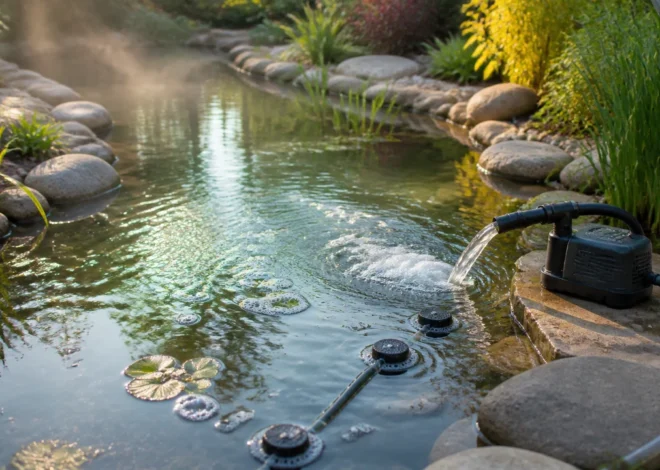
Outdoor pumps often lose flow because the water level falls, a skimmer door changes position, or a prefilter loads with leaves and algae. A vortex can pull air into the intake even when the pump itself is clean. Restore a stable submerged inlet before judging the motor.
Measure the feature, not just the pump
A waterfall or stream is affected by vertical rise, pipe diameter, length, fittings, filter media, spillway shape, and nozzle or outlet restriction. The zero-head GPH printed on a box cannot describe the sheet of water at the top of the feature.
Separate a blocked wet end from a bad motor
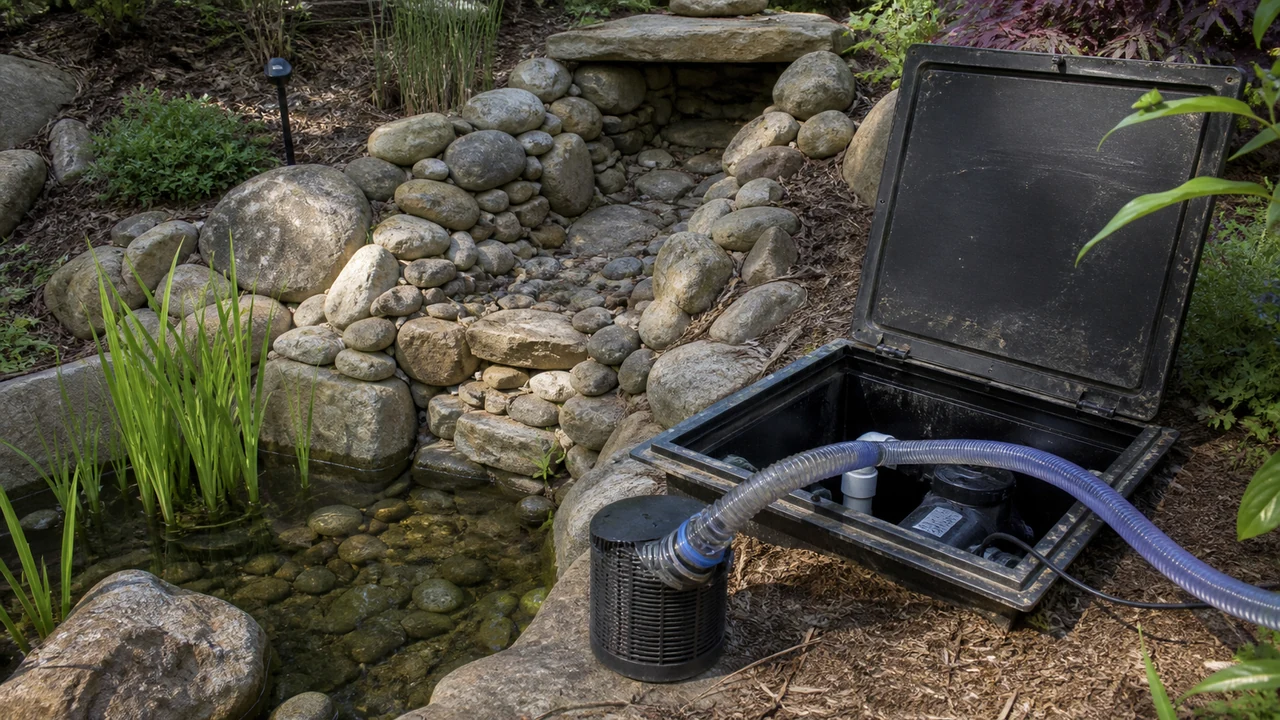
When power is isolated, inspect only the serviceable intake, impeller cover, and prefilter identified by the manufacturer. Gravel, string algae, and small sticks can jam an impeller. Severe heat, repeated trips, or a damaged seal calls for model-specific service.
Protect fish and wildlife while testing
Do not leave a pump running dry or allow a small pond to be drained below a safe level during diagnosis. Keep electrical connections protected outdoors and avoid introducing cleaners or lubricants that are not approved for the feature’s plants and animals.
Use seasonal observations
Record normal flow, water level, cleaning interval, and sound at the start of the season. A gradual decline suggests debris, wear, or increasing filter resistance; an immediate stop after a storm points more strongly to power, blockage, or a control event.
Read the symptom before touching the pump
| What you observe | What it often suggests | First useful check |
|---|---|---|
| Motor silent | GFCI, timer, cord, or motor issue | Check the outdoor power protection without opening the motor. |
| Motor runs, weak flow | Debris, small pipe, clogged filter, or too much head | Clean the intake and measure the lift and pipe route. |
| Flow pulses | Air, low water, vortex, restricted intake, or impeller debris | Raise water level and inspect the prefilter. |
| Flow stops after rain or winter | Sediment, leaves, ice, or a shifted intake | Inspect the intake and exposed discharge. |
Do not treat every symptom as proof of a failed motor. A pump curve describes what the pump can do at a particular head, while the switch, source, pipe, filter, and discharge determine whether that operating point is reached.
Likely causes and what separates them
The intake is restricted
Leaves, string algae, gravel, and fish-safe media can reduce inlet area. Clean the prefilter and impeller housing according to the pump manual.
The feature has more head than the pump can handle
Vertical rise, long tubing, narrow pipe, elbows, valves, and a nozzle all consume head. The useful flow is the point on the pump curve at that combined resistance.
The pump is drawing air
Low water, a vortex over the intake, a loose fitting on a flooded line, or a poorly placed skimmer can interrupt flow and make the stream surge.
The motor or impeller is damaged
A seized impeller, worn bushing, thermal overload, or water intrusion can stop a pump after it has been obstructed or run dry.
A safe diagnostic sequence
- Disconnect power at the outdoor protection device before removing a cover or handling the pump. Keep electrical connections dry and use the protection required by the installation.
- Confirm the pond level covers the intake and that the pump is not pulling a visible vortex. Do not add a stronger pump until the intake and feature are safe for the higher flow.
- Clean the prefilter, intake screen, impeller, and nozzle. Remove only parts the manual identifies as serviceable.
- Measure vertical rise from the pond surface to the outlet and record tubing length, diameter, bends, valves, and nozzle restrictions.
- Compare the required flow at that head with the manufacturer curve. For a waterfall, width and desired sheet thickness also matter; a wider spillway needs more flow.
- Restart under water and observe the full cycle. Stop if the pump runs dry, becomes hot, leaks electricity, or repeatedly loses prime.
When to stop and call for help
Do not handle an energized pump in a pond or work on wet outdoor wiring. Stop when the basin is contaminated, the pump housing is damaged, or the repair requires sealed motor work.
Prevent the same fault from returning
Use a prefilter that can be cleaned, leave service access around the pump, keep the water level within the pump’s operating range, and winterize before freezing conditions if the model is not rated for them.
What to record for the next service visit
| Observation | Useful detail |
|---|---|
| Power and controls | Breaker, fuse, controller light, switch, alarm, and whether the motor starts |
| Water behavior | Source level, inlet condition, discharge flow, return water, and time to clear |
| Hydraulic conditions | Vertical lift, pipe or hose size, filter state, valve position, and any recent changes |
| Operating pattern | Continuous run, short cycling, intermittent output, heat, noise, or vibration |
Verify the repair under a normal load
A pump is not repaired merely because the motor starts. Run the controlled test appropriate to the installation and confirm that the source remains adequate, the outlet carries water, the switch reaches its normal stop point, and no leak, alarm, overheating, or unsafe pressure appears. Do not create a larger load simply to prove capacity.
Three patterns that deserve a second look
A weak waterfall after cleaning
If the pump is quiet but the stream is thin, inspect the prefilter, filter media, pipe route, spillway, and water level before replacing the motor. A narrow hose or newly clogged filter can consume the head that the pump needs at the feature.
A pump that works early in the season
Leaves, string algae, and sediment can gradually restrict the intake or impeller. A falling pond level can also create a vortex that admits air. Note the interval between cleanings and whether the problem appears after wind, rain, or evaporation.
An intermittent outdoor fault
Intermittent starts can involve a float, timer, GFCI, low water, solar controller, or a loose protected connection. Keep the electrical diagnosis safe and focus on the pattern: time of day, water level, weather, and whether the intake is submerged.
Before you decide on a replacement
Separate pump condition from feature design
A pump can be clean and healthy while a narrow hose, loaded filter, high spillway, or restrictive nozzle reduces the visible result. Check the intake and measure the route before replacing the pump. The feature’s actual head and outlet shape matter as much as the model’s free-flow claim.
Look for the first point where flow changes
Observe the intake, prefilter, pipe, filter return, and spillway in sequence when safe. A sudden change at one point identifies the restriction. If flow is strong at the pump but weak at the feature, moving to a larger motor without correcting the route can increase noise and energy use without improving the stream.
Treat algae and debris as a system load
Repeated impeller jams may indicate that the intake protection is too coarse, the pump is sitting near sediment, or cleaning intervals are too long for the pond. Improve the prefilter and access arrangement before treating every jam as a new impeller failure.
Document seasonal behavior
Keep a note of water level, weather, cleaning interval, flow, sound, and the condition of the prefilter. A gradual decline often points to loading or wear, while a sudden stop after wind or rain points toward blockage, power protection, or a low-water condition.
Do not skip these final observations
Compare the symptom with the installation
A motor, impeller, switch, controller, source, pipe, filter, and outlet can each be the first failed point. Use the liquid, head, flow, and duty to narrow the diagnosis instead of treating the pump label as the answer.
Look for a change rather than a single reading
Pressure, flow, water level, runtime, noise, and temperature become more useful when compared with the system’s normal baseline. A single maximum or minimum value rarely identifies the fault by itself.
Make the next repair reversible
Use approved cleaning, fittings, replacement parts, and settings. Avoid cutting a line, bypassing a safety device, or changing a fuse until the exact manual and installation requirements support that action.
End with a normal operating record
Save the successful flow, pressure, level, cycle, and maintenance result. That record makes a recurrence easier to recognize and reduces unnecessary replacement of a pump that is still serviceable.
Keep the next diagnosis simple
Save the model number, manual, normal pressure or water level, typical runtime, and any replacement part information. A short record made when the system is healthy often prevents a future technician from having to guess whether a changed sound or cycle is new.
Frequently Asked Questions
Can a pond pump run continuously?
Many water-feature pumps are designed for long operation, but the exact duty rating belongs to the model. Continuous duty still requires adequate water, a clean intake, proper cooling, and a flow path that does not overload the motor.
Why is my waterfall pump noisy?
Air, a low water level, a vortex, debris, vibration against the basin, and a worn impeller are common possibilities. Check water level and intake restriction before assuming the motor bearing has failed.
Does a bigger pond pump always make a better waterfall?
No. Excess flow can overwhelm the spillway, filter, tubing, or wildlife-safe intake and may increase energy use. Size the pump at the required head and match the waterfall width and plumbing.
How often should I clean a pond pump?
Clean it whenever flow drops or the prefilter loads, with frequency set by leaves, algae, and fish load. Seasonal inspection is a sensible baseline, but a dirty pond may need more frequent service.
Can I use a fountain pump for a pond waterfall?
Only when its curve, continuous-duty rating, intake protection, and outlet fittings support the feature. Small fountain pumps often provide decorative flow, not the head or debris tolerance a waterfall needs.
Bottom line: Diagnose a pond pump as part of the feature, not as an isolated motor. Intake condition and delivered flow at real head usually matter more than the number printed beside the pump.